Rising Tensions: Protests Erupt in Greenland and Denmark Amid Trump’s Greenland Acquisition Threats
In the Arctic, tensions are reaching a boiling point as President Donald Trump intensifies threats to purchase Greenland, a semi-autonomous territory of Denmark. In response to these provocative actions, large protests erupted in both Greenland and several cities across Denmark this week, sending a clear and resounding message: their homeland is not for sale.
The backdrop to this unrest is Trump’s recent announcement that he plans to impose tariffs on Denmark and other European nations if a deal to acquire Greenland is not reached. The President argued that control over the island is vital for U.S. national security, especially amid rising challenges from China and Russia. This declaration, rather than fostering a dialogue, has sparked outrage in Greenland, where residents took to the streets in droves to demonstrate their defiance.
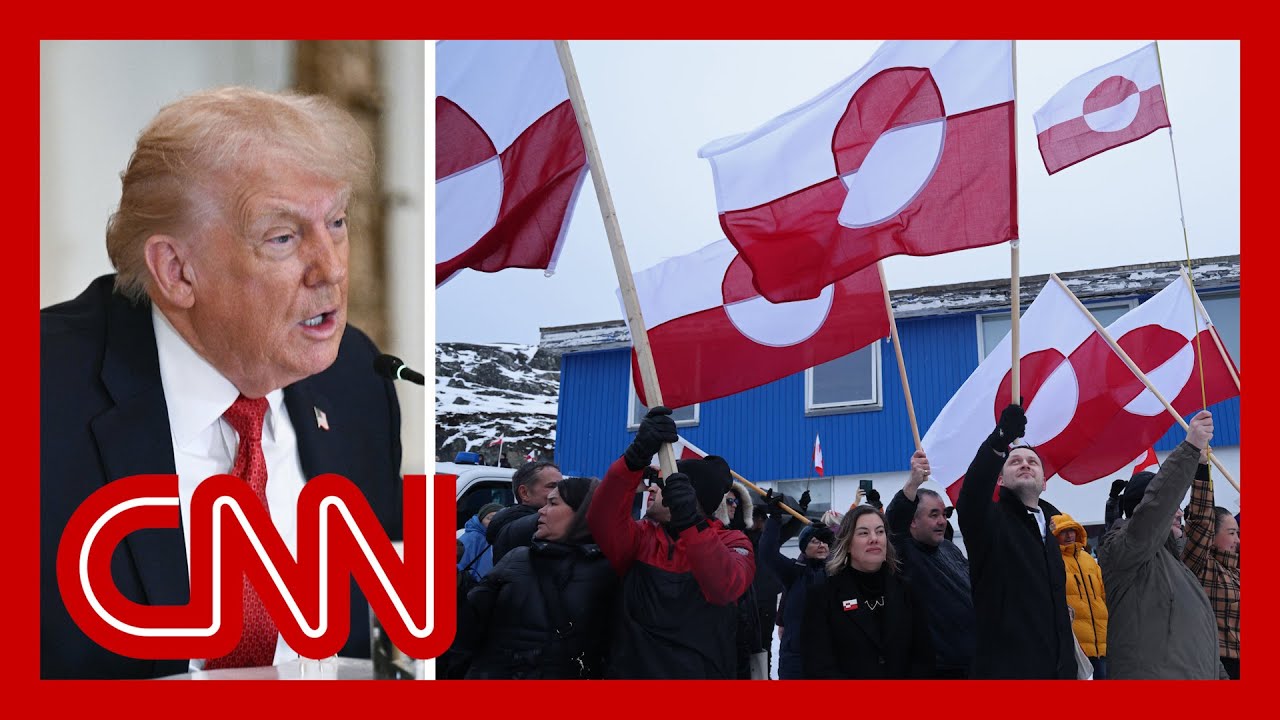
During the protests in Greenland, estimates suggests that around 20,000 people participated, with a considerable portion of the population marching through major towns. Holding banners and shouting slogans, demonstrators made their sentiment clear. Greenland’s Prime Minister, who opted to return home from Denmark to join the protests, emphasized unity in the face of external pressure.
The scene was powerful. Protesters gathered outside the U.S. consulate, with the Prime Minister waving the Greenland flag and delivering an impassioned speech in the local language. The chant "Greenland is not for sale" echoed through the streets, underscoring a collective resolve to reject any notion of territorial commodification. Youthful voices among the crowd expressed deep concerns about the implications of U.S. military presence and the potential sale—an affront to their identity and sovereignty.
While the protests were robust, the political implications of Trump’s tariff threats reverberated far beyond Greenland’s shores. The economic consequences of such tariffs are potentially severe, threatening established trade relationships between the U.S. and numerous European nations. In a lengthy statement posted on social media, Trump outlined a tiered tariff schedule that would start at 10% in February 2026, escalating to 25% by June of that same year. This ultimatum has placed pressure on Danish and Greenlandic officials to negotiate quickly, leaving them with under two weeks to respond.
Amidst these developments, a bipartisan delegation of U.S. lawmakers is currently meeting with Danish and Greenlandic leaders to navigate this complicated situation. However, initial discussions have yielded few solutions, leaving many to ponder the ramifications of continued friction.
Internationally, European leaders have not remained silent. A chorus of powerful figures, from French President Emmanuel Macron to British Prime Minister Keir Starmer, have vociferously criticized the tariff strategy, labeling it a misguided approach that could disrupt transatlantic relations. European Commissioner Ursula von der Leyen warned that these tactics could lead to a dangerous downward spiral in international cooperation—something the world can ill afford in these volatile times.
It is important to note that even within the U.S., there appears to be significant public disapproval of Trump’s strategy. A recent CNN poll indicates that 75% of Americans oppose efforts to assert control over Greenland, a sentiment echoed by both supporters and detractors of the President. This presents a real challenge for Trump, who must justify his stance while facing skepticism from his own constituents.
As the situation unfolds, both Greenland and Denmark remain firm in their rejection of the proposed acquisition. Demonstrators have articulated a vision for self-determination, with many citizens expressing a desire for greater autonomy rather than being engulfed by a foreign power.
As protests continue and diplomatic discussions swirl, one truth remains clear: the people of Greenland and Denmark will not yield their sovereignty without a fight. The U.S. administration must recognize that Greenland is not merely a geopolitical chess piece but a land inhabited by its own unique culture and aspirations.