Reflections on Donald Trump’s Second Term: A Year In
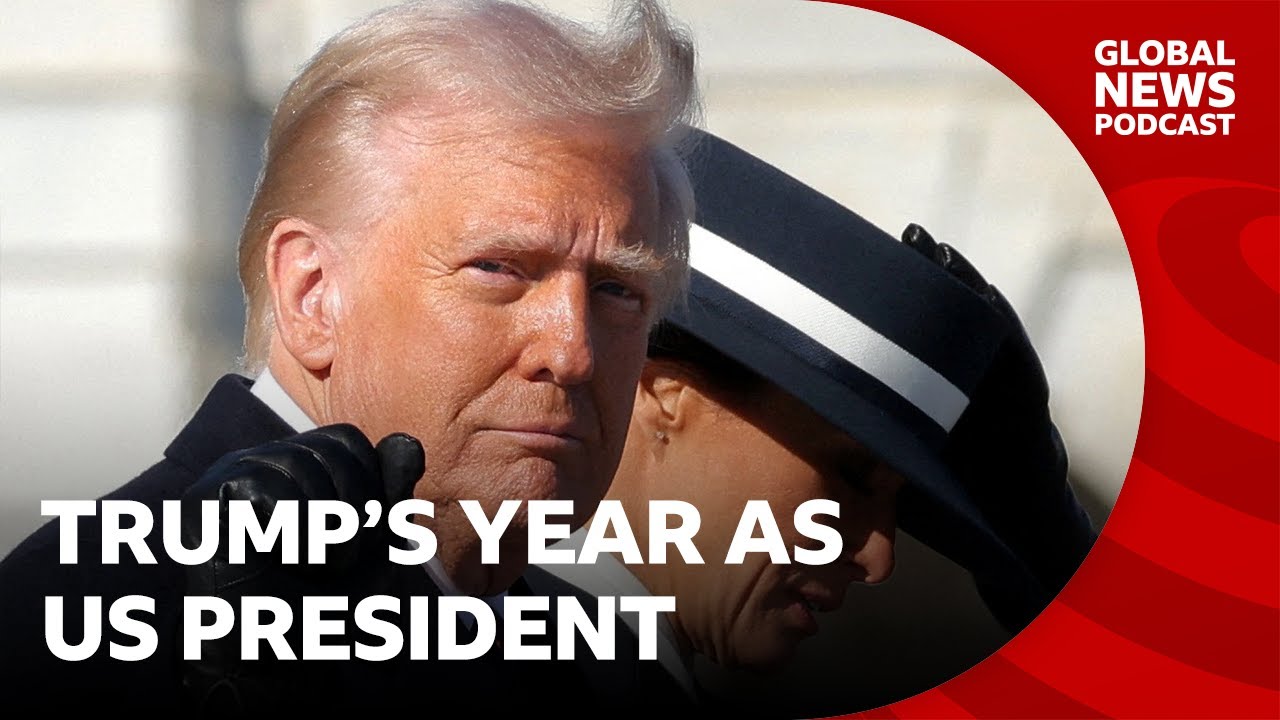
As we reflect on Donald Trump’s inaugural year in his second term, the landscape of American politics is marked by deepened divisions and an assertive approach both domestically and globally. In conversation with Gary O’Donoghue, the Chief North America Correspondent for Global News, the complexities of Trump’s presidency unfold.
One year in, the sentiment across America is starkly polarized. Supporters of Trump remain fervently loyal. Their backing is evident, particularly when it comes to his policies and actions on the international stage. Conversely, opposition groups have solidified their resistance, resulting in a pronounced divide that seems to grow wider with each passing day. The once subtle shift in public opinion has morphed into a clear polarization, with minimal overlap between the two factions.
Trump’s foreign policy, often framed under the banner of "America First," has drifted from initial promises of introspection to a more aggressive stance. Critics anticipated an era of American isolationism; instead, Trump has deployed military maneuvers and asserted his will on global affairs, even amidst a rising chorus questioning the need for traditional alliances. His approach, a significant departure from past presidential doctrines, emphasizes subjugation over consensus, thus jeopardizing long-standing partnerships that the United States has relied upon for decades.
Compounding this tension is Trump’s handling of conflicts like Ukraine. Despite promises to address the situation promptly, ongoing strife reveals a failure to fully grasp and manage international dynamics. His interaction with leaders such as Vladimir Putin has oscillated between confrontation and concession, yet the anticipated outcomes have remained elusive. While Trump has pressured European allies to enhance their involvement in Ukraine, the relationship between the U.S. and Europe stands at a precipice, with pressures not seen since World War II.
Domestically, Trump’s immigration policies have sparked significant discourse. With strict measures implemented along the southern border, he boasts reductions in apprehensions. Nonetheless, there is rising unease even among his base concerning the conduct of ICE and the implications of stringent immigration enforcement. The images of unrest and brutality resulting from these policies present challenges to his narrative, suggesting a gap between political objectives and public sentiment.
On the economic front, Trump’s administration faces a complex landscape. Inflation has soared, attributing much of the strain to actions and legacies carried over from previous administrations, notably Joe Biden’s. Trump presents a mixed message regarding economic stability; while discussing lowered prices for commodities like gas, he simultaneously downplays the impact of inflation as a pressing issue. The imposition of tariffs, a signature feature of his economic strategy, has been met with mixed results, with many experts yet to ascertain their long-term ramifications.
Trump’s unique governing style marks a departure from traditional political norms. He has decisively chosen a path of executive actions, sidestepping Congress and emphasizing a presidency driven by personal decree rather than collaborative governance. This raises questions about the permanence of his policies, as many can easily be reversed by future administrations.
Perhaps the most concerning implication of Trump’s presidency lies in its potential to redefine the power and scope of the office. Landmark Supreme Court decisions have granted the presidency unprecedented latitude, creating a landscape where certain actions may escape accountability. This shift not only changes the presidency’s power dynamics but may set a precedent for future leaders, impacting the balance of American governance for generations.
As we navigate this contentious period marked by a stark divide and aggressive policy initiatives, the full implications of Trump’s second term remain to be seen. With critical midterm elections looming, the national dialogue around these issues continues to evolve. The realm of American politics now stands uniquely challenged by an administration willing to stretch traditional boundaries, leaving future political discourse forever altered by Trump’s tenure.
For further insights, feel free to subscribe, and share your thoughts and recommendations for future topics.