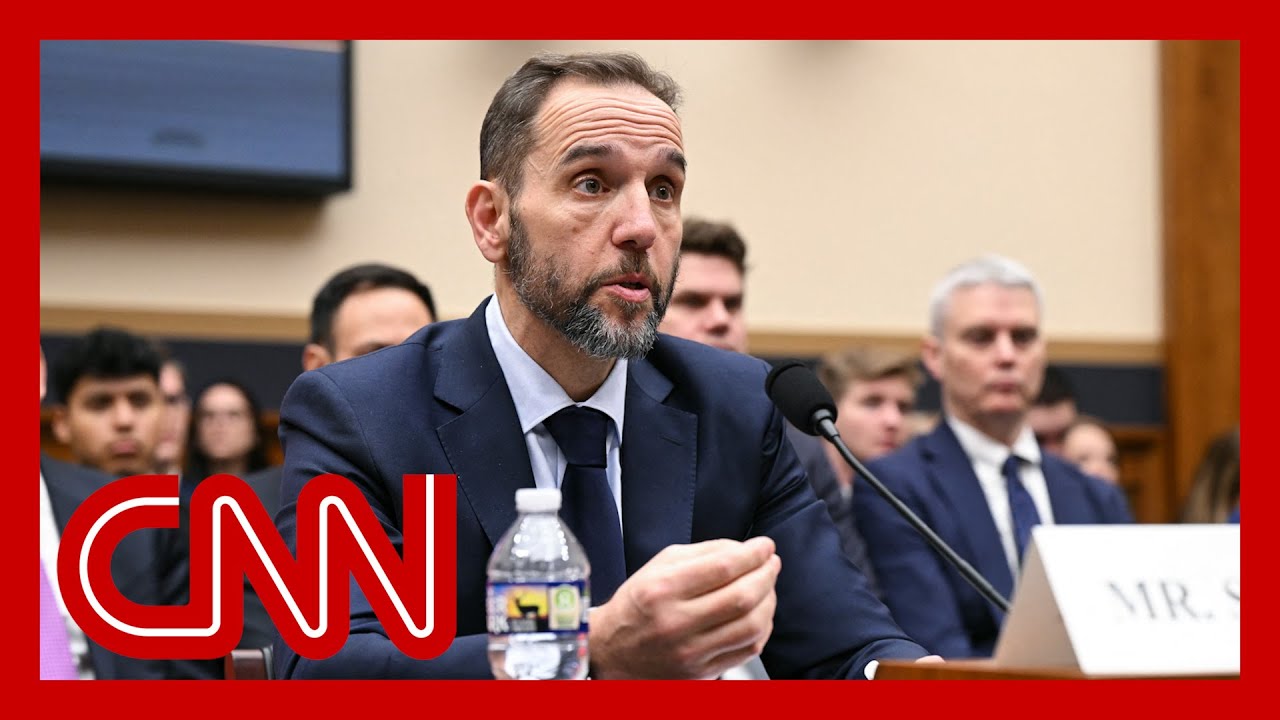
In a significant moment on Capitol Hill, former Special Counsel Jack Smith provided testimony that has become pivotal in the ongoing discussion about accountability and the rule of law. Smith, a seasoned prosecutor with nearly three decades of experience, testified before the House Judiciary Committee, addressing both his work as special counsel and the broader implications of his findings.
He began by reiterating his commitment to impartiality. “I am not a politician,” Smith stated unequivocally, emphasizing his non-partisan approach to prosecution. His career has spanned administrations from both major political parties, which has endowed him with a wealth of experience that he drew upon while leading high-profile investigations, including those involving domestic violence, gang activities, public corruption, and election crimes.
Smith’s dedication to the rule of law is evident in his assertion that he has always aimed to “follow the facts and the law without fear or favor.” This principle formed the backbone of his investigations, particularly as he navigated the complex legal landscape surrounding former President Donald Trump.
He made it clear that his decision to charge Trump was based strictly on evidence and not influenced by political affiliations. “President Trump was charged because the evidence established that he willfully broke the law,” Smith stated with clarity. The indictments, he explained, stemmed from two separate grand jury findings that confirmed Trump’s engagement in criminal conduct related to efforts to overturn the 2020 election results.
Moreover, Smith detailed specific allegations against Trump, highlighting that he illegally retained classified documents at his Mar-a-Lago estate, jeopardizing national security. His resounding message was straightforward: “No one should be above the law in this country.” This assertion was central to his testimony, reinforcing the critical need for accountability in high office. Notably, he stated that if faced with the same circumstances today, he would prosecute any former president, regardless of political affiliation.
The implications of Smith’s work extend beyond mere legal proceedings; they touch on the foundational principles of democracy and governance. After more than twenty years in public service, including roles in international legal settings, Smith expressed concerns over the erosion of the rule of law. He warned that many might take its presence for granted, yet underscored that it requires a collective commitment to uphold it.
“To have done otherwise on the facts of these cases would have been to shirk my duties,” he clarified, reinforcing his stance as a public servant dedicated to justice. Meanwhile, the testimony has sparked significant reactions, particularly from Trump and his supporters, who have sought to vilify those involved in the investigation. Smith condemned this retaliation against public servants, stressing that these individuals are integral to the justice system’s integrity.
Smith’s testimony exemplifies the ongoing struggle for justice in a politically charged environment. With his words echoing in the hallways of power, the debate around the role of law in governance remains at the forefront of national discourse. As he presented his defense against attacks on his character and his work, he reminded Congress—and, by extension, the public—of the necessity of ensuring that the law applies equally to all.
The hearings revealed the political dynamics at play, as Congress members from both sides sought to navigate the implications of Smith’s work. While Democrats leaned into highlighting Smith’s credentials and the importance of his findings, Republicans appeared more focused on interrogating the motivations behind his investigation. These contrasting approaches underscored how divided the political landscape remains regarding accountability and the legal system.
As the day progressed, Capitol Hill was abuzz with ongoing votes and discussions, but the gravity of Smith’s testimony lingered. His commitment to justice shines as a beacon of hope that even in tumultuous times, the rule of law can prevail. The complexities of governance, accountability, and justice are far from resolved, but Smith’s presence at the hearing stresses that every action taken—regardless of political implications—should always align with the truth and the law.