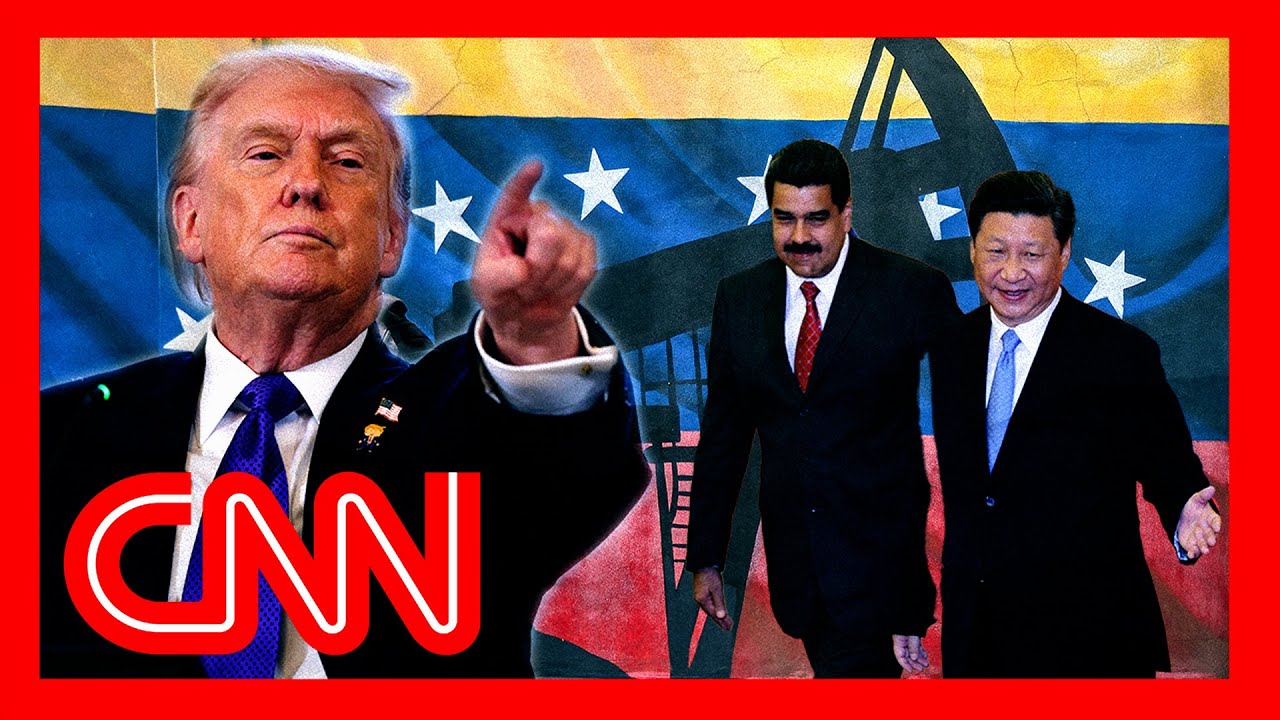
Aftermath of U.S. Strikes in Venezuela: China’s Response and Latin America’s Future
The geopolitical landscape in Latin America is shifting dramatically following recent U.S. military actions in Venezuela. President Trump announced large-scale strikes aimed at ousting Nicolás Maduro, a leader often labeled a dictator and terrorist. This intervention comes hot on the heels of a high-level Chinese delegation’s visit to Venezuela, igniting discussions about China’s longstanding interests in the region.
Over the last two decades, China has significantly expanded its presence in Latin America, investing billions to build solar farms, transportation networks, and other infrastructure projects. However, these initiatives have also raised U.S. security concerns, with specific focus on Chinese-controlled ports and sensitive technologies. The timing of Trump’s announcement, correlated with Chinese diplomatic overtures, underscores the complexities of international relations in a region traditionally seen as the U.S.’s sphere of influence.
For context, one must trace China’s engagement with Latin America back to 2001, when then-leader Jiang Zemin embarked on a pivotal tour of the continent. Following China’s accession to the World Trade Organization, its trade barriers began to fall, facilitating greater engagement. The long-standing infrastructure deficit in Latin America provided a strategic opportunity for China, which sought outlets for its domestic construction capabilities and resources such as oil and minerals.
Investment data reveals that from 2014 to 2024, Chinese financial engagement in Latin America surged by over 400%, positioning it as the second-largest recipient of Chinese investment after Asia. This burgeoning partnership has led some observers to view it as an orchestrated attempt by China to dominate the region. However, others, including former Chilean ambassador Jorge Heine, argue that this relationship has developed organically, benefitting both sides, if not without pitfalls.
China’s commitment to its Belt and Road Initiative has further entrenched its position in Latin America. This ambitious infrastructure program, launched by Xi Jinping in 2013, aims to expand China’s global footprint by financing large-scale construction projects in various countries. The first Latin American nation to join this initiative was Panama in 2017. Chinese state lending to the region peaked earlier this decade and has supported substantial initiatives, including the construction of the longest bridge in Panama and significant port facilities in Peru.
Yet, despite Venezuela’s pivotal role as a political ally, it has not been China’s largest trading partner in the region. Countries like Brazil and Argentina often take precedence. Nevertheless, China’s backing of Maduro has been strategic, offering a counterweight to U.S. influence while allowing Beijing to secure investments in Venezuelan oil fields, a key asset considering the country’s vast reserves.
However, China’s support for Venezuela may encounter new challenges following the upheaval initiated by U.S. interventions. The Biden administration, succeeding Trump, has stated that it aims to establish an exclusive partnership with Venezuelan authorities for oil production, effectively coercing the country to sever ties with adversaries like China. This leaves Beijing reassessing its strategy in a country where it has previously invested approximately $106 billion in loans.
Experts suggest that China may need to modify its approach across all Latin American nations, particularly those that have veered toward anti-Americanism. Panama, for instance, has already distanced itself from the Belt and Road Initiative.
As the dynamics continue to evolve, the ultimate question remains: How will Latin American governments respond to the shifting allegiances and pressures from both the U.S. and China? Already, there is an observable trend where nations are weighing their engagements with China against U.S. security interests. The need for infrastructure development remains acute, but that urgency must be carefully navigated against geopolitical pressures.
In conclusion, both China and Latin America find themselves at a critical juncture. While the former seeks to extend its economic reach, the latter must balance its needs for development against an increasingly complex global political landscape. For now, it appears unlikely that China will retreat from its extensive ties; the economic imperatives are too compelling. As both nations seek stability and predictability, how they recalibrate these relationships in light of evolving circumstances will significantly influence their futures.