Zelensky’s Stark Address at Davos: A Call for Urgent Action
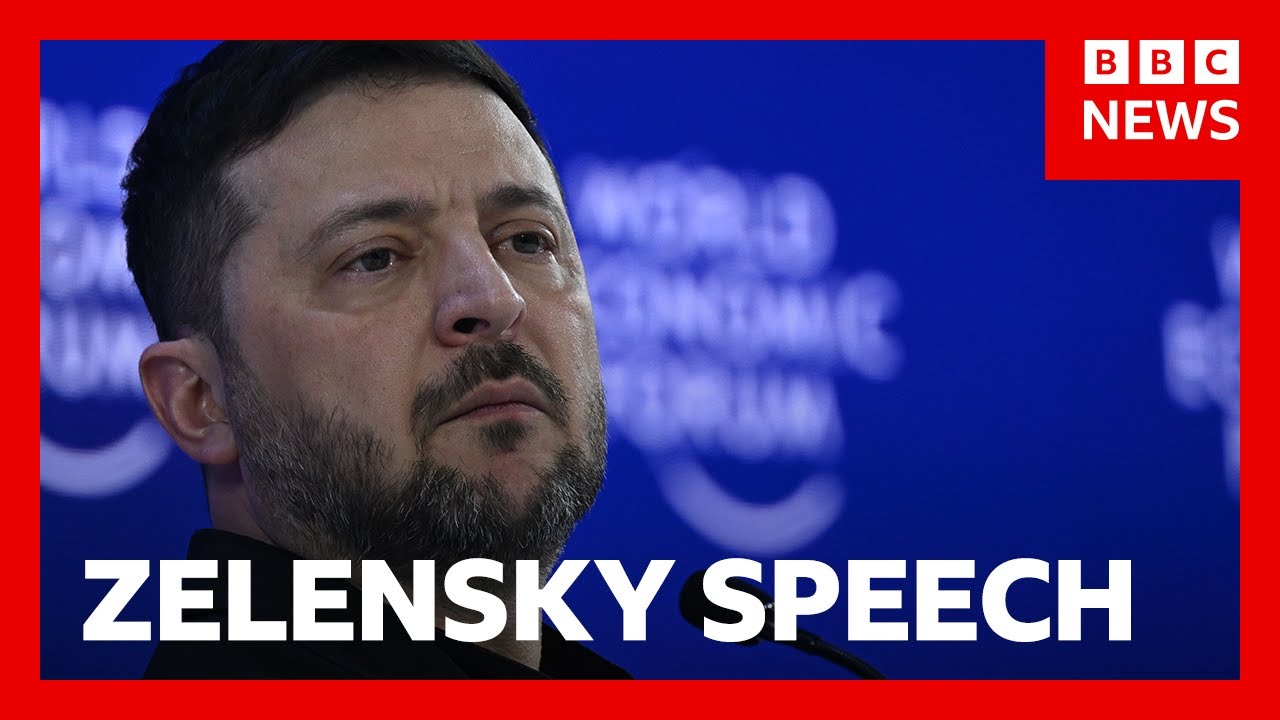
In a candid and pointed address at the Davos Economic Forum, Ukrainian President Volodymyr Zelensky leveled sharp criticism against European leadership. His remarks highlighted a growing frustration with the continent’s failure to tackle pressing issues arising from Russia’s ongoing aggression. Zelensky’s speech, a blend of urgency and skepticism, not only underscored the dire situation in Ukraine but also emphasized the need for immediate and decisive action from European allies.
Zelensky opened his discourse with an evocative comparison to the classic film Groundhog Day, a metaphor that succinctly captures the cyclical nature of Ukraine’s struggles. "Everyone remembers the great American film," he remarked, "but no one would want to live like that." His message resonated with listeners: the repetitive cycle of conflict and stalled resolutions is a grim reality for Ukraine. Despite the passage of time—marked by numerous international forums and discussions—the situation remains stagnant. Critics have noted that a year has elapsed, yet the same concerns continue to surface, underscoring a consistent failure to innovate solutions in the face of escalating threats.
The president’s critique extended beyond rhetorical flourishes. He dissected European inaction regarding Russian oil tankers, questioning why Europe has not taken definitive steps to curb the shadowy operations of Russia’s maritime fleet. In stark contrast, he pointed out that former U.S. President Donald Trump managed to implement swift measures that Europe has refrained from pursuing. Zelensky’s inquiry was not mere commentary; it was a call to arms for European states to reassess their strategies in real-time and to tackle significant threats with tangible answers.
Furthermore, while expressing gratitude for the freezing of Russian assets—an important step in a coordinated economic response—Zelensky made an urgent appeal for those assets to be utilized effectively. He lamented the obstacle that had stalled the unfreezing process for Ukraine’s benefit. His message was clear: when it comes to tangible assistance, intentions must translate into actionable support. The implications of such financial resources are immense, potentially paving the way for critical aid in fortifying Ukraine against ongoing aggression.
Amidst this challenging landscape, Zelensky also indicated that steps towards a resolution are being taken. His discussions with U.S. leaders, notably Trump, signified that plans to end the war are near fruition. "The documents aimed at ending this war are nearly ready," he confirmed, instilling hope for diplomatic resolution. However, he tempered this optimism by emphasizing that for progress to be made, both Ukraine and Russia must be prepared to engage in constructive dialogue. The world has entered a complex geopolitical quagmire, and a balance of pressure and support is necessary to compel Russia towards de-escalation.
Much of Zelensky’s address was infused with a palpable sense of urgency, particularly when he addressed the ominous potential of a false flag operation by Russia. This scenario poses risks not just for Ukraine but for NATO as a whole. "Could you rely on NATO?" he questioned, reflecting an inherent uncertainty that lingers over the alliance’s collective response. The prospect of inadequate action—or worse, indifference—from the United States looms large, complicating an already volatile situation. As the conflict unfolds, President Zelensky calls upon NATO members to reinforce their commitments, revealing the fragility of international alliances in times of crisis.
Zelensky’s address at Davos was not merely a critique of European leadership; it was a clarion call for change. He pressed for a proactive stance against Russian aggression and implored European leaders to transform their strategies from long-term visions into immediate actions. The plight of Ukraine serves not only as a narrative of struggle but as a test of the international community’s resolve. As Zelensky poignantly noted, the time for words has passed; it is now imperative to translate intentions into impactful deeds for the sake of peace and stability in Europe.