Prince Harry Concludes Testimony in Landmark Privacy Case Against Associated Newspapers
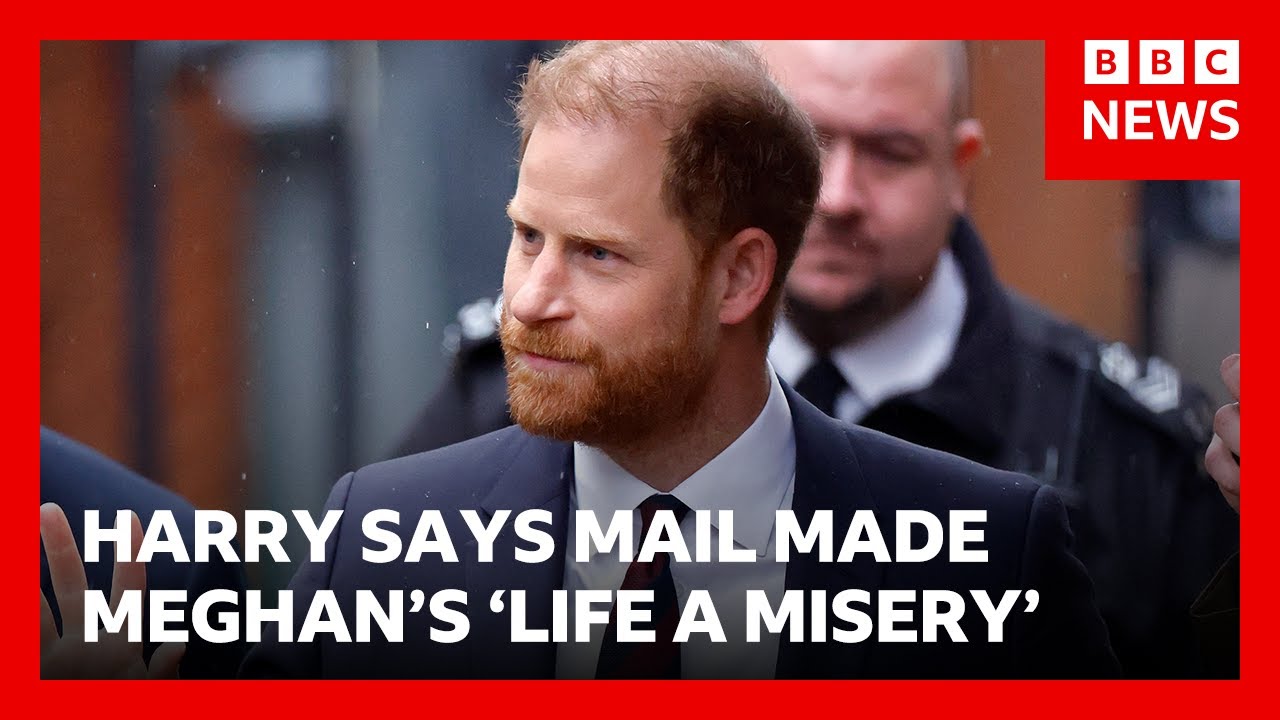
Prince Harry has wrapped up his appearance in a high-profile privacy case against Associated Newspapers Limited, publishers of the Daily Mail and Mail on Sunday. The prince’s testimony showcased a tumultuous mixture of emotion and resolve as he accused the publisher of subjecting his wife, Meghan Markle, to what he described as “absolute misery.” This case, involving seven prominent claimants, centers around allegations of unlawful information gathering, a claim vigorously denied by Associated Newspapers.
Witnesses in the courtroom observed Prince Harry’s visible emotional strain as he detailed the toll that this ongoing legal battle has taken on both his personal life and mental well-being. He expressed his discontent with the relentless nature of the media’s intrusion, stating that the litigation process has exacerbated his distress rather than alleviating it. In a poignant moment, he called for an apology—not just for himself but also for the other claimants who share his plight.
The morning session painted a stark contrast to the emotional conclusion. Initially, Prince Harry appeared resolute and ready to confront the courtroom proceedings head-on. He engaged in a combative exchange with Anthony White KC, the lawyer representing Associated Newspapers. Responding to pointed questions about previous articles published as far back as 2001, Prince Harry referenced a well-known royal adage: “never complain, never explain.” This phrase, emblematic of the royal family’s historical reticence, underscores the difficult balancing act that public figures face when grappling with media scrutiny.
White’s argument rested on the assertion that Prince Harry’s social circle was leaky. They suggested that many personal details printed in the press stemmed from friends divulging information. Prince Harry strongly refuted this claim, emphasizing that substantial portions of the private information disseminated by the media could only have been obtained through illegal means. He disclosed that he had prepared a detailed 23-page witness statement to illustrate the gravity of the situation, citing profound negative impacts on his personal relationships.
In a striking revelation, Prince Harry described a Daily Mail reporter as having resorted to what he termed “full-blown stalking.” This accusation signals a severe breach of personal privacy and underscores the lengths to which media entities may go to acquire information about public figures. As the prince articulated the pain endured by his family, it became evident that this case is deeply personal; it is not merely a legal maneuver but a significant moral stand against what he perceives to be abusive media practices.
As he concluded his testimony, it was clear that the emotional weight of the situation had taken its toll. Inevitably, the financial and relational strain resulting from protracted media scrutiny was palpable. Prince Harry’s resolve to challenge the media reflects not just a response to personal grievances but a broader commitment to advocating for privacy rights for individuals in the public eye.
In an official statement following the day’s proceedings, Prince Harry’s spokesperson remarked that the cross-examination of the prince was revealing and insightful. They described the line of questioning as "assertive," yet it quickly faltered under the prince’s scrutiny, leading to a notably brief two-hour session in which many pertinent topics were overlooked. The spokesperson pointed out that the media group, rather than the prince, stands on trial.
Looking ahead, the trial continues over the course of nine weeks, with future sessions expected to feature other claimants, including notable figures like Elizabeth Hurley, Sadie Frost, and Doreen Lawrence. Their testimonies may further illuminate the pervasive issues concerning privacy breaches and media ethics.
The courageous stand taken by Prince Harry and his co-claimants ignites a critical dialogue, not only about the boundaries of journalistic conduct but also about the psychological wellbeing of public figures under constant scrutiny. As the legal proceedings unfold, the implications for both privacy rights and media accountability are set to resonate far beyond the walls of the courtroom.