Canada on the Global Stage: Emerging Leadership Amid Uncertainty
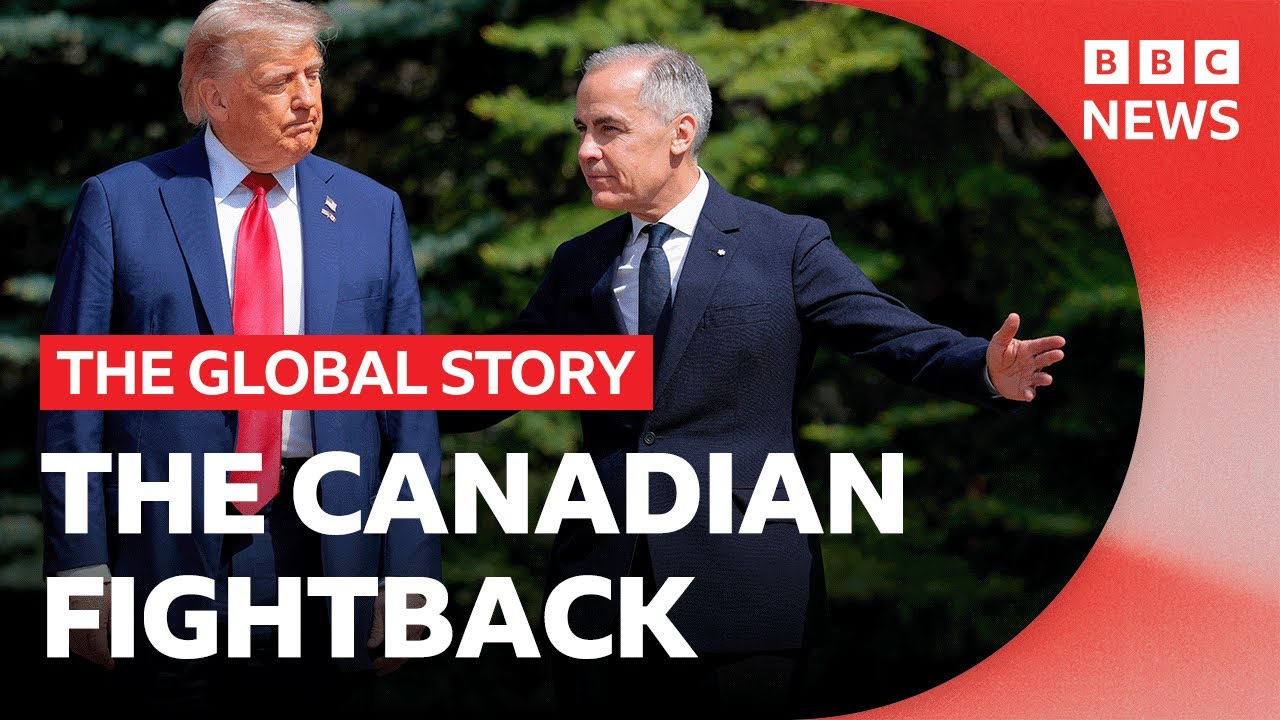
In recent years, Canada has found itself navigating a complex geopolitical landscape, particularly in the wake of Donald Trump’s presidency. The rhetoric exchanged between leaders of Canada and the United States has underscored a significant shift in international relations. Mark Carney, a prominent Canadian figure and the country’s recent Prime Minister, has emerged as a voice of reason and resilience, addressing the challenges posed by an increasingly unpredictable American administration.
During his recent speech at the World Economic Forum in Davos, President Trump made headlines with comments that some interpreted as dismissive of Canada’s contributions, stating, "Canada gets a lot of freebies from us… They should be grateful." This sentiment is symptomatic of a broader narrative where Canada’s relationship with the U.S. is reconsidered under the lens of power dynamics.
Mark Carney has critiqued the old world order, which he believes was rooted in a misleading framework of shared international rules. He articulated that this structure often favored more powerful nations while sidelining the interests of middle powers like Canada. According to Carney, the time has come for nations to confront the realities of international relations: “Nostalgia is not a strategy,” he said, implying that clinging to outdated notions of a cooperative global order is futile. Instead, he called on nations to build their strengths and act collectively, a clarion call for middle powers facing immense pressures from stronger states.
One pivotal moment in this evolving narrative occurred during Carney’s recent visit to China, marking the first time a Canadian Prime Minister had engaged in high-level discussions with its leadership since 2017. This visit was both symbolic and strategic, emphasizing Canada’s intent to diversify its global partnerships beyond its over-reliance on the U.S., which accounts for 70 to 75% of Canada’s trade. By negotiating a preliminary trade deal that lifted tariffs on electric vehicles, Carney aims to establish a more balanced trade relationship between Canada and China, despite underlying tensions.
However, the geopolitical landscape remains fraught with challenges. The growing notion among Canadians that they could become the “51st state” of the United States has risen from jest to serious consideration, particularly in light of President Trump’s repeated comments regarding the integration of Canada into the U.S. This idea has sparked a wave of national pride and self-assertion among Canadians, leading to a grassroots movement promoting Canadian-made products and a rise in anti-American sentiment. Mark Carney’s ascent in political influence can be attributed, in part, to this cultural shift as Canadians rally around their identity and sovereignty.
In a startling report by the Toronto Globe and Mail, Canadian government officials have begun “wargaming” scenarios for a potential invasion by the U.S. This unsettling development reflects a growing awareness in Canada of the precarious nature of its relationship with its neighbor. Military and diplomatic strategists are not just assessing potential military responses but are also contemplating the underlying cultural and societal ramifications of such an invasion.
Carney’s nuanced approach in dealing with Trump presents a sharp contrast to the highly publicized and often confrontational style of U.S. foreign policy. While he does not shy away from calling out inconsistencies in the current global order, there is a cautious acknowledgment that aggressive rhetoric can backfire. Canada’s strategy, therefore, is one of building alliances and fostering cooperative dialogue, maintaining a diplomatic posture that allows it to navigate complex international waters.
The landscape of global power is shifting, and Canada appears poised to assume a greater role as a stabilizing force among middle powers. While it may not wield the same military clout as the U.S., Canada has an opportunity to leverage its diplomatic strengths and foster cooperative relationships that can address contemporary global challenges.
In this ever-changing landscape, the words of Mark Carney resonate — it is time for middle powers not to shy away from their responsibility, but rather to step into a leadership role, committed to building a new world order based on collaboration, resilience, and mutual respect. The stakes have never been higher, and Canada’s approach may well set a precedent for how nations can navigate their destinies in a world where the rules are increasingly under siege.