Andy Burnham’s Bid for Labor’s Gorton and Denton Seat: A Political Crossroads
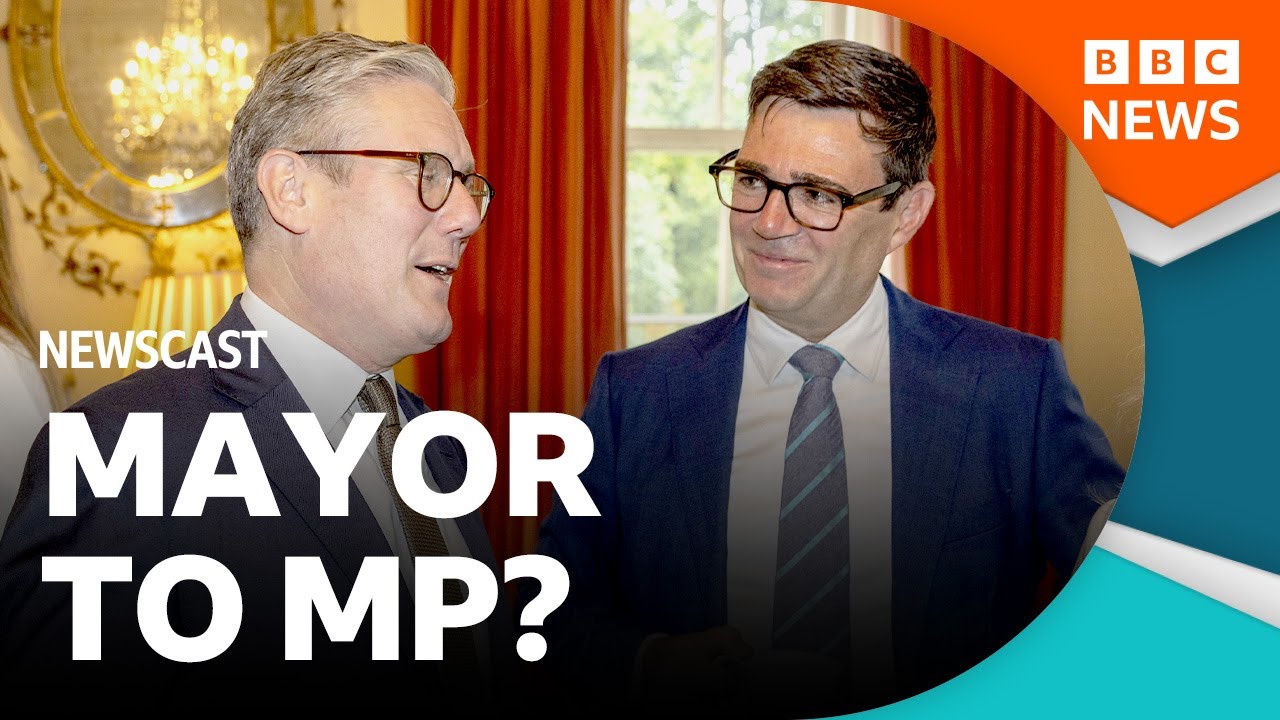
In a letter recently released, Andy Burnham, the Mayor of Greater Manchester, formally requested permission from the National Executive Committee (NEC) of the Labour Party to enter the selection process for the upcoming Gorton and Denton by-election. On the surface, this might seem like a mundane administrative step. However, it could signal a dramatic shift in the political landscape, especially considering the ongoing challenges faced by Labour leader Keir Starmer.
Burnham’s ambition is well-known. Despite being at the helm of a significant regional office, he has expressed aspirations for Labour’s top position multiple times. Starmer, who has faced mounting criticism for his leadership amid declining popularity, may find Burnham’s bid both threatening and strategically complicated. With a vacancy opened by the departure of Andrew Gwyn, Burnham’s move could pave the way for his return to Westminster—a move that has implications for Labour’s future.
The NEC, Labour’s powerful ruling body, holds the authority to accept or deny Burnham’s request to run in this crucial by-election. For Burnham, the stakes are high, not only for his political career but also for Labour’s standing within the broader public discourse. If allowed to run and subsequently win, Burnham would position himself as a formidable contender for Starmer’s role, something that would likely concern the current leadership.
Starmer’s team faces a dilemma: blocking Burnham may appear paranoid, while permitting him to run could potentially enable a rival with ambitions similar to Starmer’s. Critics have noted that not allowing Burnham to stand could reflect poorly on Starmer, especially given Burnham’s popularity among party members and voters alike.
Conversely, those in Starmer’s circle argue that endorsing Burnham could lead to unnecessary expenditures associated with both the by-election and a potential mayoral election in Greater Manchester—a political battleground of considerable importance. Ultimately, the fear among Starmer’s allies could stem from the realization that Burnham would enter Westminster not solely to support the party but also likely to challenge for leadership.
Burnham’s tone in his letter hints at a broader political battle. He referenced "poison" as a negative force in political discourse, suggesting that one of his motivations for entering the fray is to ward off threats from other emerging parties, like Reform UK, which could gain traction in an area where Labour has historically been strong.
The significance of the Gorton and Denton constituency cannot be overlooked. Polling has recently shown that Reform UK has gained ground in various regions, which adds urgency to Burnham’s ambitions. While Labour has, in the past, comfortably held onto seats in this area, the shifting political landscape indicates that nothing can be taken for granted.
As discussions within the NEC unfold, the significance of leadership dynamics cannot be understated. With key figures like Lucy Powell, the deputy leader, and Sadiq Khan, the Mayor of London, publicly supporting Burnham’s candidacy, Starmer’s ability to control the narrative may be tested. Should the NEC block Burnham, it could exacerbate internal tensions and alienate popular figures within the party.
The ongoing speculation raises a critical question: if Burnham is barred from running, could this act of perceived exclusion rally support behind him, crystallizing him as a martyr figure among disenchanted Labour members? A precedent established with figures like David Miliband indicates that the party can easily create a narrative of lost potential; one that could linger long after any decision is made.
Moreover, external factors could come into play. The looming local elections and the necessity for Labour to present itself as a united front in the face of potential challenges from both left and right would demand the strongest candidate at a time when unity is of utmost importance.
As this political drama unfolds, it highlights a larger discontent within the Labour Party. With the specter of internal rivalry always looming, the lens through which Labour’s future will be viewed hinges not just on leadership choices, but on how well it can grapple with these evolving challenges while maintaining party cohesion and public confidence.
The developments in the coming days, as the NEC meets to deliberate the decision regarding Burnham’s candidacy, will be closely scrutinized. The outcome could either reinforce Starmer’s leadership or inadvertently empower a rival—a scenario that could drastically alter the course of Labour’s narrative in the near future. The stakes are high, and the implications extensive, emphasizing how crucial these next steps are for the party’s trajectory amidst an increasingly complex political environment.