War and Wealth: The Paradox of Russia’s Billionaires
War often breeds suffering, not only for those directly involved in the conflict but also for economies dependent on stability. The recent invasion of Ukraine by Russia in 2022 illustrated this bitter truth. However, the outcomes are not uniformly catastrophic. For a significant segment of Russia’s elite—its billionaires—the ramifications of the war have been profoundly complex.
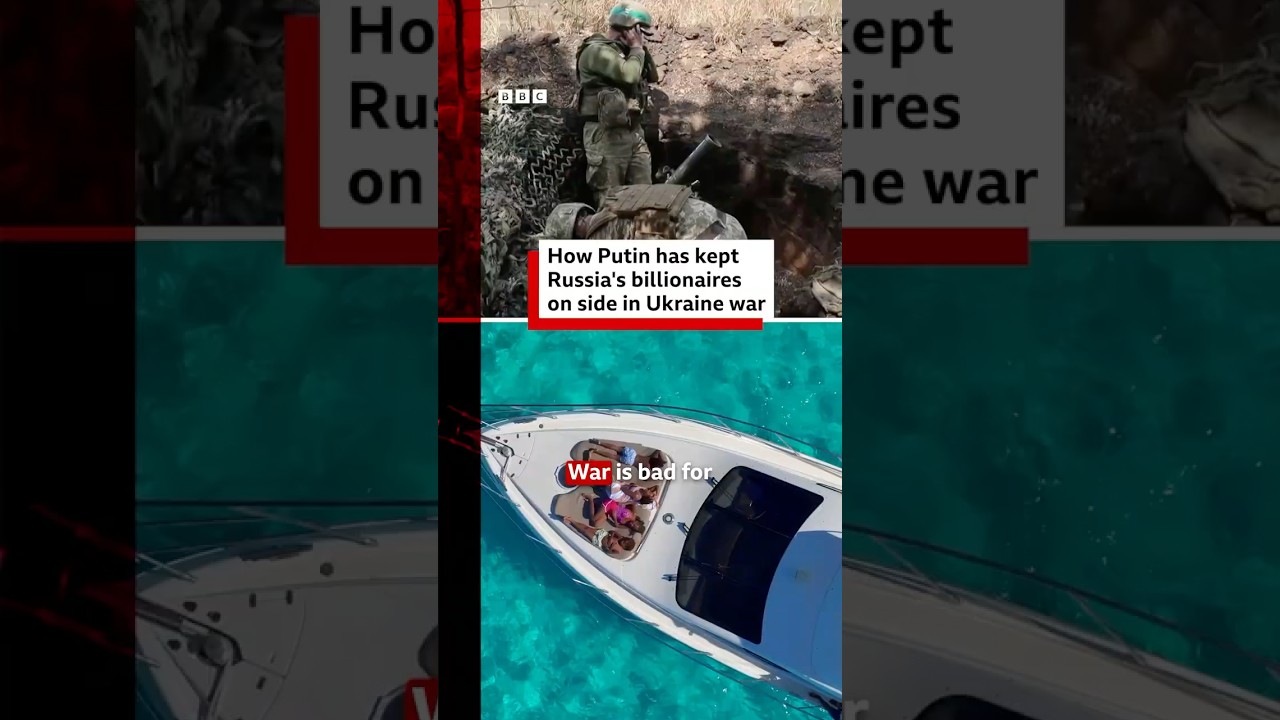
Initially, the war led to a dramatic loss of wealth for many of Russia’s richest individuals. Imposing Western sanctions, crippled access to international markets, and the depreciation of the ruble combined to wipe out over a quarter of their fortunes. Luxurious assets such as mega yachts, private jets, and lavish villas, often scattered across opulent locations worldwide, became liabilities rather than symbols of affluence. In the minds of many in Ukraine and some in Western nations, these elites should have turned against Vladimir Putin. After all, his ambitions directly affected their wealth.
However, this anticipated backlash failed to materialize on any large scale. Why? The reasons are multifaceted. Some oligarchs, mindful of their interests, genuinely support the war, perceiving it as a means to expand and solidify their influence. Moreover, certain members of this elite class have profited significantly from the military contracts that abound in the current climate. As Western firms exited the Russian market, they left behind a vacuum that savvy billionaires rushed to fill. Consequently, the number of billionaires in Russia soared, with 57 new names gracing the Forbes list since the inception of the full-scale invasion. Today, the total stands at an unprecedented 140.
Putin’s government effectively ensures that dissent is a high-stakes affair. Many billionaires have learned that speaking out against the regime carries severe repercussions. Historical precedents illustrate this reality. Mikhail Khodorkovsky, once Russia’s richest man, spent ten years imprisoned for his political activism. His case remains a cautionary tale, reminding others of the potential costs of opposing the state.
More recently, the fate of Dmitry Allegianov serves as another chilling example. After publicly criticizing the war on social media, he witnessed the loss of nearly $9 billion in assets and was compelled to flee Russia. Such instances make it abundantly clear: silence is often the cost of survival in Putin’s Russia.
The emboldened elite presents a troubling scenario for Ukraine and its Western allies. The narrative that the war would fracture the cohesion between the regime and its wealthy supporters has proven overly simplistic. Instead of shifting loyalties, the conflict has often solidified existing power dynamics, allowing a new generation of tycoons to emerge in a highly opportunistic environment.
For Ukraine, this development bears dire implications. The struggles are not confined to the battlefield; they extend into economic realms where the lines between wealth and power are inextricably linked. The current landscape signifies a troubling entrenchment of interests that continues to support the ongoing conflict, contradicting the hope that economic losses would spur dissent.
Additionally, the influx of new billionaires underscores a broader shift in the Russian economy—one that moves towards greater self-reliance in the face of isolation. This evolution presents challenges for those seeking to leverage economic pressures to demoralize Putin’s supporters.
What does all of this mean for the future? The narrative of war as a vehicle for discontent among the elite is proving misleading. The intertwining of military ambitions and economic gain creates a feedback loop that emboldens Putin’s stance. As the war unfolds, the implications extend far beyond immediate conflict zones, highlighting a stark reality: in the capitalist landscape of contemporary Russia, loyalty may come with profit, complicating efforts for change.
In essence, the paradox of Russia’s billionaires reveals that war may not simply be bad for business—at least not for everyone. While tragedy reigns in Ukraine, a new class of wealthy elites is thriving amid chaos, deeply entrenching the status quo and undermining hopes for a peaceful resolution.