Incident at Town Hall: A Reflection on Political Safety and Rhetoric
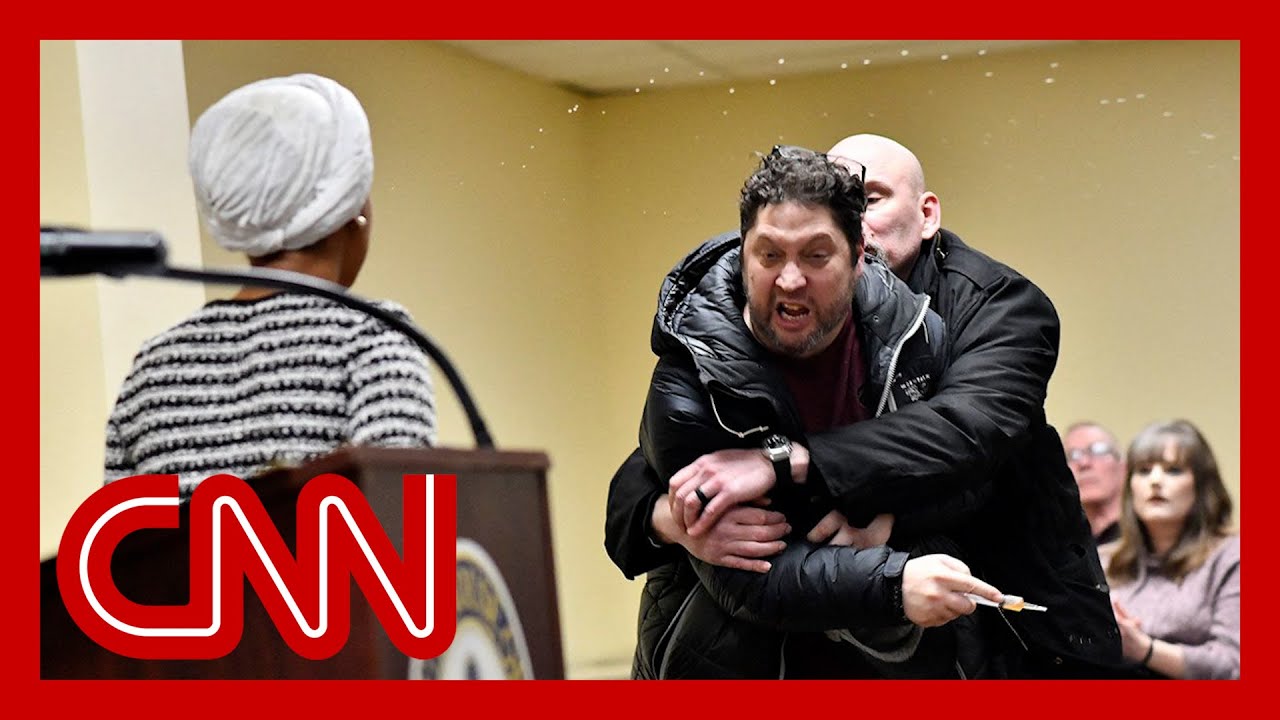
In a shocking turn of events during a recent town hall meeting in Minneapolis, Congresswoman Ilhan Omar found herself confronted by an individual who sprayed her with an unknown substance from a syringe. The attack occurred shortly after Omar called on Department of Homeland Security Secretary Kristi Noem to resign. Eyewitness Sara Sidner from CNN described a scene marked by confusion and fear as attendees struggled to comprehend the unfolding situation.
As the attacker approached, holding what appeared to be a syringe filled with a vinegary liquid, security personnel quickly intervened. They tackled him to the ground and restrained him, ensuring he would not pose any further threat. In the face of this volatile moment, Omar remained resolute. Despite the commotion, she insisted on continuing her address to the crowd, reaffirming her commitment to serve her constituents and not be intimidated.
The congresswoman, who has been the target of numerous threats throughout her career, displayed a remarkable fortitude. After the incident, she confirmed to reporters that she felt compelled to stand her ground: “I’ve survived the war, and I’m definitely going to survive intimidation.” Such statements not only showcase her personal strength but also reflect a broader resilience seen among public figures grappling with increasing threats.
This attack has raised significant concerns about the safety of elected officials and the political climate in the United States. While Omar’s experience was alarming, it was not isolated; it underscores a trend where political rhetoric has contributed to an environment of hostility. The attack on Omar drew mixed reactions from political figures and commentators. Some Republicans condemned the action unequivocally, emphasizing that disagreements should never escalate to violence. Mike Lawler called the incident "unacceptable," while Nancy Mace expressed her deep disturbance over what had transpired.
On the other hand, former President Donald Trump suggested, without any evidence, that the incident may have been staged, revealing a troubling level of disregard for the seriousness of the attack. His comments were indicative of a broader cultural malaise where violence against public officials has been trivialized or politicized. Unfortunately, past rhetoric from Trump and others has contributed to a toxic political environment, where aggression is normalizing in public discourse.
The repercussions of this incident extend beyond Omar; they touch on the foundational principles of democracy. Each attack against an elected official is an affront not only to them personally but also to the democratic process itself. Political representatives should not have to face intimidation or violence while engaging with their communities. As political strategist Antoine Seawright pointed out, there seems to be a troubling acceptance among certain groups that celebrates or justifies such violence, particularly against visible figures like Omar and Alexandria Ocasio-Cortez. This sentiment demands urgent reflection and response from all levels of leadership.
Conversations surrounding the attack also highlight the necessity for systemic change in how political discourse is conducted. Leaders, especially those at the highest levels, must strive for a tone that promotes respect and civility. In the wake of threats and violence, it is imperative for all political figures, regardless of affiliation, to unite in condemning such actions. The attack on Omar serves as a stark reminder that words carry weight—especially when uttered by those in influential positions.
As the country grapples with the ramifications of this incident, one can only hope for a future where political engagement is marked by safety, respect, and constructive dialogue. The need for a comprehensive investigation into the attack is paramount, but it is equally essential for society to come together to foster an environment free of fear, where elected representatives can advocate for their constituents without the shadow of violence looming over them.
This incident was a wake-up call. It challenges us all to contemplate the state of our political culture and the need for a collective commitment to uphold democratic values while ensuring the safety of those who represent us. As political tensions continue to run high, may this moment ultimately lead to greater accountability and compassion within the political arena.