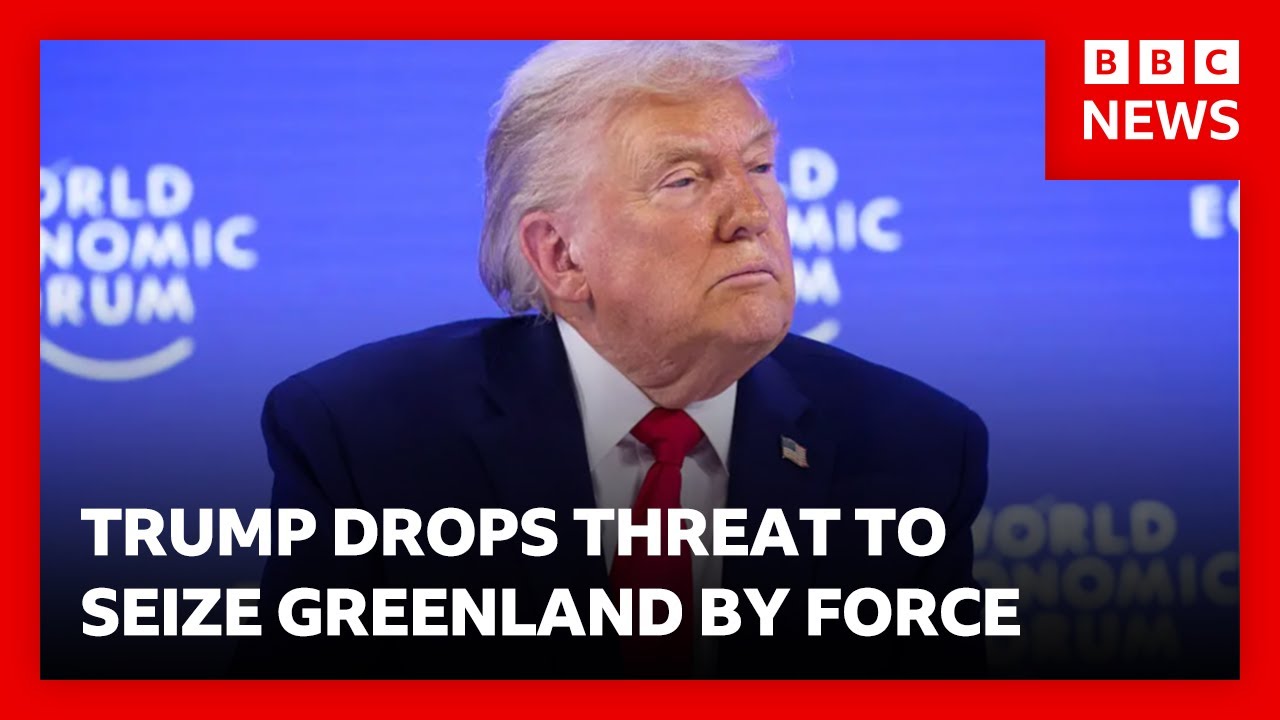
In a rather tumultuous week for international relations, U.S. President Donald Trump made waves during his recent address at the World Economic Forum in Davos, Switzerland. Following his earlier remarks suggesting the acquisition of Greenland through military force and the imposition of tariffs on European allies, he has stepped back from both positions. Instead, after discussions with NATO’s Secretary General, Trump announced a semblance of a deal concerning Greenland, describing it as a long-term framework beneficial for both parties.
In his speech, Trump didn’t shy away from boasting about the American economy while also targeting various world leaders and critiquing Europe’s handling of immigration and energy policies. The atmosphere was tense as NATO representatives gathered, with many openly mocking Trump’s initial provocation regarding Greenland. Yet, there was a momentary sigh of relief shared amongst his critics when he clarified that military action would not be considered. “I don’t want to use force. I won’t use force,” he asserted, a statement that served as a counter to his prior stance.
The aftermath of this shift was curious. Trump, while still expressing an emphatic desire for the U.S. to control Greenland—citing its strategic geographic significance—alleged a deal had been struck that satisfied his needs. “It’s the ultimate long-term deal,” he stated cryptically, hinting at potential security and mineral interests without clarifying what the arrangement entailed. A subsequent inquiry into whether this deal implied U.S. ownership of Greenland was met with ambiguity.
Initially, tensions had run high, exemplified by uneasy interactions with global leaders who felt blindsided by Trump’s earlier assertions. However, during his address, he attempted a diplomatic touch, noting the importance of NATO and reiterating that allies should appreciate American support. “Canada gets a lot of freebies from us, by the way. They should be grateful,” he remarked, a statement showcasing his stance on perceived imbalances in international relations.
While Trump’s remarks included a range of issues, from historical grievances regarding World War II support for Greenland to distrust in NATO allies, they painted a picture of a president at a crossroads: caught between bombastic rhetoric and the necessity of diplomatic relations. He cited a historical context in which the U.S. played a pivotal role in Greenland’s defense against adversaries during the war, framing these actions as a basis for his claims over the territory.
Reactions to Trump’s speech were mixed. Some European diplomats expressed relief at avoiding an escalation of hostilities, albeit with lingering concerns about his unpredictability. The gravity of his threats had not gone unnoticed, particularly his open discussion of tariffs against nations that opposed his Greenland ambitions. However, admiration for his apparent diplomatic retreat was tempered by skepticism about his sincerity and intentions moving forward.
The responses from key Republican figures were telling, indicating a schism in attitudes toward Trump’s approach. Senator Tom Tillis, for instance, openly expressed disapproval of the tone and nature of Trump’s Greenland rhetoric, suggesting an evident divide among GOP leaders on international matters.
Ultimately, Trump’s address, characterized by a blend of bravado and concession, resonates in a larger context of shifting global alliances. European leaders, now more cautious, seem to perceive the necessity of self-reliance in defense and diplomatic engagements, likely motivated by the recent Greenland episode. The episode serves as a reminder of the fragility of international relationships, especially when grounded in the unpredictable nature of Trump’s presidency.
As the political landscape continues to evolve, international actors are now contemplating the implications of Trump’s announcements, weighing both the opportunities and challenges that lie ahead in their dealings with the United States. The future remains uncertain; however, one thing is clear—this saga around Greenland has shifted perceptions and may alter the course of U.S.-European relations going forward.