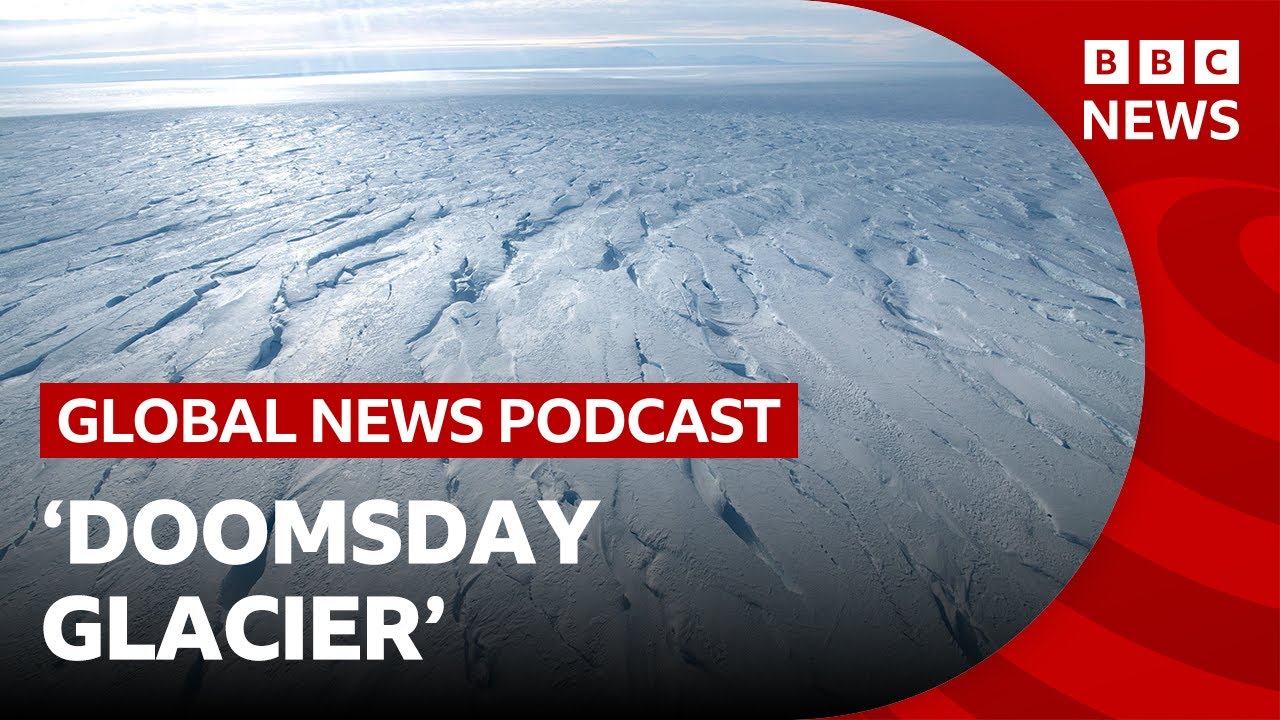
Exploring the Thwaites Glacier: A Key to Understanding Climate Change
In a remote corner of our planet lies one of the most critical glaciers affecting our future: the Thwaites Glacier in West Antarctica. This monumental body of ice is not just a stunning natural wonder; it plays a pivotal role in understanding rising sea levels due to climate change. Recently, a collaboration between British and South Korean scientists aims to shed light on the dynamics of Thwaites Glacier, a project that holds significant implications for global climate science.
The Thwaites Glacier, often referred to as the "doomsday glacier," is one of the largest and fastest-changing glaciers in the world. Situated in a unique geographical basin below sea level, Thwaites stretches across an area roughly the size of Great Britain and holds enough frozen water to raise global sea levels by more than three meters if it were to melt entirely. As Justin Rola, the BBC’s climate editor, emphasized, the ramifications of even a fraction of that melting could lead to catastrophic flooding in low-lying cities worldwide.
The glacier acts as a keystone, a cork that prevents a network of other glaciers in West Antarctica from flowing into the ocean. Should Thwaites continue to erode, the consequences could be dire. With many of our urban infrastructures located in vulnerable coastal areas, a rise of three meters in sea level poses an existential threat. The science is not just abstract; it translates directly into challenges for cities like New York.
What makes this research critical is not merely its focus on the glacier’s physical dimensions but its broader aim: to understand the processes behind its rapid changes. Scientists are drilling deep into the ice to reach the grounding line, the pivotal point where the glacier meets the seabed. This interaction is crucial, as warm ocean water seeps in from below, melting the ice and making it more susceptible to collapse. By analyzing sediment cores and monitoring melting patterns, researchers hope to answer pressing questions about the glacier’s future behavior. Will it refreeze? Or is it destined to continue melting away? These insights are vital for planning effective responses to foreseeable sea-level rises.
For Rola, who had the rare opportunity to visit Thwaites, the experience was transformative. He was among a small group of people to witness the glacier firsthand, describing the landscape as both alien and breathtaking. Despite the harsh conditions, the collaborative effort among scientists represents a beacon of hope. It speaks to humanity’s ability to confront daunting challenges through shared knowledge and determination.
The expedition requires immense preparation and dedication. Scientists cope not just with Arctic temperatures but also with the practicalities of accessing a location considered one of the most inhospitable on Earth. The rigorous gear, the journey by aircraft over vast expanses of ice, and the need to gather data under extreme conditions all reflect the commitment necessary for this vital research.
Interestingly, while the melting of the Thwaites Glacier is alarming, it instills a sense of urgency that could galvanize action. Climate change is often perceived as a distant threat, but as Rola pointed out, the process of warming is akin to turning up the thermostat—a gradual change that can have catastrophic long-term effects. Understanding the glacier’s melting timeline gives humanity a chance to prepare and adapt, offering strategies for mitigating future damage.
As the research unfolds, early findings indicate that the glacier is indeed melting faster than previously thought. Increased warm water intrusion is exacerbating the situation, leading to greater concerns for the rapidity of sea-level rise. This knowledge is crucial. While the timeline of several centuries may feel distant, it emphasizes humanity’s responsibility to prepare for the future.
This collaborative global effort should be a source of optimism. The investigation into Thwaites glacier embodies a collective human spirit, striving to comprehend and tackle pressing environmental issues. The message is clear: while the challenges are monumental, the ability to come together and seek solutions offers hope. As Rola concludes, our capacity for united action can turn the tide against climate change, driving us toward a more sustainable future.
The Thwaites Glacier project reminds us that understanding our planet is a shared responsibility, and that through concerted efforts, we may yet chart a course toward resilience in the face of climate change.