Navigating Complexities at Davos: Trump’s Greenland Comments and Their Implications
The World Economic Forum in Davos has always been a pivotal gathering, where global leaders converge to discuss challenges and opportunities shaping the world. This year, President Trump’s remarks on Greenland have generated significant discussion, raising questions about U.S. foreign policy and international relations.
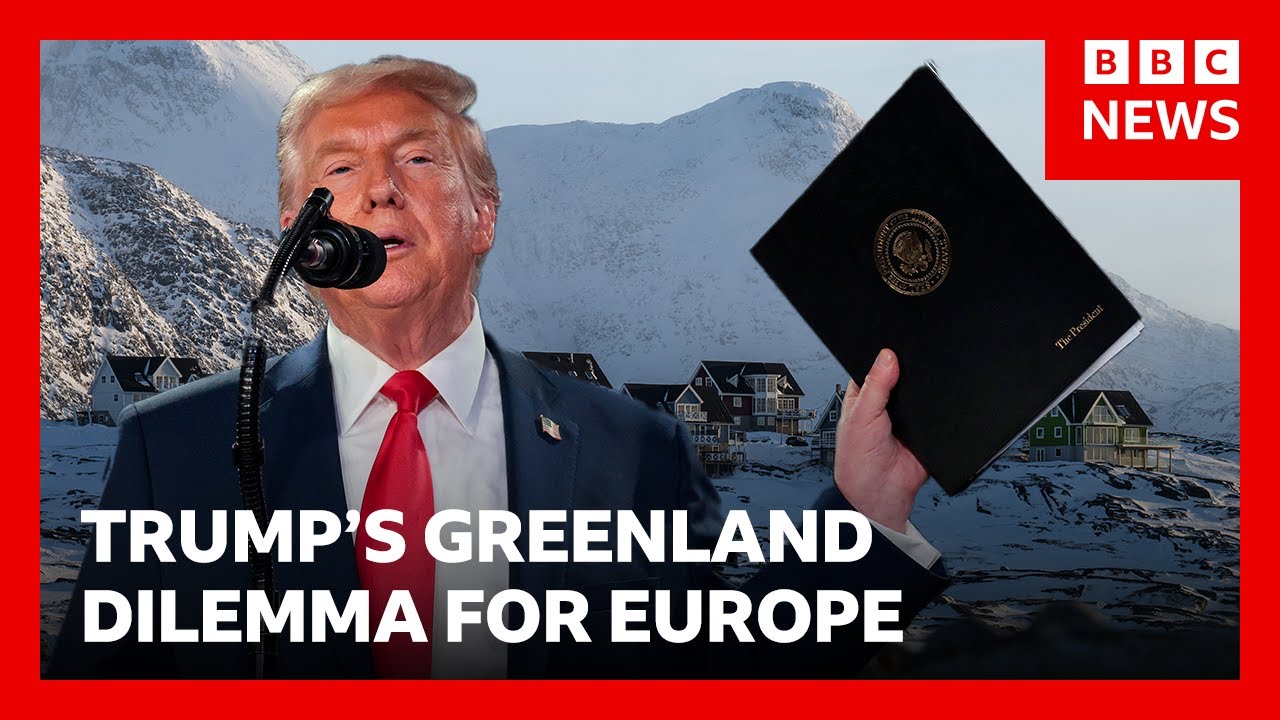
Trump’s declaration that he would not use force to acquire Greenland was met with mixed reactions. He praised the Danish leadership while simultaneously asserting that only the United States could adequately defend the strategically significant Arctic territory. This statement comes in the context of heightened tensions regarding missile defense and international security, highlighting the intersection of geopolitics and environmental concerns.
The international community had previously reacted with skepticism. European leaders perceived Trump’s interest in Greenland as a threat to the existing world order. His rhetoric, including remarks about the potential use of "excessive strength," forced many to reconsider the implications of U.S. intentions toward its NATO ally. Despite his reassurances, the optics of a superpower casting its gaze on a small territory fueled discontent in diplomatic circles.
Security correspondent Frank Gardner emphasized the surreal nature of having to headline that the United States would not invade a NATO ally. Indeed, Europe breathed a qualified sigh of relief; yet, this relief was shadowed by Trump’s threats of economic tariffs as a method of exerting pressure. Gardner noted, “His speech contained a predictable mixture of truths and untruths.” While he was right in asserting the U.S.’s overwhelming military capability, he diminished the contributions of NATO allies, particularly Denmark—who tragically lost 44 soldiers during the Afghanistan conflict.
Trump’s comments led to broader concerns about his stance towards NATO, particularly when he questioned its contributions to U.S. interests. This was viewed as an insult to Denmark, whose support during the war on terror exemplifies the alliance’s commitment. Such remarks reveal a chilling undercurrent in transatlantic relations and illustrate the precarious balance of power within NATO.
The world might hope that Trump’s fixation on Greenland will wane, just like previous obsessions regarding other regions. However, his statements indicate a persistent interest that may not diminish easily. Many analysts are concerned that his focus on Greenland could lead to further international friction rather than engagement.
European leaders are now grappling with how best to respond to Trump’s provocative declarations. While flattery has proven ineffective, a tougher stance may also be risky. Calls for mutual economic sanctions are emerging as a potential avenue, but they risk igniting a damaging trade war, which benefits no one. Economically, both the U.S. and Europe require each other, creating a complex web of dependencies that complicate any potential retaliation.
Moreover, the issue is compounded by the necessity of U.S. military support. European nations, including the U.K., rely heavily on American intelligence and military capabilities, which underscores the importance of maintaining a cooperative relationship. The potential consequences of losing that support—for instance, the servicing of Britain’s Trident nuclear program—could be dire.
Gardner aptly pointed out this duality: the need for European leaders to maintain firmness while also recognizing the potential repercussions of pushing back against Trump’s rhetoric. As the European political landscape becomes increasingly intricate, leaders must carefully navigate these precarious dynamics.
In conclusion, Trump’s assertions at Davos reflect a broader narrative about American exceptionalism and the evolving nature of international alliances. As nations assess their paths forward, it becomes clear that maintaining robust dialogue will be essential for preventing misunderstandings and fostering cooperation. The true challenge lies not only in international diplomacy, but also in finding common ground amid an increasingly fragmented world.