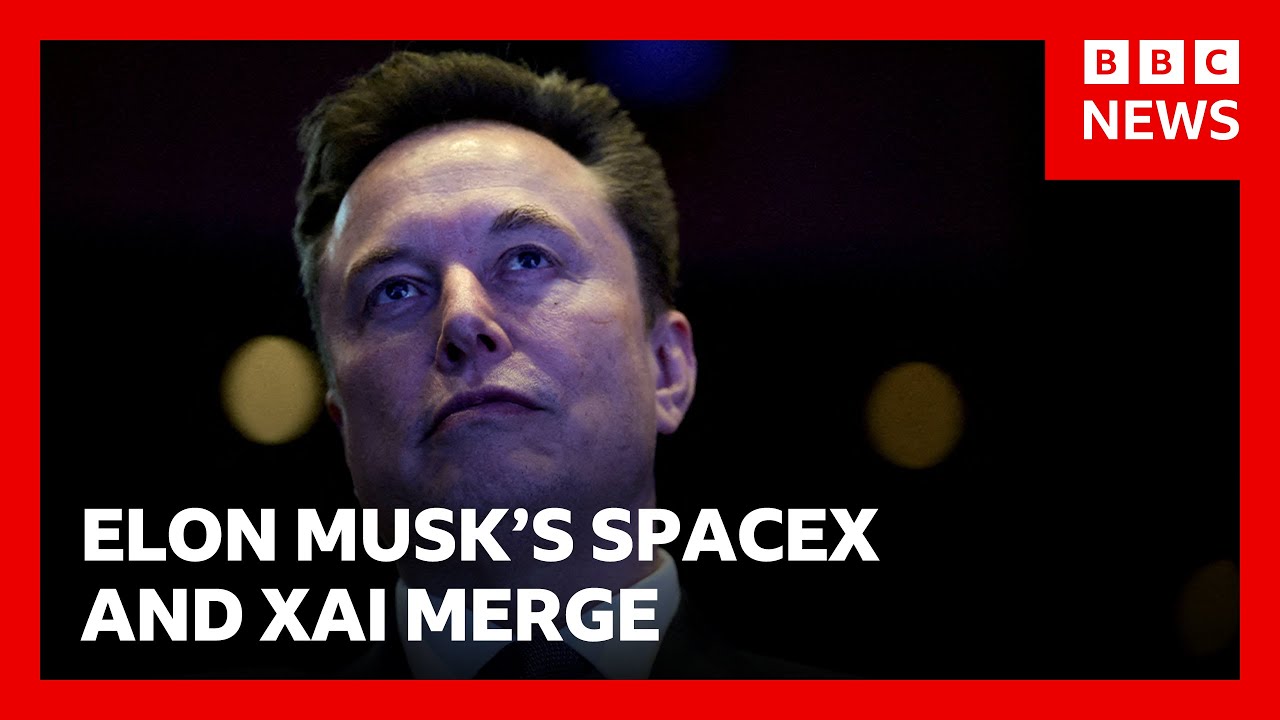
Elon Musk’s Monumental Merger: SpaceX Acquires X AI for $1.25 Trillion
In a groundbreaking development that has sent shockwaves through both the tech and investment communities, Elon Musk’s SpaceX has announced its acquisition of his artificial intelligence venture, X AI, in a staggering deal valued at $1.25 trillion. This monumental merger not only sets the stage for a blockbuster initial public offering (IPO) slated for this summer but also positions Musk on the cusp of becoming a trillionaire. However, as with any major financial maneuver, questions abound regarding the merger’s ramifications and feasibility, especially in the realms of finance and technology.
Investment advisor Colleen McHugh emphasizes that the investor interest surrounding this IPO will be immense. “There’s been significant discussion about when SpaceX would go public,” she notes, highlighting an ongoing trend where innovative companies remain private for extended periods. This merger transcends the traditional rocket company narrative, amalgamating space exploration, artificial intelligence, and communications into a singular entity. The excitement is palpable, but McHugh also raises a cautionary flag regarding scrutiny over the financial health of the new enterprise. X AI has been “burning cash,” which could lead investors to question whether SpaceX will act as a financial buoy for X AI’s operations.
The juxtaposition of soaring investor interest against a backdrop of financial scrutiny creates a complex landscape. On one hand, this merger represents an exciting horizon for investors who have been eager to engage with pioneering technologies. On the other hand, McHugh posits that investors may probe into the sustainability of funding X AI’s endeavors through SpaceX, potentially complicating the financial narrative.
While financial mechanisms are crucial, the technological implications of this merger are equally captivating. Tech writer Chris Stokel-Walker points to an ambition shared by Musk and his companies: the establishment of data centers in space. This aim is particularly pressing, given the constraints of physical space and resources on Earth. The need for expansive data centers is underscored by Musk’s recent announcement about Tesla’s strategic shift to humanoid robots—referred to as "Optimus bots"—which will likely require vast quantities of data processing.
However, the timeline for realizing Musk’s ambitions remains ambiguous. He claims that the infrastructure will be operational in the next few years, yet Musk’s historical propensity for optimistic projections raises questions about the actual feasibility of such timelines. This uncertainty is compounded by logistical challenges associated with launching and maintaining data centers in space. Stokel-Walker argues that Musk’s unique position—through SpaceX’s capabilities in rocket launches—provides him with an edge that few others possess.
Nonetheless, let’s not overlook the pressing questions of space governance and ownership. As Musk outlines grand plans to deploy numerous satellites and, potentially, floating data centers, the congestion of orbiting vehicles comes into focus. Stokel-Walker cautions that overcrowding in space could pave the way for monopolistic control over critical infrastructure that Musk envisions as pivotal for the future. Such considerations should be part of the dialogue moving forward, as we grapple with the intersection of technological innovation and ethical governance.
In the face of unprecedented innovation, Elon Musk’s merger of SpaceX and X AI is both a thrilling and complicated venture. The potential for revolutionizing not only how we think about AI but also the very landscape of data management is immense. Yet, the financial scrutiny, operational expectations, and ethical implications warrant careful examination.
As we await the summer IPO, the world is left to ponder: Can Musk deliver on his audacious dreams? Will this merger mark a new chapter in technological advancement or merely serve as a cautionary tale of overwhelming ambition? Only time will tell, but one thing is certain—this is a moment that warrants close watching.