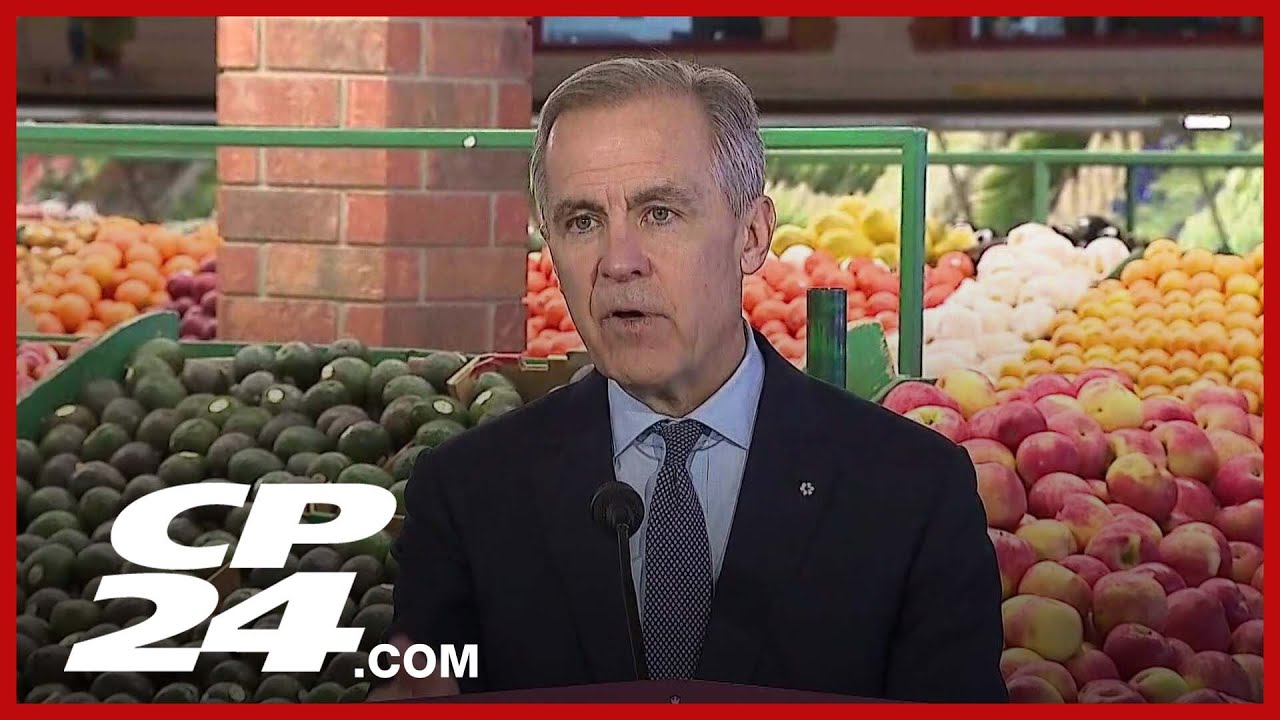
Prime Minister Mark Carney’s Economic Strategy: A Response to Rising Costs in Canada
This morning, Prime Minister Mark Carney made a significant announcement regarding the Canadian government’s ongoing efforts to address the pressing economic challenges faced by citizens. His remarks focused on initiatives designed to alleviate financial pressures on households, particularly as inflation continues to affect daily living expenses.
A cornerstone of Carney’s message was the multi-faceted approach to infrastructure improvements, vital for enhancing local communities across Canada. "We’re starting to fundamentally transform our economy," he stated, revealing a robust global investment strategy aimed at generating one trillion dollars over the next five years. This initiative encompasses essential sectors—hospitals, roads, bridges, and public transit systems—all aimed at fostering a resilient and independent Canada.
Since August, Carney noted, Canada has experienced the creation of approximately 190,000 net jobs, outperforming the United States during the same period. Such statistics reflect not only a recovery trajectory but also underscore the strength of the administration’s economic planning. Yet, he acknowledged the immediate need for assistance, particularly as many Canadians continue to grapple with the pressures of rising costs for necessities.
To combat these challenges, the Prime Minister outlined several tax relief measures implemented by his government. The cancellation of the consumer carbon tax has already resulted in lower gas prices, complementing tax cuts for middle-class families and first-time home buyers. In the eastern provinces, toll reductions and fare cuts have also made a tangible difference. As Carney described it, the new automatic federal benefits system aims to assist millions of lower-income Canadians in accessing entitlements such as the disability tax credit.
Beyond immediate relief, these initiatives align with a broader vision for sustainable economic growth. The introduction of affordable housing projects through the Build Canada Homes initiative seeks to tackle structural issues in the housing market, while a recent partnership with China promises to increase the availability of affordable electric vehicles across the country.
Carney emphasized the importance of equitable access to essential services in the upcoming 2025 budget, highlighting daycare and medical insurance as critical components of this strategy. Indeed, the government aims to protect social safety nets that contribute to a fairer, more just society.
Amid these positive developments, however, the Prime Minister did not shy away from addressing the persisting economic concerns. Although inflationary pressures are reportedly easing—with consumer prices now within the Bank of Canada’s target range—everyday essentials remain burdensome for many. Data revealed that costs for groceries have surged, exacerbated by global supply chain disruptions and geopolitical tensions, leading to significant increases in the prices of items like ground beef and orange juice.
In light of these issues, Carney recently convened cabinet discussions focused on immediate solutions for food insecurity. Conversations included insights from leaders in the field, such as CEO Kirsten Beardsley of Food Banks Canada. The goal is clear: to enact measures that effectively support Canadian families while addressing the underlying causes of food scarcity.
One of the most notable initiatives stemming from these discussions is the introduction of the new Canada’s Groceries and Essentials Benefit. This program aims to directly assist over 12 million Canadians by increasing the existing GST credit by 25% for five years, along with a one-time payment equivalent to half of the GST credit this year. Carney illustrated the potential impact of this initiative: a family of four currently receiving about $1,100 annually through the GST credit could see this amount significantly enhanced.
As he concluded his announcement, Prime Minister Mark Carney reaffirmed the government’s commitment to fostering an economy that serves all Canadians. "We look out for each other," he stated, encapsulating the essence of his administration’s objectives. The measures unveiled today not only provide immediate financial relief but also pave the way for a more sustainable economic future, reinforcing the belief that a thriving economy must be inclusive and equitable.
In the weeks ahead, the government will continue to refine these strategies, ensuring that all Canadians have access to the resources they need to thrive in a rapidly changing economic landscape.