U.S. Mission in Venezuela: A High-Risk Operation to Capture President Maduro
In an operation shrouded in secrecy and fraught with peril, U.S. forces launched a mission to capture Venezuelan President Nicolás Maduro. Insights from recent analysis by CNN reveal that the operation’s success hinged on a mere two minutes, during which American helicopters, soaring ghostlike against the backdrop of a tumultuous sky, became sitting ducks. This high-stakes endeavor took place amidst a heavily fortified compound, one where Maduro had taken refuge.
Eyewitness videos tell the story of this brazen incursion. Two types of helicopters—Chinooks, known for troop transport, and Blackhawks, recognized for their attack capability—were deployed from the south, directly into the lion’s den. Almost instantaneously, a barrage of anti-aircraft fire erupted from Maduro’s defenses, underscoring the volatility of the situation. The tension escalated further as General Dan Kaine later noted the “multiple self-defense engagements” that left at least 100 people dead, according to Venezuelan authorities. Images from the aftermath depict devastation: blood-stained ground littered with debris, scorched patches of earth, and mangled vehicles, painting a grim picture of the operation’s toll.
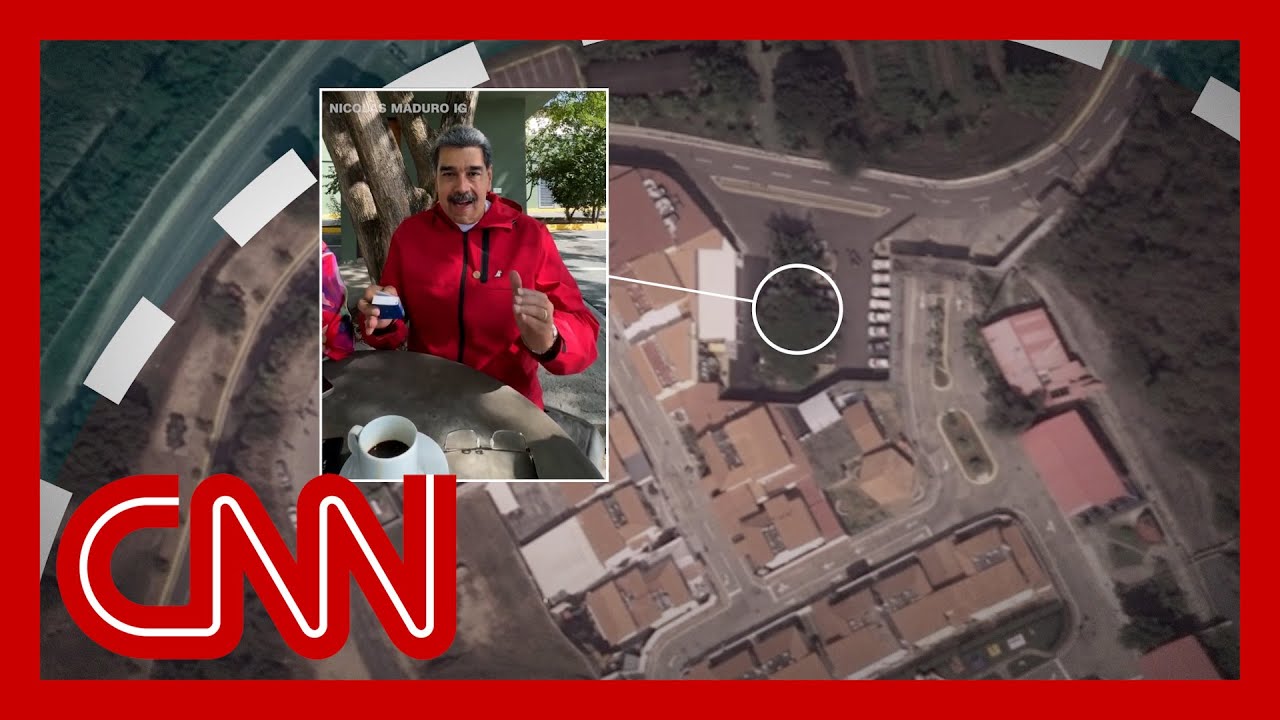
The critical moments of the mission, captured in the videos, reveal the extreme risks faced by U.S. forces. The initial landing of the Chinook was met with palpable tension—this was their most vulnerable moment. Soon after, as the Chinooks lifted off, they were closely followed by another, exposing the inherent danger of their ascent. Analysis of the terrain highlighted identifiable features, allowing experts to pinpoint the helicopters’ take-off locations within the Fortuna military complex, one of Venezuela’s largest and most secure installations.
Subsequent satellite imagery taken the day after the operation depicted only minor damage to roofs in the area—too minimal to suggest a direct assault but hinting at the presence of hovering helicopters. Prior to the conflict, the exact location of Maduro’s residence within Fortuna had remained a closely guarded secret. However, through meticulous investigation, CNN uncovered evidence of where Maduro was likely situated that fateful night.
Archaeological traces of past public appearances confirmed the likelihood that he was inside a particular building in Fortuna, which had undergone substantial renovations prior to the operation. Just months earlier, videos showed him casually enjoying coffee outdoors at the same site. As the Chinooks departed, combat helicopters circled overhead, providing aerial cover to protect against Venezuelan fire.
Expert analysis from Wes Bryant, a former member of the U.S. Air Force’s elite special warfare team, emphasizes the operation’s strategic brilliance. The landing within the compound was a high-stakes gamble. Speed and surprise were critical—the U.S. forces aimed for efficiency, to get in and out swiftly. Bryant speculated that possibly only one or two helicopters engaged in the landing, leaving room for the unsettling possibility that Maduro might have been on board one of them.
Bryant expressed the operation’s element of luck, acknowledging that the seamless execution was unlikely to recur. Given the risks involved, even the smallest variation—be it timing, positioning, or hostile response—could have altered the outcome dramatically. The intricacies involved in such military engagements underscore the unpredictable nature of high-stakes missions.
As Maduro awaits trial, the implications of this mission are profound. They underscore the intertwining of international relations and military tactics, both of which often tread a fine line between diplomacy and confrontation. The involvement of the U.S. in capturing a head of state raises questions about sovereignty, ethics, and the broader geopolitical landscape.
In this extraordinary and controversial situation, Maduro’s fate now rests in the hands of American authorities, encapsulating a narrative filled with tension, consequence, and the ever-present specter of risk in international politics. The unfolding story will no doubt resonate for years to come as observers analyze the ramifications of this unprecedented operation.