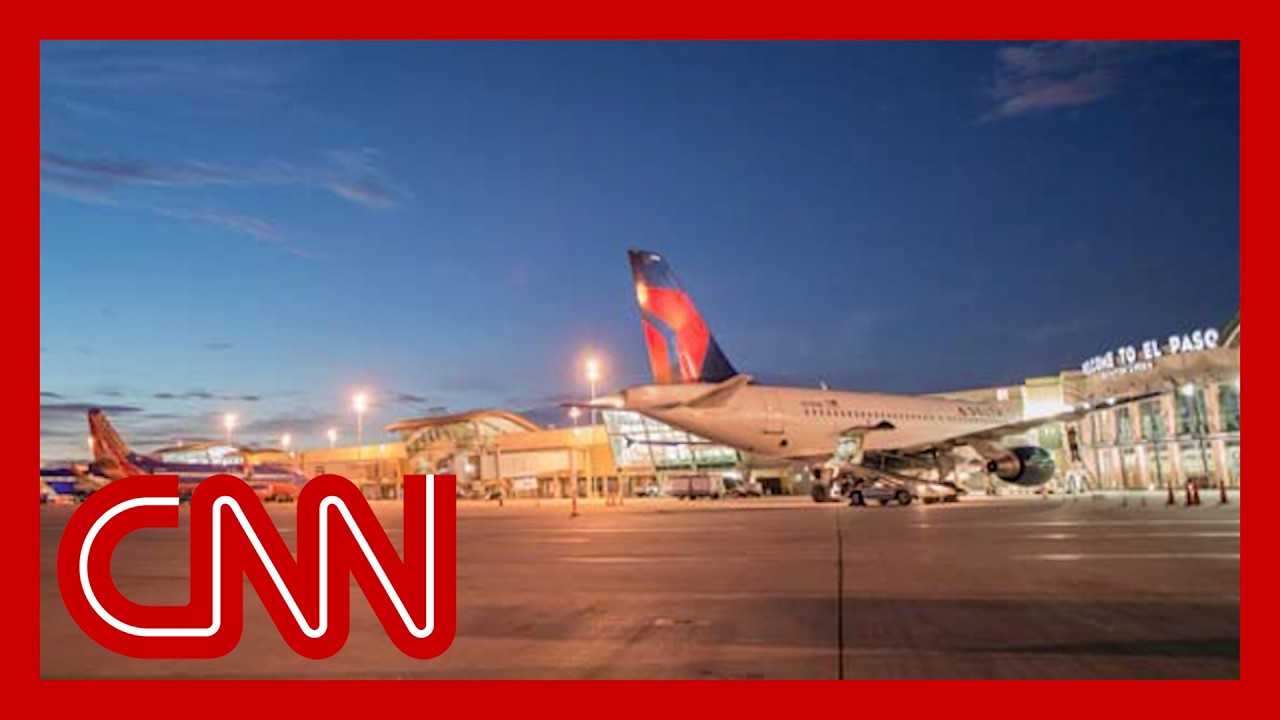
Unprecedented Airspace Closure Over El Paso Raises Questions and Concerns
In an unusual and concerning move, El Paso, Texas, finds itself under a ten-day airspace closure initiated by the Federal Aviation Administration (FAA). Citing "special security reasons," this decision has grounded all flights to and from El Paso International Airport, including both commercial and private air travel. The closure has left many, including aviation experts and local residents, scrambling for answers.
This is not an ordinary announcement; it draws parallels to post-September 11 airspace restrictions, a period marked by heightened national security measures. Aviation analyst Mary Schiavo emphasizes that the seriousness of this action is underscored by the absence of exceptions—even for medical evacuations. It signifies an immediate and significant threat perceived by authorities, something that should not be taken lightly.
The implications of this closure extend beyond the airspace immediately surrounding El Paso. According to experts, the jurisdiction includes parts of southern New Mexico, as well as military airspace. This far-reaching impact raises questions about the nature and validity of the threat. While imagery of military jets and law enforcement helicopters vanishes from the skies, the rationale behind these measures remains vague. Skewed by public speculation, many are concerned about what might lie behind this mystery.
This situation has evoked a variety of qualified theories. Schiavo notes that closures like this typically arise only when there is credible intelligence of an imminent threat that could jeopardize air traffic or pose risks to individuals on the ground. Various potential reasons for this security alert include military exercises, law enforcement actions, or critical foreign intelligence suggesting an elevated risk.
Adding to the situation’s complexity is the language used in FAA’s advisory, particularly concerning the potential use of “deadly force” against airborne aircraft that threaten security. While this could evoke alarm, Schiavo reassures that this phrasing is standard protocol in extreme circumstances. It serves as a serious warning, especially in cases where aircraft stray into restricted airspace.
With local officials caught unawares, the lack of communication raises additional questions. Robert Moore, founder of El Paso Matters, relayed his interaction with the FAA, where even agency personnel indicated ignorance regarding the details of the security threat. This obscurity is unsettling and suggests that the announcement came from higher levels within the governmental structure, thus limiting its circulation. The absence of clear communication points toward the gravity of the situation, as operational security likely restricts information flow.
El Paso City officials have acknowledged the disruption this will bring, not just in air passenger travel but across multiple sectors, including freight and commercial goods transportation. Businesses reliant on efficient air travel—critical in a region bordering Mexico’s industrial hub of Ciudad Juarez—will face operational hurdles that could ripple through local economies.
The mysterious nature of this airspace closure has inevitably led to speculation tying it to local events, such as the recent disappearance of a community member named Nancy Guthrie. However, experts urge caution against conflating unrelated stories, reinforcing that the FAA prioritizes safety and security and is reacting based on assessed risks rather than public narratives.
As these developments unfold, questions remain. What credible threat prompted such drastic actions? Why are local officials and the public left in the dark? While it’s natural to seek clarity amid uncertainty, residents, businesses, and aviation professionals alike are urged to exercise patience as authorities navigate this unprecedented situation. Public safety, after all, remains paramount—a truth that transcends immediate answers.
In this evolving scenario, the aviation community and residents of El Paso await further details that could shed light on the security dynamics at play. As the world has learned, precautions in one moment can shape realities in another, especially in an age where safety sometimes demands the most profound actions.