Ukrainian Combat Medic Victoria Honcharuk: A Story of Resilience Amidst War
On Thursday, a significant meeting is set to take place in Geneva. Ukraine’s chief peace negotiator will meet with U.S. envoy Steve Witoff, navigating the complexities of ongoing conflict. This engagement precedes a new round of three-way talks involving Russia, anticipated in early March. However, the long history of negotiations has yet to yield meaningful progress in ending Russia’s prolonged invasion of Ukraine.
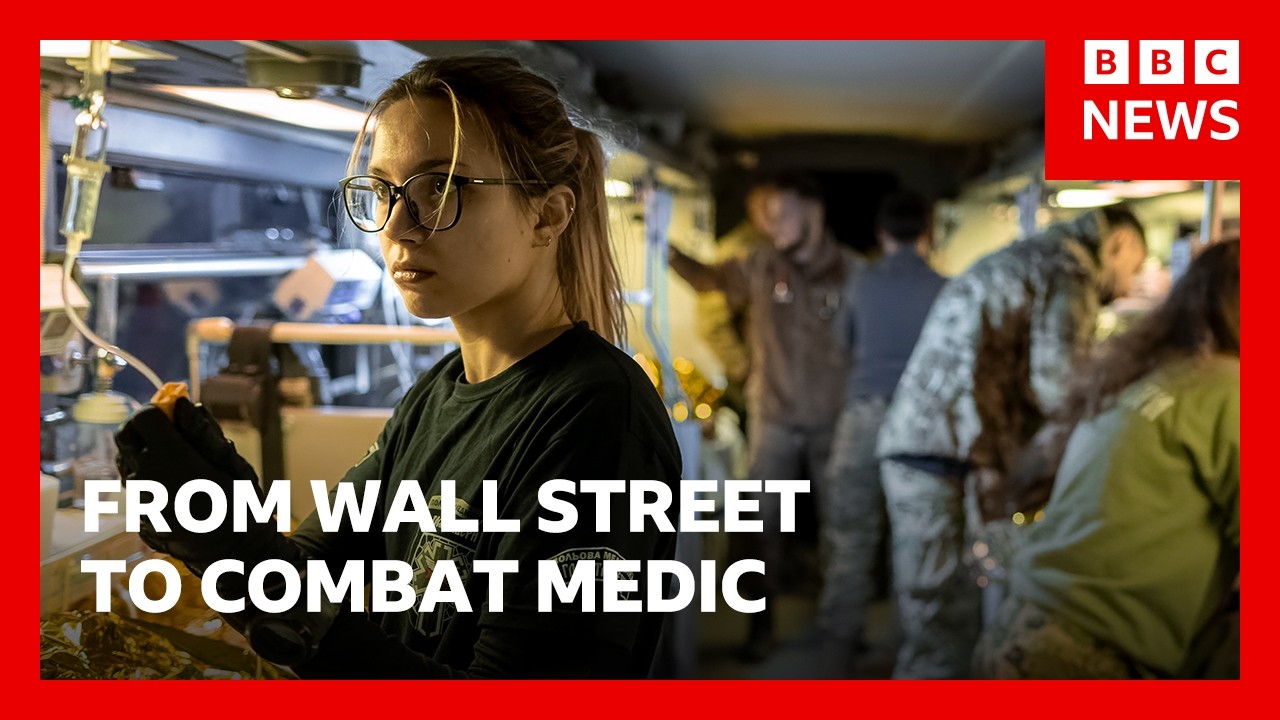
Against this geopolitical backdrop, the story of Victoria Honcharuk emerges as a poignant narrative of bravery and self-sacrifice. A former investment analyst on Wall Street, Honcharuk left her promising career at Morgan Stanley to serve as a combat medic on the front lines of the ongoing conflict, a decision that reflects deep-rooted convictions and a desire to stand up for her homeland.
Honcharuk’s journey began in a small Ukrainian town where dreams of exploration and success ignited her ambitions. Scholarships enabled her to study computer science and finance in the United States, laying the foundation for a prosperous career. Yet, when Russia launched its invasion, the gravity of the situation compelled her to act. “I couldn’t stand behind,” she shared, embodying a sense of duty towards her family and values of freedom.
The transition from Manhattan to the front lines happened rapidly. After a short training period, she found herself in high-stakes environments, often serving in dire conditions. Initially, she faced the psychological hurdles of working with trauma; the prospect of dealing with blood and injuries was daunting for someone who had lived a comfortable urban life.
“My entry into combat medicine was surprising,” Victoria recounted. For the first few weeks, casualties were relatively low, providing her an opportunity to learn under a more experienced medic’s guidance. However, this reprieve was short-lived. As conflict intensified, the horrors of warfare became starkly evident, especially when she was stationed near Bakhmut—a site of some of the most brutal fighting.
The human cost of this war is staggering. Honcharuk recounted dealing with dozens of casualties a week, a testament to the relentless violence imbued in this conflict. Many of her comrades—individuals she fought alongside—have fallen, underscoring the profound emotional toll this war inflicts on those who serve.
“What’s remarkable,” she pointed out, “is how technology is reshaping combat.” The utilization of drones has altered the dynamics of battlefield care. In the early days of the conflict, medics could efficiently reach wounded soldiers. Now, due to the extensive use of drones, evacuations must occur from increasingly distant locations, complicating timely medical responses. The once-simple logistics of transporting injured soldiers have become fraught with complexity due to the constant threat posed by aerial surveillance.
Victoria’s innovative approach, alongside her team, includes employing Unmanned Ground Vehicles (UGVs) to facilitate safer evacuations. While these advancements have markedly improved operations, they do underscore a reliance on technology that reflects the changing nature of warfare.
The profound emotional strain is further exacerbated when medics like Honcharuk receive radio calls about injured soldiers, only to be unable to assist. “That is the worst thing ever,” she stated, a sentiment that resonates deeply with anyone aware of the psychological burden faced by those in war zones.
Responding to recent comments from U.S. negotiator Steve Witoff, who described the conflict as a “silly war,” Honcharuk expressed her disbelief. “It’s not silly for us,” she asserted. “We’re fighting for our freedom, and the stakes are incredibly high.” Such dismissals of the war diminish the sacrifices being made by countless individuals.
While discussions about easing tensions continue in Geneva, Honcharuk’s message to European leaders emphasizes the urgent need for cooperation and understanding. “Let Ukrainian soldiers teach you modern military doctrine,” she urged. Ukraine’s experiences in combat and strategy should inform broader NATO efforts to strengthen European defense capabilities.
As for Honcharuk, her commitment to her country remains unwavering. Set to return to the battlefield soon, she embodies the resilience and dedication that characterize many Ukrainians in these trying times. In a world where geopolitical complexities can often overshadow individual stories, Victoria Honcharuk stands as a testament to the spirit of those fighting for freedom in Ukraine. Her narrative inspires not just a sense of urgency but a profound respect for the human spirit in the face of unfathomable adversity.