Robert De Niro Joins ‘No Kings’ Rally, Voices Strong Opposition to Trump
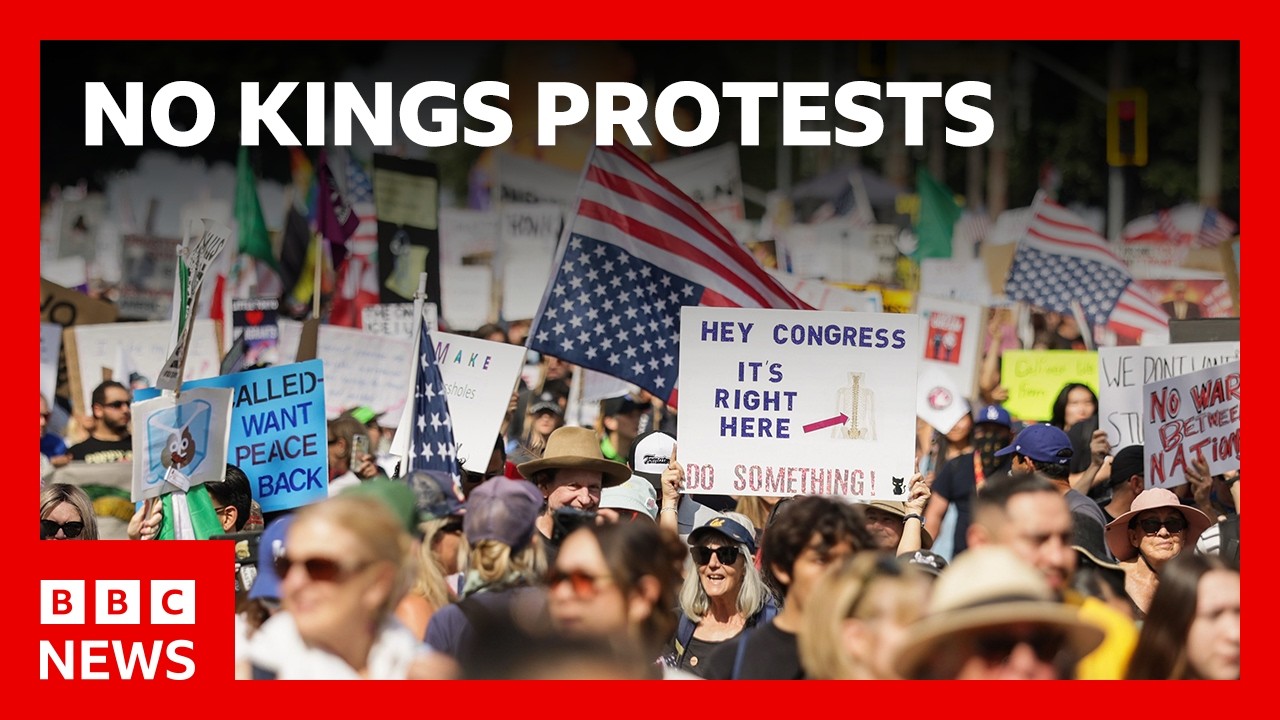
In a vibrant display of dissent against the current political landscape, Robert De Niro, one of America’s most iconic actors, made a notable appearance at the No Kings rally in New York City. Known for his fierce criticisms of President Trump, De Niro stood at Columbus Circle, the very location where he shot pivotal scenes for the iconic 1976 film Taxi Driver. This time, however, he took on a different role—one advocating for social and political change.
De Niro’s presence at the rally was not merely symbolic. As the crowd cheered and shouted in agreement, he articulated his deep-seated concerns over the direction the country has taken under the Trump administration. During an interview, he was identified as both an "actor and activist," but he downplayed the latter label. “I don’t think of myself as an activist,” he explained. “I just see what’s been going on the last ten years. We’ve got to do something.” His urgency resonated throughout the afternoon, capturing the frustrations of many present.
Critics of the rally, including a White House spokesperson, dismissed the No Kings initiative as a manifestation of what they referred to as "Trump derangement therapy." Yet, such critiques seemed trivial in the face of De Niro’s powerful rhetoric. For him, the stakes couldn’t be higher. He expressed a profound sense of alarm, stating, “We’ve got to stand up to him, to the regime, fight it with everything. We just got to fight, you know, peacefully.” He communicated a grim determination, noting that the days of hope seemed behind him. Instead, he placed emphasis on activism as an essential duty—a mandate, even.
As the chants from the crowd grew louder, the dichotomy between De Niro’s perspective and Trump’s was glaring. While many attendees embraced De Niro’s involvement as a rallying point, President Trump has consistently undermined the actor’s stature, labeling him a "second-rate actor." This public disparagement reveals a chasm between their worlds—though that chasm is perhaps highlighted by irony. Prior to his presidency, Trump reportedly named Goodfellas—another film in which De Niro delivered a standout performance—as one of his favorites. In that film, De Niro played a character that personified the very machinations of crime and power that Trump seems drawn to.
When an interviewer asked De Niro if he could share Trump’s enthusiasm for his role in Goodfellas, he retorted, “He thinks he wants to be a gangster. Who knows? He’s crazy. He can’t be our president.” This rhetorical flourish captured the essence of his frustration: a stark denunciation of Trump’s leadership style, framed in the context of a bygone era of American cinema.
What emerges from De Niro’s activism is a reflection of broader societal sentiments among celebrities who choose to engage politically. The convergence of art and activism continues to shape public discourse, albeit amid critique and skepticism. Yet, for De Niro, it transcends mere performance; his call to action resonates with a generation that feels disillusioned and desperate for change.
As the rally evolved, the palpable energy highlighted a community determined to resist—not simply against a single administration but against a larger trend they see as threatening democratic values. De Niro’s involvement serves as a beacon, perhaps even a catalyst, urging others to partake in the political discourse, regardless of their profession.
While the No Kings rally may serve as a momentary blip in a volatile political landscape, the legacy of De Niro’s outspoken engagement may endure far beyond the event itself. The convergence of celebrity culture and political activism is not merely a trend but signals a profound opportunity for engagement. In a country rife with division, voices like Robert De Niro’s remind us of the collective responsibility to shape our society actively and, hopefully, positively.