Rising Tensions in the Middle East: Analyzing Iran’s Stance Amid Military Maneuvers
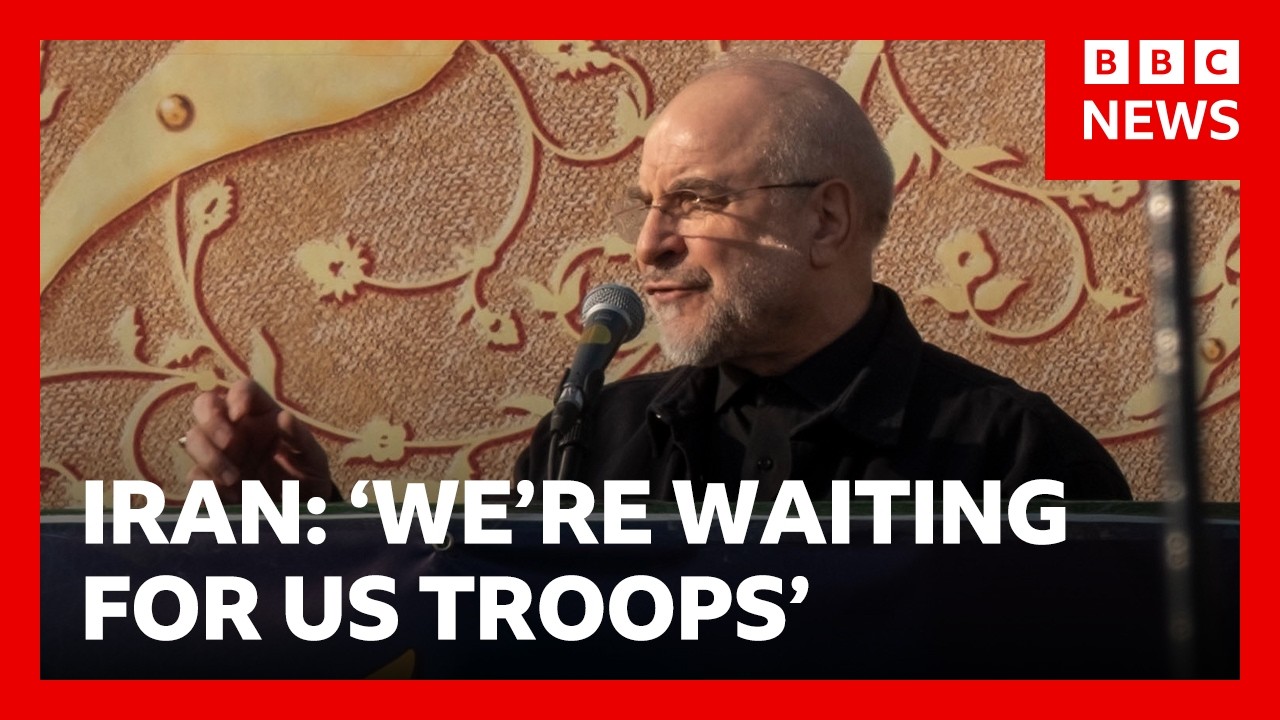
In an escalating conflict that threatens to reshape regional dynamics, Iran’s parliament speaker recently cautioned the United States about Tehran’s readiness to respond aggressively to any ground invasion. These comments come amidst mounting speculation surrounding a potential ground operation by the U.S. military, reportedly being planned discreetly under the Trump administration. As tensions rise, with thousands of U.S. troops deploying into the region, diplomatic efforts to de-escalate the situation appear increasingly feeble.
According to reports from the Washington Post, the Pentagon may be gearing up for extended ground operations in Iran. As of last Friday, more than 3,000 U.S. troops arrived aboard the USS Tripoli, signaling a significant military buildup. Yet, in stark contrast to the rhetoric of military action, President Trump has asserted that negotiations with Iran are progressing positively. This dissonance raises questions about the administration’s strategy and the risks involved in a direct confrontation with Iranian forces.
Iran has not remained passive. The Revolutionary Guard has issued stark warnings to American and Israeli universities in the Middle East, suggesting that retaliation for an attack on Tehran University could be imminent. They have advised students and staff at these institutions to maintain a safe distance—a clear indication of Iran’s intent to extend its retaliatory measures. Additionally, the Houthis in Yemen, an Iranian ally, claimed responsibility for missile and drone attacks aimed at Israel, effectively broadening the conflict and generating concern over the stability of vital shipping routes such as the Bab el-Mandeb Strait.
From the U.S.-Israeli perspective, media portrayals reflect a narrative of control and precision, with Israeli jets operating within tightly coordinated military strategies. However, the reality on the ground presents a more complex picture. Retaliations from Iran are ongoing, albeit at a reduced intensity, as U.S. and Israeli military actions persist. While the Chairman of the Joint Chiefs of Staff indicates a 90% reduction in Iranian missile and drone attacks, the threat remains significant.
Sasha Brookman, a research fellow for defense and military analysis at the International Institute for Strategic Studies, emphasizes the current state of stalemate in the conflict. Both sides have now gathered intelligence about one another’s capabilities and are entering a phase characterized by sustained military pressure. As daily sorties by the U.S. and Israeli forces continue, Iranian responses, although diminished, indicate ongoing hostilities.
The discussions surrounding a possible ground assault by U.S. troops highlight the precariousness of the situation. Brookman notes that deploying troops poses unpredictable challenges for the Iranian military, which could struggle to anticipate U.S. maneuvers. The presence of Marines aboard the USS Tripoli raises concerns about amphibious assaults that could target key strategic locations, further complicating Iran’s military calculus.
Despite Iran’s vocal defiance and warnings of retaliatory measures, analysts suggest that there may be underlying vulnerabilities within the Iranian military. While the Iranian Navy has suffered substantial losses, its ground forces remain somewhat intact. However, the effectiveness of Iran’s strategies against its Gulf neighbors has not yielded significant results; the resilience of Gulf states underscores the limitations of Iran’s military operations.
As diplomatic efforts to restore calm appear stalled, the involvement of regional actors like Pakistan, Egypt, and Turkey is noteworthy, but the absence of direct talks involving the U.S., Israel, and Iran stifles potential resolutions. Each party is steeped in a narrative of victory, reducing the likelihood of compromise.
In conclusion, the Middle East stands at a perilous crossroad. The interplay of military preparation, defiance, and strategic posturing heightens the risks of an expanded conflict. As the situation evolves, the importance of diplomacy cannot be overstated—only through cooperation and dialogue can the devastating consequences of military escalation be avoided. The world watches closely, aware that any miscalculation could have far-reaching implications not only for the region but for global stability as well.