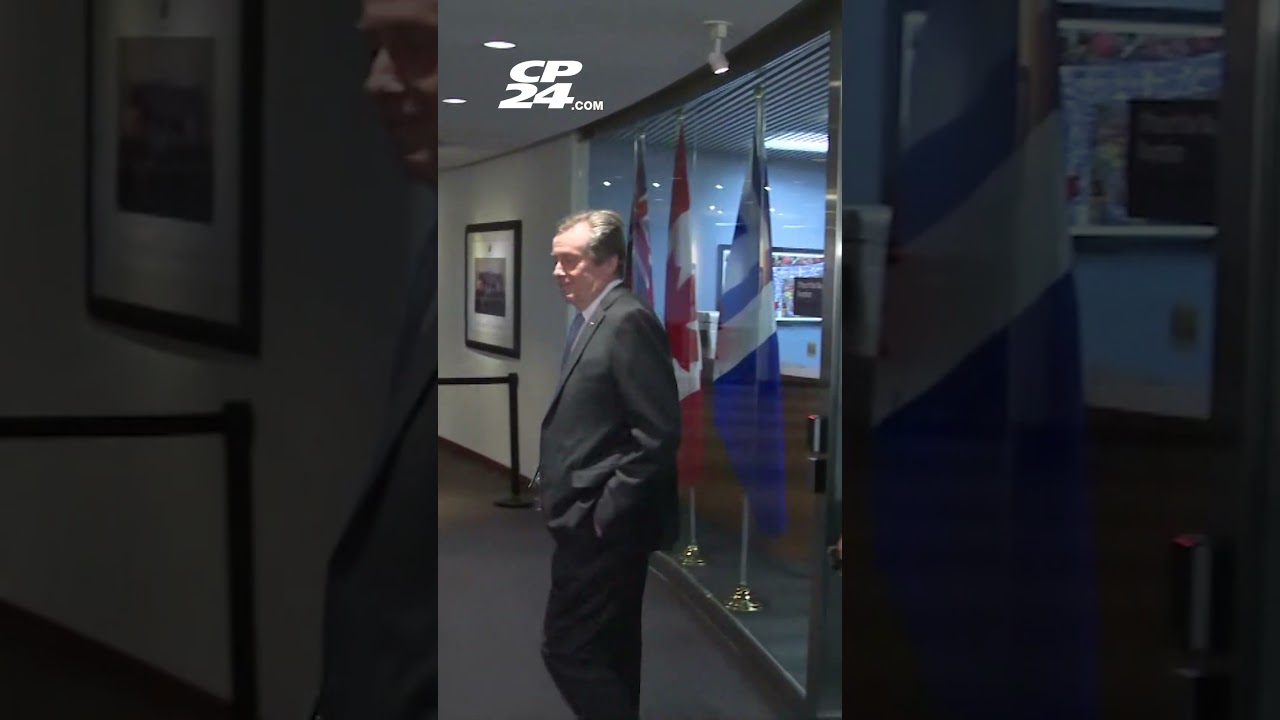
In a surprising turn of events, John Tory has officially declared that he will not be seeking to reclaim the mayoralty of Toronto. This announcement comes amid speculation regarding his potential candidacy for the position he held from 2014 until early 2023. Tory’s decision to step back from the race leaves the door open for other candidates as the city gears up for its upcoming election on October 26.
Tory’s tenure as mayor was marked by both notable achievements and controversies. He became a familiar figure in Toronto’s political landscape, characterized by his pragmatic approach to governance. However, his resignation in early 2023 came with a considerable public outcry. Tory admitted to engaging in a relationship with a staffer during the pandemic, an admission that ultimately undermined his position and credibility as mayor. This scandal forced his premature exit from the role and paved the way for a bi-election that saw Olivia Chow ascend to the mayoralty.
Chow, a former federal politician and long-time advocate for various social issues, was elected by a constituency eager for change. Her victory symbolized a shift, encapsulating the desires of Torontonians who sought a different perspective on governance. The dynamics of the current political landscape indicate that Chow has made significant strides in her role, yet her tenure is not without challenges.
As the next election approaches, Toronto faces pressing issues ranging from housing affordability to public safety. With John Tory firmly out of the running, the focus now shifts to potential contenders who could fill the void. The political arena is already buzzing with speculation about who might step forward. Will another established figure emerge, or will the opportunity be seized by a relative newcomer looking to reshape the city’s direction?
Tory’s announcement underscores the unpredictable nature of politics, particularly in a vibrant metropolis like Toronto. The city’s diverse population and complex socio-economic fabric demand a leader who can navigate a myriad of challenges while also uniting various community interests. As past events have demonstrated, the personal conduct of a leader can have far-reaching implications on public trust and voter sentiment. Tory’s decision to refrain from running reflects an acute awareness of this reality.
Meanwhile, public interest in the upcoming election remains high. Many residents are eager to voice their opinions on the city’s direction and the policy priorities that will shape its future. In the context of rising housing costs and increasing public concern over safety and infrastructure, the stakes could not be higher.
Chow’s administration will likely face scrutiny not only from political rivals but also from an engaged electorate hungry for results. The mayoral race, especially without Tory as a candidate, will undoubtedly draw attention to how candidates articulate their visions for Toronto. Issues such as transit development, climate action, and public health will also be pivotal talking points in campaign debates.
As election day looms, candidates will need to connect authentically with the electorate. They must articulate not only their plans for the city but also their motivations for wanting to lead it. In this way, the upcoming election could become a referendum on the city’s past leadership—both for Tory and Chow—and a unique opportunity for voters to reimagine their future.
The absence of John Tory from the race signifies a new chapter for Toronto politics. As the city prepares to head to the polls, many will look to the horizon, eager to see what new leadership will emerge. Whether a fresh face will challenge incumbent Olivia Chow or if she will continue to reign will be determined in the coming weeks. For now, Torontonians await the excitement that will certainly accompany the unfolding political landscape as the date approaches. The election marks not only a moment for decision-making, but also for reflection on what it means to lead in a complex urban environment.