Teachers Unions Speak Out Against Centralization of Ontario Education
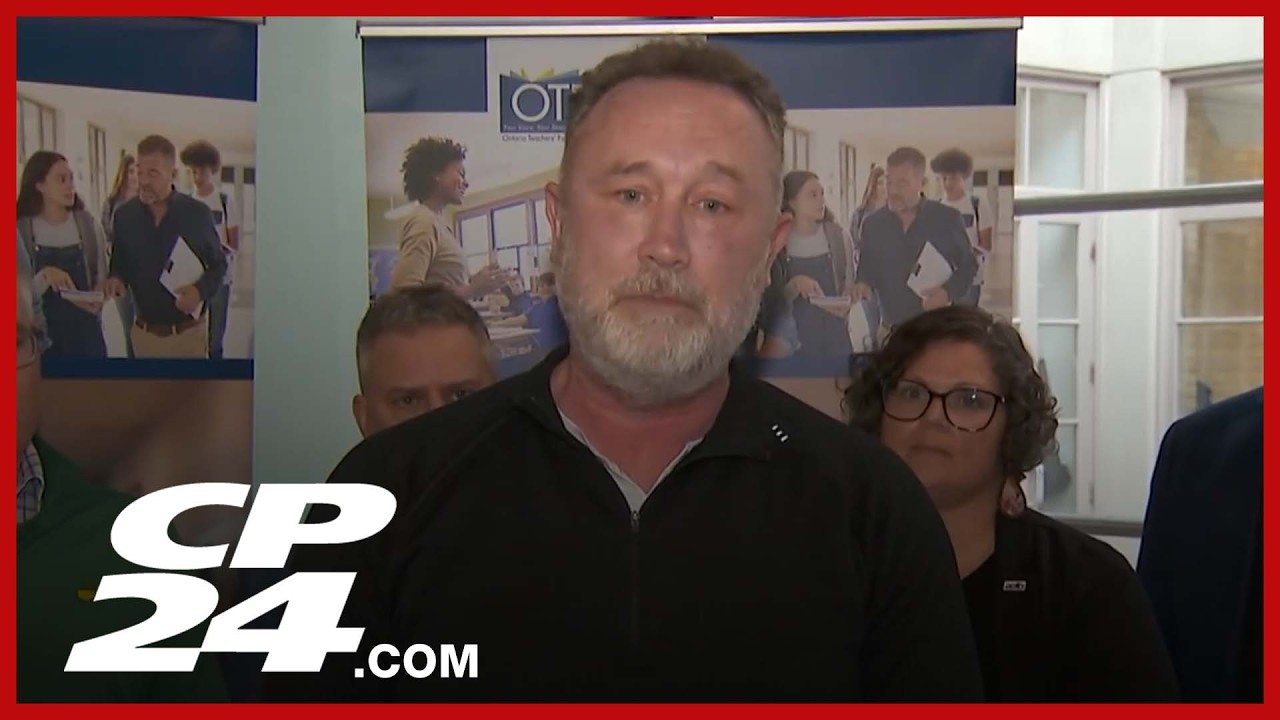
The announcement made today by Ontario’s Ministry of Education regarding changes to the governance of public education has ignited a fierce response from major teachers’ unions in the province. Leaders from the Ontario Secondary School Teachers Federation (OSSTF), the Association des enseignantes et des enseignants franco-ontariens (AEFO), and the Elementary Teachers Federation of Ontario (ETFO) convened a press conference to express their concerns, raising crucial questions that demand answers.
Martha Hurotaway, president of OSSTF, opened the discussion by emphasizing the lack of consultation with Ontario’s teaching community. "Once again, we see the minister making an announcement without involving professional educators," she said. This disconnection raises immediate questions about how teachers are expected to implement these new policies. The unions are eagerly awaiting details regarding the resources and systems that will support these changes. Hurotaway noted that one particularly alarming aspect of the announcement is the apparent erosion of democratic decision-making within the province’s education system.
The introduction of two new positions, both titled CEO—Chief Executive Officer and Chief Education Officer—has sparked concern about centralized control, with Hurotaway warning that this move appears designed to increase the power of the current administration. "We do not yet know the full scope of these positions," she stated. "What we do know is that this creates a pathway for political favoritism."
In their statements, the union leaders made clear that the current government has neglected pressing issues in Ontario’s schools, including escalating violence, larger class sizes, and the complexities of modern classrooms. Hurotaway pointed out that since 2018, public education has been underfunded by a staggering $6.3 billion, resulting in tangible consequences for both educators and students. "This legislation serves as a distraction from the real challenges we face," she insisted.
David Mastin, president of ETFO, echoed Hurotaway’s concerns by referencing similar issues arising from past legislation under former Premier Mike Harris. "Nearly 30 years ago, Bill 160 began to strip away local community power, and now we see history repeating itself," Mastin argued. He highlighted that communities from Kenora to Toronto have historically relied on elected trustees who represented their interests. The current legislation, according to Mastin, signals a troubling trend towards further marginalizing local voices in education governance.
Both Hurotaway and Mastin articulated a shared apprehension that the government is steering the province towards a corporatized model of education. "This is not merely a financial issue; it’s about the principles underlying our public service," Hurotaway remarked. The concern is that the focus on a business-like delivery model will undermine the integrity of public education.
Renee Jansen in de Wal, president of AEFO, made a poignant appeal to the public, urging citizens to engage with their local Members of Provincial Parliament (MPPs). "We need the voices of Ontarians to be heard," she said, insisting that those concerned about the future of public education should stand up and protest what they feel is an alarming shift.
Through a combination of passionate rhetoric and informed arguments, the leaders of Ontario’s teachers’ unions made it clear that they view the latest government announcement as a serious threat to public education. The ongoing battle over governance appears set to intensify, given the dissatisfaction expressed by key stakeholders in the education sector.
Ultimately, the unions are calling for immediate action and consultation, pushing the government to move beyond announcements and empty promises. "Our children deserve better, and Ontario’s educators are more than willing to partner in finding solutions," Hurotaway asserted. "But we cannot work effectively under a system that sidelines voices within our own communities."
As the political landscape surrounding public education continues to evolve, the reaction from educators and parents alike will be pivotal in shaping the future of schooling in Ontario. Stakeholders are encouraged to remain vigilant and advocate for a system that prioritizes democratic participation and resource allocation, rather than one dominated by political maneuvering.