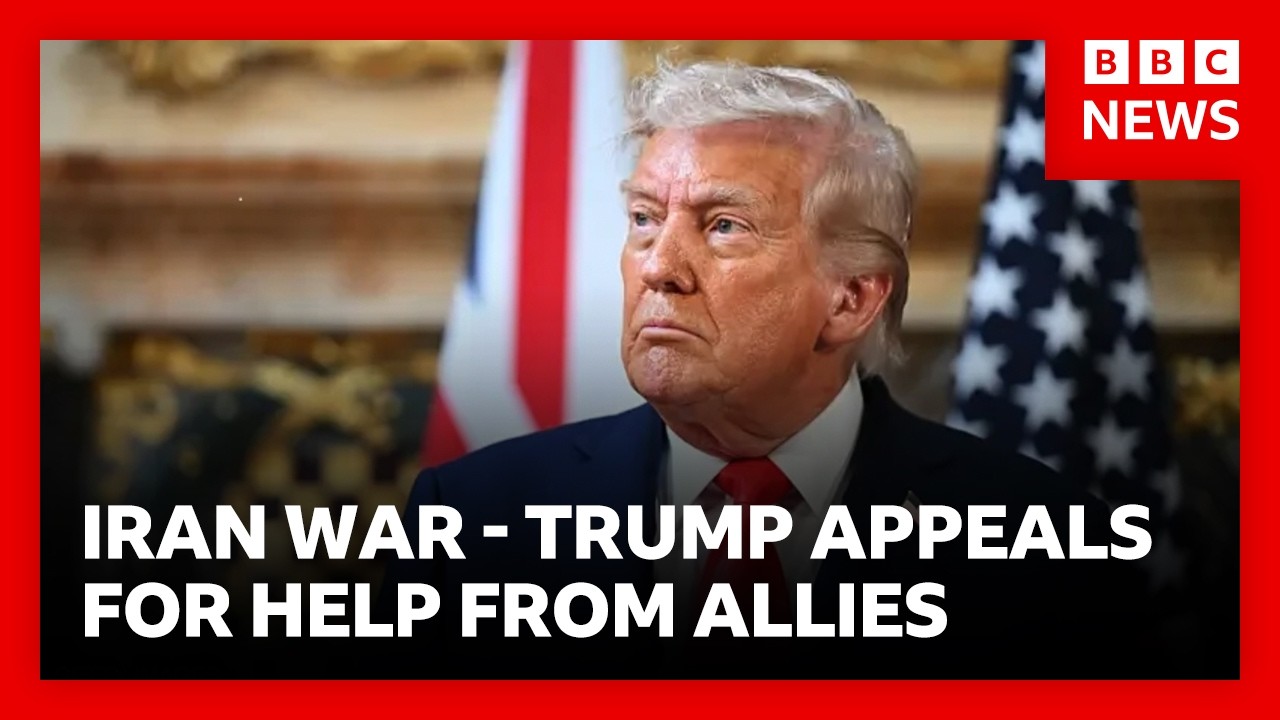
The escalating tensions surrounding the Strait of Hormuz have reached a critical juncture, prompting U.S. President Donald Trump to appeal for international support in the form of naval reinforcement. In a matter of hours, Trump reiterated his call for allies, including the United Kingdom, France, and even China, to send warships to safeguard one of the world’s most vital maritime routes, which Iran claims to have closed to ships connected to its adversaries.
The current hostilities involving Iran have resulted in a significant surge in global oil prices, a development that has not gone unnoticed by economies worldwide. The Iranian foreign minister’s declaration that the Strait is closed to its enemies and their allies has exacerbated fears of energy supply disruptions. Observers have noted that this situation could have long-term implications for global energy markets, particularly as access to oil from the region remains essential for many countries, notably China.
Compounding these tensions, military operations have intensified in recent days. The United States, alongside Israeli forces, has targeted Iran’s key oil terminal at Hag Island, an area crucial to the Iranian economy where 90 percent of the country’s oil exports transit. Trump has claimed that U.S. forces have successfully neutralized all significant military targets, but reports indicate that the conflict has escalated to include drone strikes on critical infrastructure, such as the radar system at Kuwait International Airport.
As the U.S. ramps up military presence in the region with additional ships and thousands of Marines, Iranian responses have also intensified. Recent missile attacks on the U.S. embassy in Iraq and drone strikes against oil storage facilities in the United Arab Emirates illustrate a growing willingness by Iran to challenge Western interests. These developments have led to evacuation orders in parts of Qatar, signaling a broader regional panic as hostilities escalate.
The backdrop of this conflict sees Iran grappling with a complex domestic scenario. Tehran has endured a series of U.S. and Israeli strikes that have provoked public concern. Iranian citizens have reported increased anxiety amidst night-time explosions and attacks, revealing the deep psychological toll of the ongoing conflict. Many residents express a difficult reality of living under constant threat, questioning how much longer this cycle of violence can persist without a resolution.
In Lebanon, the implications of the conflict extend to civilian casualties, with reports of Israeli airstrikes leading to the deaths of medical personnel. These attacks, described by local officials as indiscriminate, have raised moral and ethical questions about the nature of warfare in urban settings. Accusations from Israel that Hezbollah employs medical facilities for military purposes have been firmly rejected by local authorities, raising the stakes for civilian safety in the region.
As the United States and its allies contemplate further action in the Middle East, the economic ramifications loom large. The Chancellor of the Exchequer in the UK has indicated plans to support households grappling with soaring heating oil prices. Economies dependent on oil are feeling the pressure, with reports suggesting that in parts of Northern Ireland, rising prices have made it cheaper to work rather than heat homes.
Amid these multifaceted crises, questions linger about the efficacy of military responses and the prospects for diplomatic resolutions. President Trump’s call for additional warships from allies, despite the ongoing violence and instability, indicates a recognition of the complex geopolitical landscape. However, the reluctance of many nations to commit military assets underscores the precarious nature of the situation.
Ultimately, this developing narrative in the Strait of Hormuz exemplifies the intersection of military strategy, economic stability, and humanitarian concerns. As international stakeholders weigh the risks and opportunities in the region, it remains uncertain how these events will shape the future of the Middle East and beyond. In this turbulent climate, the need for reassessment and dialogue is more critical than ever.