Rocket Launches in the Arctic: Europe’s New Frontier in Space Exploration
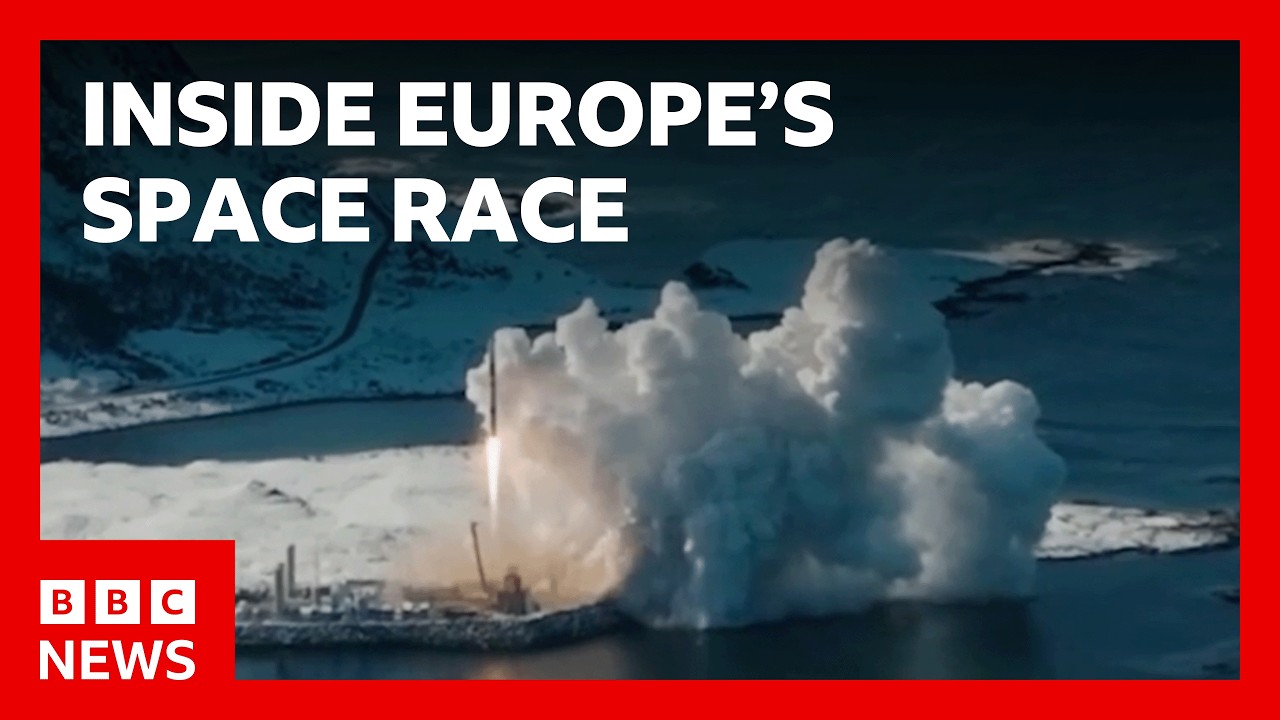
Nestled high above the Arctic Circle, in the unyielding beauty of Lapland, lies a remarkable hub of scientific advancement—the S-range Space Center in Sweden. Here, amidst the snow and ice, the hustle and bustle of a burgeoning space race is underway, transforming this remote wilderness into a pivotal player in Europe’s aerospace ambitions.
Since its inception in the 1960s, the S-range has witnessed the launch of over 600 rockets, collaborating with a diverse array of space agencies and research institutes globally. Currently focused on suborbital missions, these sounding rockets reach altitudes of approximately 250 kilometers. Such heights provide a unique platform for conducting scientific experiments during brief moments of weightlessness, giving researchers insights that terrestrial conditions cannot replicate.
The significance of these launches cannot be overstated. Not only do they mark Sweden’s contributions to space science, but they also position Europe in a competitive race for supremacy in space exploration. The S-range is poised to expand its capabilities, with plans to include satellite launches in the near future.
Strategically located near the borders of Norway and Finland, the S-range boasts a vast landing zone spanning over 12,000 square kilometers, primarily devoid of human habitation—save for the occasional roaming reindeer. This vast expanse ensures launches can occur safely, minimizing risks to personnel and nearby communities.
One of the standout projects at the S-range involves the German-built Mafus rocket, developed by an international collaboration of scientists from the German Aerospace Center. Set to soar to 260 kilometers above the Earth, the rocket will embark on a flight lasting around 15 to 20 minutes. This mission includes a critical acceleration phase, propelling the rocket into the atmosphere where it will experience approximately six to seven minutes of microgravity.
Equipped with an array of instruments designed for scientific research, the Mafus rocket carries payloads that will help deepen our understanding of various phenomena. For instance, one particular mission aims to investigate the northern lights, deploying sensors to collect critical data on auroral activity. By suspending experiments in microgravity, scientists can glean insights into biological and physical processes—information that remains obscured under the influence of gravity on Earth.
The push toward launch facilities is urgent. While the United States and Russia maintain multiple operational sites, Europe’s sole launch complex is located thousands of miles away in French Guiana. New spaceports are emerging across the continent—from Scotland to Norway—in a spirited race to establish the first orbital launch facility. Among these competitors, S-range is advancing its initiatives, constructing a new launch pad to facilitate satellite launches anticipated within the next two years. This development is critical, allowing Europe to enhance its autonomy in the aerospace sector.
The demand for satellite technology is soaring, driven by the increasing need for internet connectivity and geographical mapping. Current estimates suggest that the number of satellites will surge from around 10,000 to potentially 50,000 within the next decade, prompting commercial enterprises to intensify their ambitions.
As the countdown for the Mafus rocket’s launch approached, excitement permeated the atmosphere. Inside the control room, engineers meticulously prepared for the liftoff, having invested weeks in ensuring every component was in place. The anticipation was palpable; however, a sudden spike in wind conditions forced a postponement. The team, undeterred, persisted in their preparations.
A short wait turned into a moment of exhilaration when the team finally received the green light. “3, 2, 1… zero,” echoed through the control room, followed by a dramatic roar as the rocket ignited and soared into the Arctic sky. Cheers erupted—an affirmation of the hard work and dedication poured into the project.
The flight was deemed a resounding success, exceeding expectations in both altitude and precision of landing. Such achievements not only bolster the reputation of the S-range Space Center but also herald the potential for monumental advancements in Europe’s space endeavors.
In a world increasingly reliant on satellite technology, the developments unfolding in Lapland signify just the beginning. The S-range is more than a launch pad; it symbolizes Europe’s aspirations—poised for monumental leaps into the cosmos.