High Court Ruling on Palestine Action: A Landmark Decision Affecting Freedom of Speech
In a groundbreaking ruling, the High Court in London has deemed the UK government’s ban on the Palestinian advocacy group, Palestine Action, as unlawful under terrorism legislation. This decision reveals a significant tension between national security measures and the right to free speech. While the ban remains temporarily in effect pending an appeal by the Home Secretary, the ruling has already shifted the landscape of how police and government approach protests related to Palestinian rights.
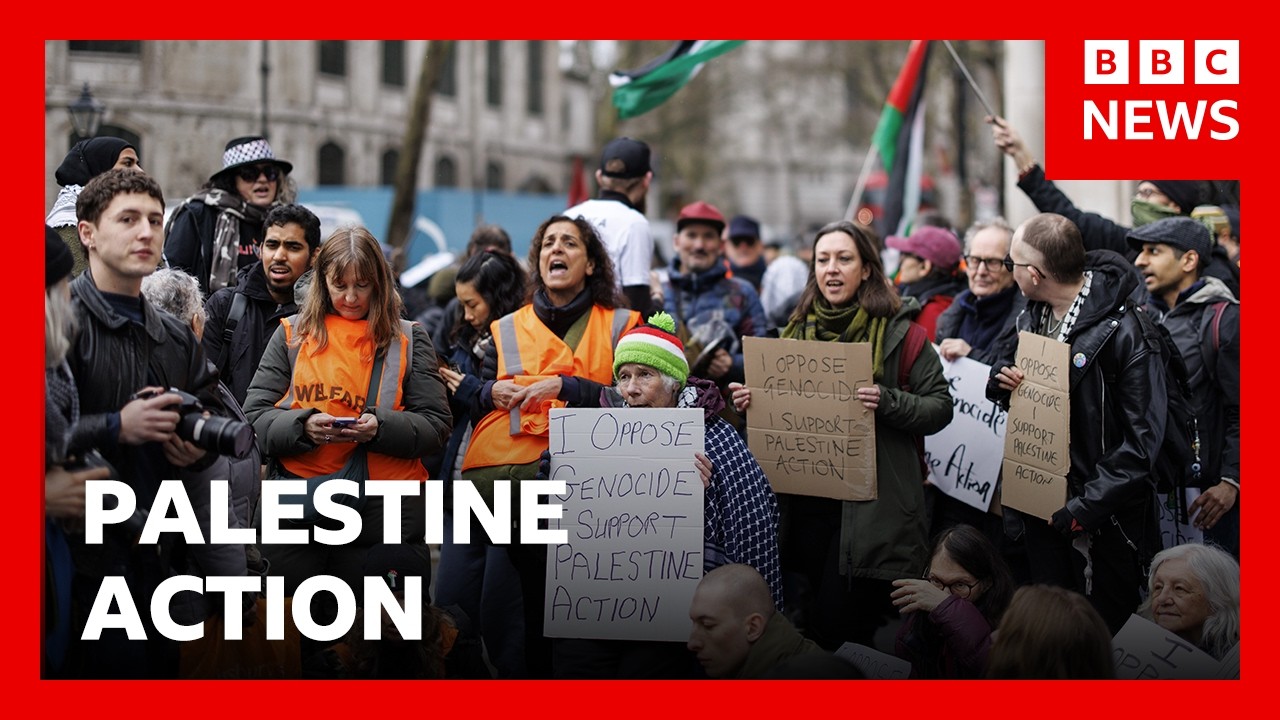
The genesis of this legal dispute centers around the accusation that Palestine Action engages in actions that some classify as terrorism. Specifically, the group has been accused of breaking into arms firms linked to Israel and damaging property with the intent to disrupt what they describe as genocide in Gaza. Following these incidents, thousands of individuals were arrested simply for displaying signs that expressed support for the group, raising alarm about the implications for freedom of speech.
According to legal correspondent Dominic Cashani, this ruling marks a significant setback for the Home Office. For the first time, a group prohibited under terrorism law has successfully challenged its designation in court. The judge noted that while a small number of Palestine Action’s activities may have crossed into unlawful territory, the overall scale and intensity of these acts did not meet the legal threshold necessary to justify a terrorism designation.
Crucially, the High Court highlighted the chilling effect the ban had on public protests. Those wishing to advocate for Palestinian rights may now feel deterred from doing so due to the fear of criminal repercussions. The ruling suggests that the government must balance national security with the fundamental right to protest, a balance that the court found to be tipped too far in favor of restrictions under the current ban.
While the court acknowledged some of Palestine Action’s activities as problematic, it asserted that other legal avenues—such as existing laws against criminal damage—would suffice in addressing concerns without imposing a blanket ban. The ruling implies that freedom of speech should not be sacrificed at the altar of preventative measures, especially when it comes to political advocacy.
In response to the ruling, Home Secretary Shabbat Mammud has indicated that an appeal will be forthcoming. Critics, like Lord Walney, a former government adviser on political violence, have expressed concern that the High Court’s conclusion fails to adequately recognize the broader implications of economic sabotage within the definition of terrorism. He argues that Palestine Action’s tactics, while less frequently violent than other groups, still warrant serious scrutiny and potential legal ramifications given their intent to disrupt.
Despite the unfolding legal drama, the Metropolitan Police have signaled a strategic pivot. Instead of immediate arrests, they now plan to focus on gathering evidence related to potential offenses during demonstrations. This approach reflects a recognition of the complexities surrounding the ongoing protests and the legal ambiguities at play.
Lord Walney believes that while the current legal definitions may offer some protections for individual rights, they could also allow for misinterpretation. He argues for a more nuanced approach that would enable the government to take action against groups dedicated to criminal sabotage without resorting to labeling them as terrorist organizations. Such a distinction, he suggests, would maintain a necessary balance between protecting public order and respecting the democratic right to dissent.
In conclusion, the High Court’s ruling on Palestine Action underscores a pivotal moment in the ongoing debate over free speech, protest, and national security. As the government braces for an appeal and the public remains engaged in fervent advocacy, the implications of this ruling will resonate far beyond the courtroom. It represents not just a legal decision but a reflection of societal values surrounding dissent, activism, and the ongoing struggles for Palestinian rights in the UK. The question now looms large: where do we draw the line between lawful protest and criminal behavior in a democratic society? The answer may dictate the response of both authorities and citizens in the months to come.