The Ripple Effects of Middle Eastern Conflict on UK Agriculture
The ongoing conflict in the Middle East is reshaping economic landscapes far beyond its geographical boundaries. In the UK, the implications are keenly felt, particularly in agriculture, where farmers are grappling with inflated costs attributed to rising diesel and fertilizer prices. Recent figures from UK consultants, the Anderson Center, reveal that British farmers faced a staggering 7.6% increase in costs last month compared to the same period last year. This surge in expenses has significant ramifications, manifesting during a particularly critical planting season.
As planting season unfolds, farmers across the country are hard at work, preparing fields and sowing crops. However, the arduous task is complicated by external factors entirely out of their control. Take Ben Savage, for instance, a farmer whose experience encapsulates the challenges faced by many. While hard at work filling up his tractor, which guzzles red diesel, he notes that fuel costs have nearly doubled. "We’re using somewhere in the region of 2 to 2.5 thousand liters a day," Ben explains, illustrating just how critical fuel prices are to the operation’s viability.
Ben, like many farmers, had his budget carefully planned, but unforeseen global events have disrupted those calculations. “All of this kicked off just before we started planting, and it wasn’t forecasted into any of our budgets,” he says, revealing a widespread issue. The conflict has not only inflated immediate costs but also eroded profit margins at a pivotal time in the agricultural calendar.
Additionally, the dynamics of fuel procurement have shifted. A representative buying fuel on behalf of over 3,500 farmers highlights the gravity of the situation. This individual, accustomed to navigating agricultural supply chains, is now facing volatility marked by uncertainty. “Genuinely, I’ve never seen anything like it,” he admits, expressing skepticism about any return to normal price levels in the near future. Some farmers are already considering not planting crops this year altogether, opting to conserve resources rather than incur the steep costs of crop management.
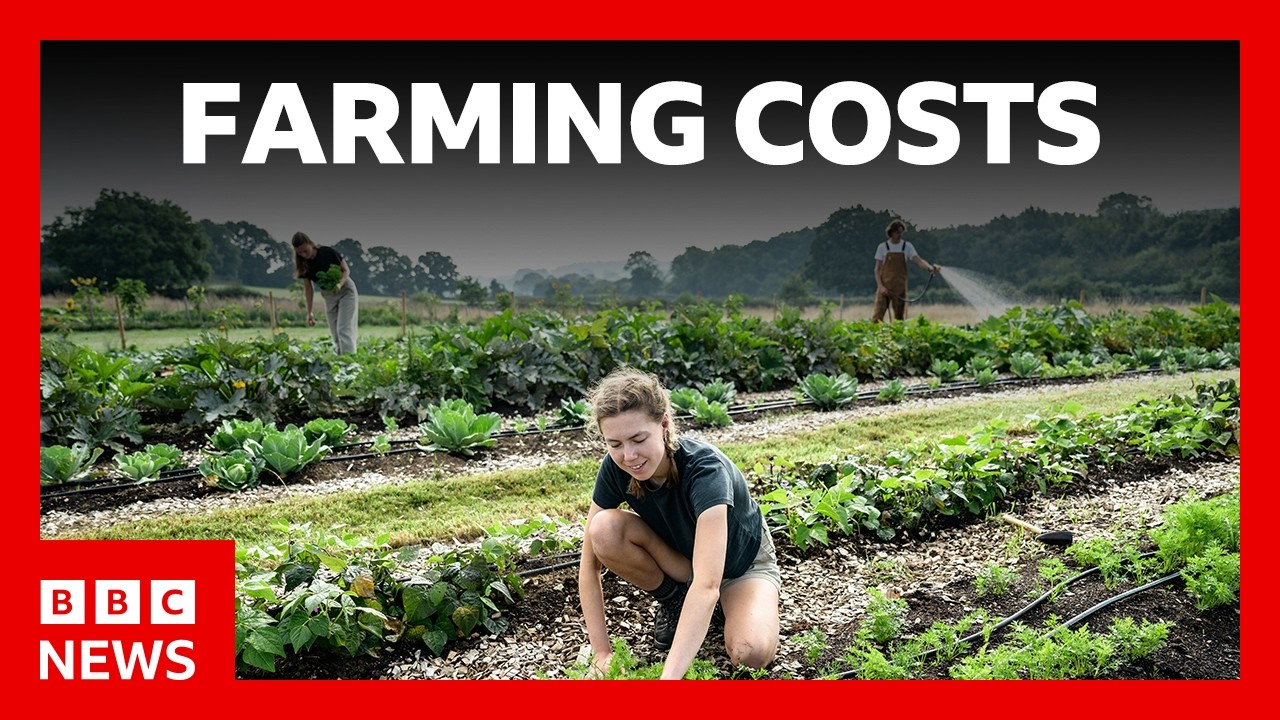
Energy expenditure is integral to food production, woven into every aspect—from powering tractors to packaging and transporting the end products. The dramatic rise in energy costs ultimately implies that consumers may encounter higher prices in supermarkets. As agriculture operates on thin margins, any increase in input costs typically travels downstream, directly affecting food prices. This creates a cascading effect, wherein the initial shockwaves felt by farmers resonate with consumers further down the line.
Driving through the countryside, the beauty of apple orchards provides a stark contrast to the underlying economic woes. Each delicate bud represents the potential for a bountiful harvest while simultaneously highlighting the vulnerabilities faced by growers. For those like Alli, who manages an orchard, the stakes couldn’t be higher. With fertilizer prices skyrocketing by 40%, the weight of economic pressures becomes increasingly burdensome.
"We absorbed most of the extra costs last time, but we can’t afford to do that again," Alli conveys the sentiments shared by many of her peers. Last year’s financial grievances remain fresh, and the reality is harsh: many growers are at risk of losing their businesses if costs cannot be adequately passed through the supply chain. The implications of these price hikes are not merely ephemeral; they are "baked in," as Alli puts it, meaning that even if the conflict resolves swiftly, the financial ramifications will still linger.
The story is clear: while farmers toil in the fields, the impact of global events unfurls far beyond their immediate environment. As Emma Simpson’s report highlights, the complexity of today’s agricultural landscape has been irrevocably altered by external forces. Although the season may bring forth new crops, the lingering effects of heightened costs are set to challenge the resilience of the farming community and could ultimately reshape consumer experiences in the months to come.
In conclusion, the ramifications of geopolitical conflict extend into the heart of UK agriculture, affecting both producers and consumers in profound ways. The future landscape remains uncertain, with challenges on multiple fronts for those dedicated to nurturing the land.