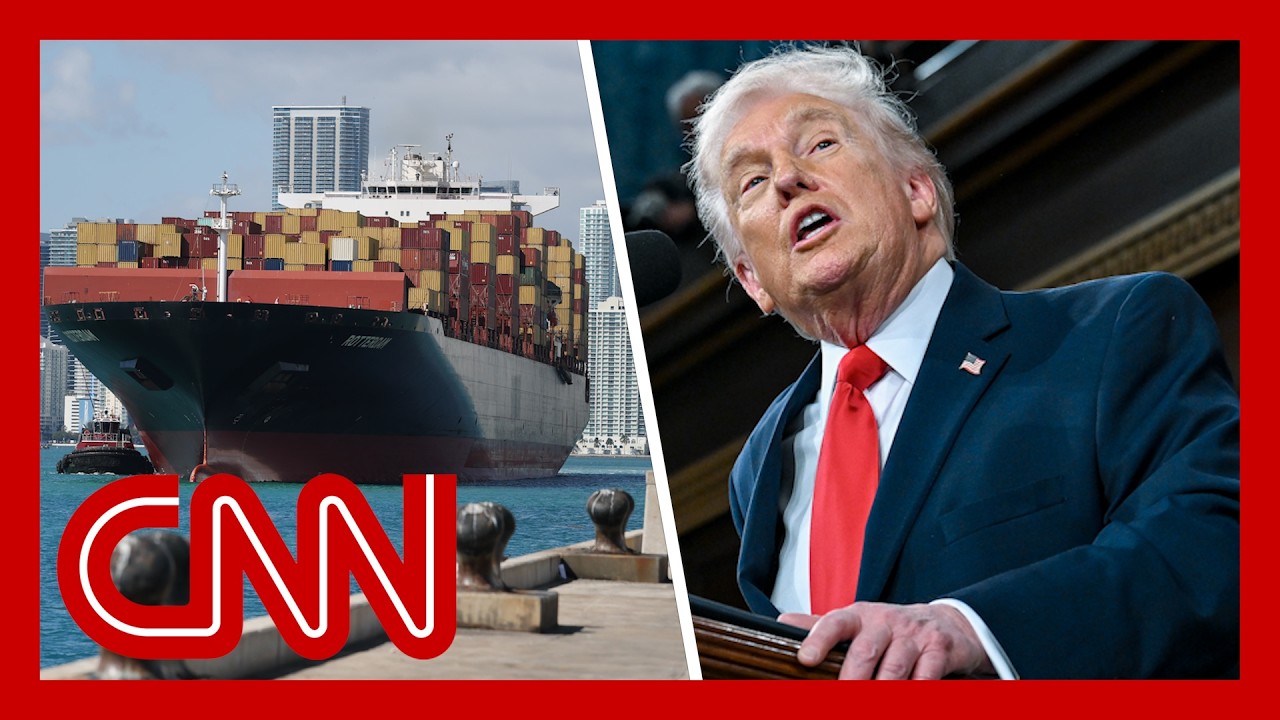
The Trump Economy: Fact vs. Fiction
In recent months, the narrative surrounding the U.S. economy has been marked by stark contrasts between political rhetoric and tangible realities. President Trump, in his public addresses, claims that the U.S. economy is "roaring" and that citizens are experiencing unprecedented prosperity. Such statements often evoke skepticism, particularly when contrasted against independent analyses and economic indicators.
A recent segment featuring CNN’s Daniel Dale scrutinizes assertions made by the President. One of the primary claims revolves around Trump’s statement that he inherited an economically stagnant nation plagued by high inflation levels. In truth, he inherited an economy with an inflation rate hovering around 3.0%, which is relatively stable compared to the much-publicized figure of 2.4% today. This misrepresentation raises questions about the validity of the broader economic narrative being presented.
Another point of contention is Trump’s assertion that he has secured over $18 trillion in investments since taking office. Dale highlights that this figure is not only inflated but also fundamentally misleading. The White House itself lists only $9.7 trillion in investment commitments—a figure that experts suggest is itself exaggerated. This disparity complicates the administration’s message and raises concerns about the reliability of figures being used to portray economic success.
Trump’s claims regarding tariffs further exemplify the complexities of economic policies. He insists that tariffs are paid for by foreign countries, which is a gross mischaracterization. In reality, tariffs are paid by U.S. importers, who often transfer these costs to American consumers. As prices of imported goods increase, it impacts affordability for everyday Americans, contradicting the narrative of a "booming" economy.
The disparity between reported economic growth and the lived experiences of many American citizens is glaring. Notably, while the overall growth rate may be described as robust, many individuals still grapple with escalating costs in crucial areas such as housing and utilities. David Goldman, another CNN correspondent, emphasizes that despite a seemingly positive economic outlook, Americans feel increasingly pinched. The disconnect between economic indicators and personal financial realities has become a critical component of public sentiment.
The "K-shaped economy" underscores this divergence, illustrating how wealth is unevenly distributed amidst economic recovery. Individuals who are already affluent, often homeowners who refinanced during lower interest rates, continue to thrive. Conversely, those at the lower end of the economic spectrum struggle with rising living costs and stagnant wages. Goldman notes that while inflation sits at 2.4%, wage growth for middle- and lower-income earners is lagging behind—1.6% and 0.9% respectively. This gap in wage growth further complicates the narrative that everyone is benefiting from economic policies.
Addressing affordability, Trump mentioned various initiatives aimed at improving economic conditions for everyday Americans. While certain programs, such as initiatives to lower mortgage rates or prescription drug prices, have shown some promise, doubts linger around their immediate impacts. Other proposals, like the establishment of tax cuts and education accounts, are still in early stages with uncertain outcomes.
As the 2024 elections loom closer, the contrast between the government’s economic narratives and public sentiment is critical. Economic health is not solely defined by statistics; people’s perceptions and experiences play a pivotal role in shaping electoral outcomes.
Furthermore, as political strategists dissect these narratives, they recognize the importance of addressing contrasts between perceived prosperity and actual living conditions. The Democrats face the challenge of countering the Republican portrayal of the economy while emphasizing the financial hardships faced by everyday Americans.
In conclusion, the current discourse surrounding the U.S. economy reflects a complex interplay between political rhetoric and empirical reality. As voters prepare to make decisions in the upcoming elections, understanding the nuances of economic performance versus personal financial health will be vital. A dialogue grounded in transparency and factual accuracy will be essential for informed decision-making. The American economy, though robust on paper, must resonate with the lived experiences of its citizens to foster genuine confidence and electoral support.