US Military Executes Daring Rescue of Downed Fighter Pilot
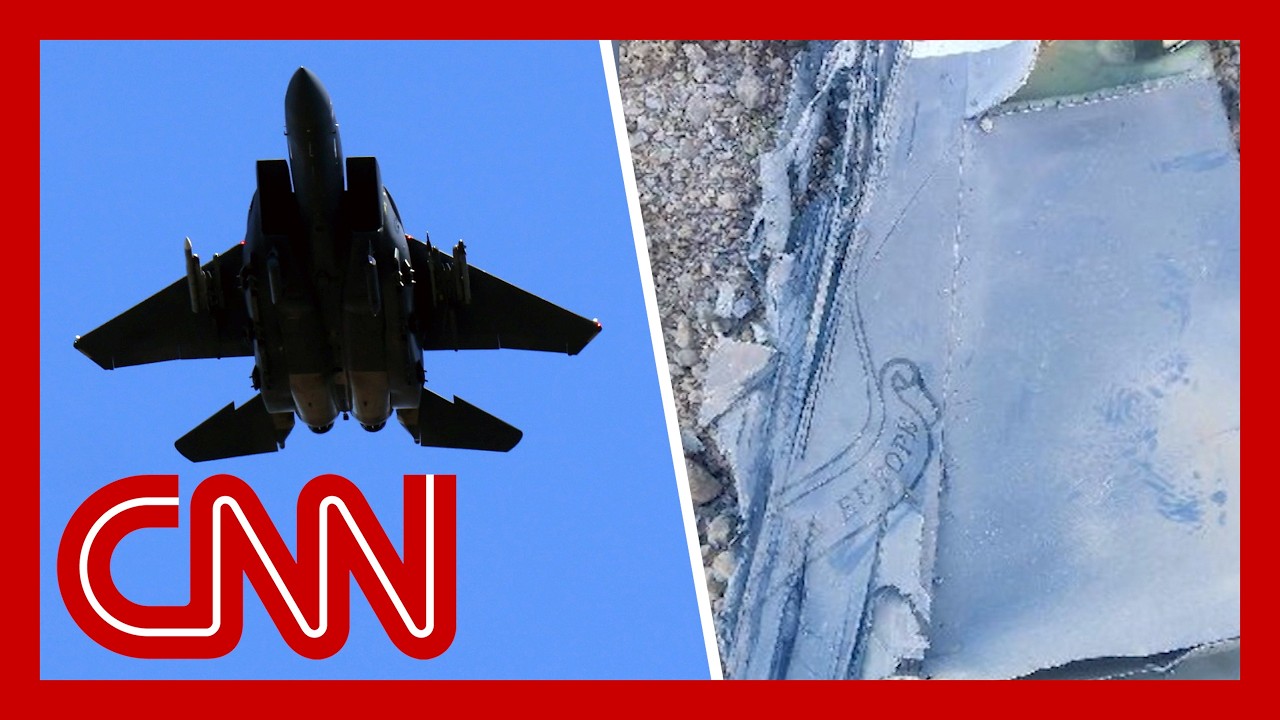
In an operation that has captured national attention, the United States military successfully rescued a second crew member of an F-15 Strike Eagle fighter jet that was shot down over Iran. President Donald Trump took to his social media platform to share the good news, stating, "We got him." He lauded the military’s efforts in what he termed one of the most daring search and rescue operations in U.S. history.
The dramatic rescue unfolded against a backdrop of intense international scrutiny. Trump revealed that the injured crew member, identified as a highly respected colonel, was now "safe and sound" after sustaining injuries during his ordeal. This rescue operation commenced soon after the jet’s downing earlier in the week, during which the first pilot was promptly located and rescued. Both men were engaged in a high-stakes conflict, and their survival hinged on meticulous planning, timing, and skillful execution.
CNN’s Jim Sciutto, reporting from Tel Aviv, confirmed that U.S. search and rescue teams had been in action since the moment the F-15 went down. “They received a communication from the second pilot late Friday, which added urgency to their efforts,” he noted. The challenge intensified as Iranian military forces initiated their own search, encouraged by state media to find the downed pilot with financial incentives.
The American search teams faced a daunting task. Operating in hostile territory meant that every helicopter and fixed-wing aircraft deployed became a target. The risk was compounded by Iran’s demonstrated firepower; just hours after the F-15 was taken down, Iran shot down an A-10 Warthog, further signaling the hostile environment in which the rescue was conducted.
For the rescued service member and his family, this outcome is a significant relief. Trump’s message emphasized that all Americans, irrespective of political affiliation, should take pride in this achievement. However, even as the U.S. celebrated the successful extraction, the broader conflict continued unabated.
Discernibly, the military and political landscape remains complex and precarious. During his statements, Trump indicated that the operation would not alter U.S. war planning, citing a timeline of "two to three more weeks" for ongoing military efforts. Yet observers remain skeptical. Past predictions from Trump have often been imprecise, raising questions about the reliability of current forecasts.
The U.S. administration is troubled by Iran’s ongoing assertiveness and military capabilities. Despite the recent rescue, there are grave concerns that Iran is not only capable of retaliating but also eager to exploit any perceived weakness. As noted by a retired U.S. Army Major General, the capture of an American service member would have been used as a propaganda tool by the Iranian regime. Such an event could have shifted the global narrative, undermining U.S. credibility and would have likely prompted violent efforts to extract intelligence from the captive.
The rescue operation underscores the fine line between military success and international diplomacy. As Trump and military officials navigate this delicate terrain, the implications of their actions extend far beyond individual incidents. The ability to maintain operational effectiveness while negotiating geopolitical pressures is paramount.
Moreover, the geography of the rescue’s location cannot be overstated. The mountainous terrain of western Iran presented a myriad of challenges, both for the downed pilot and the teams attempting to extract him. Deprived of resources in a hostile environment, the urgency to act was palpable.
In light of the increasingly complex geopolitical landscape, the successful rescue operation serves as both a triumph of military coordination and a poignant reminder of the stakes involved. While for now, the immediate crisis has been averted, the broader implications of the conflict loom large. The world watches as the U.S. seeks to balance assertive military action with strategic diplomacy, hoping to mitigate future escalations in a volatile region.