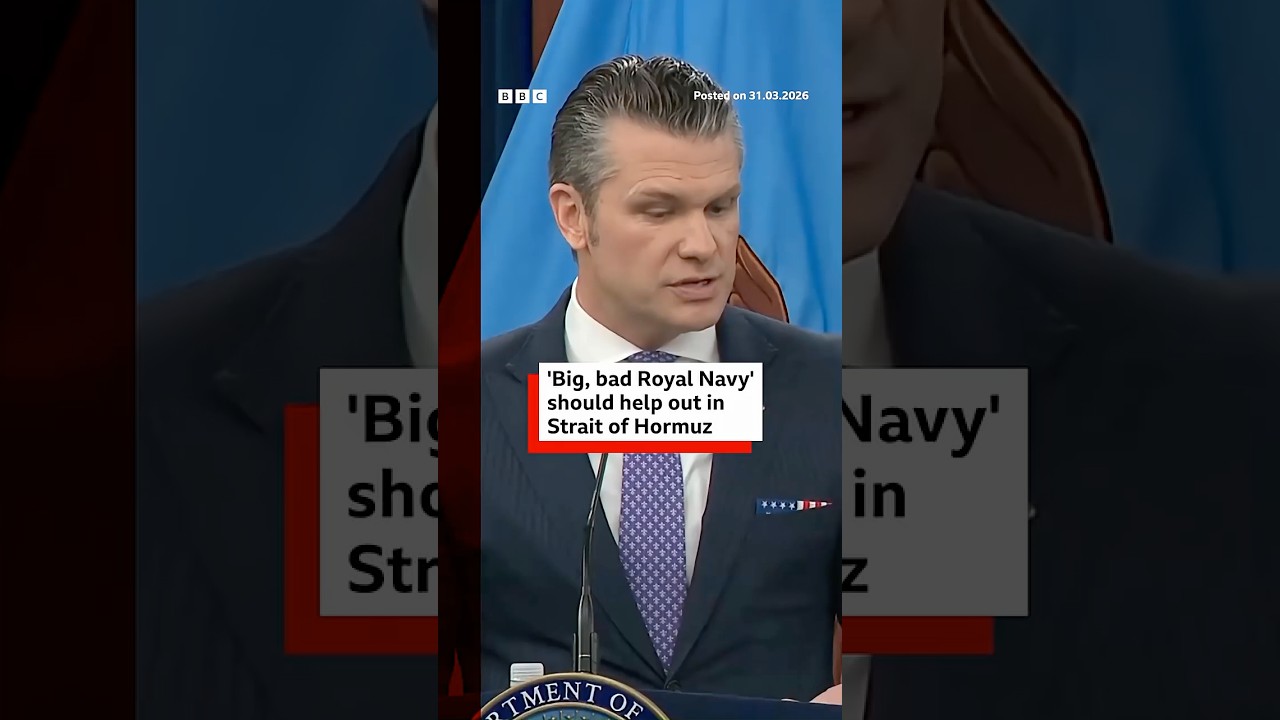
In a recent address, the President highlighted the importance of international cooperation in securing vital waterways, specifically emphasizing the need for global partners to assume responsibility alongside the United States Navy. The focus was particularly sharp on the Strait of Hormuz, a crucial channel through which a significant portion of the world’s oil supply traverses. This pivotal waterway, while primarily associated with U.S. naval operations, should not be viewed as an American concern alone. The President underscored that nations around the globe, including allies like the Royal Navy, must also be prepared to step in when necessary.
The Strait of Hormuz is a strategic transit point for energy resources, making its security critical not only for the United States but for all nations that rely on its waters. The President made it clear that the burden of maintaining maritime freedom should be shared more broadly. “We use this waterway less than most,” he remarked, urging other nations to acknowledge their stake in maintaining safe passage.
Historically, the region has seen various tensions, particularly with Iran, which has posed threats to shipping and international trade routes. The President has articulated a robust strategy for dealing with these provocations, framing it as a shared challenge for democratic nations. His approach has been characterized by a willingness to shoulder a substantial share of the burden, but he also highlighted the need for collective action from other countries.
The call for greater international involvement is a significant step toward addressing the ongoing volatility in the region. The United States has long been the dominant force in maritime security, but reliance on a single nation to uphold the safety of international waters is neither sustainable nor desirable. Inviting allies to participate in safeguarding these waterways not only strengthens alliances but also demonstrates a unified front against aggression.
By delineating the responsibilities of various countries, the President acknowledges the interconnected nature of global security. “This isn’t just our problem set going forward,” he noted, emphasizing that a collaborative approach is essential in ensuring the Strait of Hormuz remains open and navigable for all international shipping. The necessity of a collective response is particularly pressing given Iran’s recent aggressive maneuvers in the region, which have raised alarms among nations dependent on unimpeded maritime trade.
Engagement from allies is crucial. The Royal Navy, for instance, has the operational capability and experience to assist in patrols and escort missions within the region. Inviting their participation serves not only to bolster security but also fosters a shared sense of responsibility among nations. The pursuit of a stable and secure maritime environment is a common goal that transcends borders.
The President’s remarks lend insight into an evolving international security dynamic, where the United States encourages allies to step up in partnership rather than relying solely on American military might. This shift signifies a broader recognition of shared interests: the safety of oil supplies, the integrity of international trade routes, and the principles of freedom of navigation.
In summary, the President’s lucid approach on this matter reflects an urgent need for global collaboration. The stability of the Strait of Hormuz, a critical junction in international trade, relies heavily on multilateral efforts. As the United States continues to shoulder substantial responsibilities, the call for allies such as the Royal Navy to engage demonstrates an understanding of the importance of unity in the face of collective security challenges. By fostering these relationships and encouraging shared commitment, the free world can better address the multifaceted threats posed by regional actors and ensure vital trade routes remain secure for all.