Shifts in Political Dynamics: Analyzing Recent Election Trends
The political landscape in the United States, particularly in states like Wisconsin and Georgia, has witnessed significant shifts recently. Traditionally regarded as a Republican stronghold, these changes prompt serious considerations for both parties as they strategize for the upcoming midterms.
Reports indicate a notable tilt towards the Democratic Party, especially in recent special elections. In Wisconsin, for instance, the Democrats have managed an impressive overperformance compared to the previous presidential vote. To put this into perspective, during the 2024 presidential cycle, liberal candidates exceeded Kamala Harris’s baseline by an astounding 21 points. This reflects a broader pattern observed in states like Virginia and New Jersey, where Democratic candidates outperformed Harris’s numbers by 10 and 8 points, respectively.
Notably, this trend is more pronounced than in the 2017-2018 cycles, which saw Democrats surpass Hillary Clinton’s baseline, albeit by smaller margins. The 2025-2026 cycle is shaping up to be pivotal, as Democrats capitalize on shifting voter sentiments.
A remarkable highlight from Wisconsin’s recent elections was the performance of Chris Taylor in the state Supreme Court race, marking the best results for a liberal candidate in three decades. The data reveals a nine-point swing, further illustrating the evolving political sentiment in the state.
Contrasting these results are the developments in Georgia, specifically regarding the special election for Marjorie Taylor Greene’s former House seat. Despite the win by Republican Clayton Fuller, who secured over 55% of the vote, the Democratic candidate, Shawn Harris, received 44%. While this may seem inadequate at first glance, it represents a substantial reduction of 23 points compared to Donald Trump’s 2024 performance in this traditionally Republican district, which he won by a staggering 37 points.
This reduction indicates a trend of Democratic resilience and increasing attraction among voters who may have previously supported Trump. Such patterns are not isolated; they mirror results from elections in Virginia and New Jersey. These victories illustrate that Democrats are not only mobilizing their base effectively but are also capturing the interest of some former Trump voters.
However, it is crucial to approach these results with caution. November’s midterm elections might not completely resemble special election results. The electorate in midterms tends to differ significantly from those who participate in special elections. Republicans, despite recent setbacks, still hold notable advantages, including substantial financial resources. Donald Trump, for instance, has an impressive war chest of $500 million that he has not yet deployed. How this financial leverage is managed will play a crucial role in shaping election outcomes.
Additionally, the political map itself remains a factor. Many House districts have been strategically gerrymandered to favor Republicans. This geographic advantage continues to complicate Democrats’ efforts in particular races.
Yet, the dynamic appears to be shifting. Recent trends suggest that even in solid Republican territories, such as Georgia, the political landscape may be evolving. The 25-point margin of overperformance in special elections, the largest since Doug Jones’s 2017 Alabama Senate win, underscores a critical moment for Democrats.
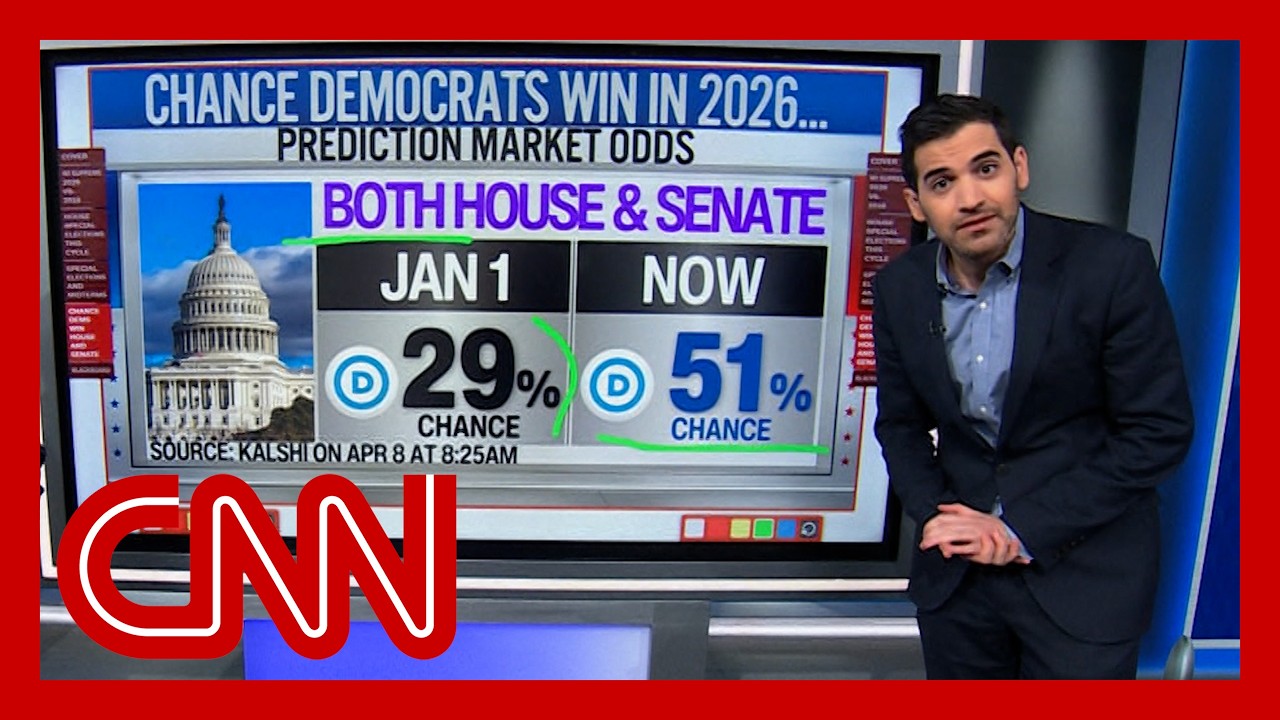
Political analysts are increasingly noting that historical trends can provide predictive insights. In the past, Democratic overperformance in special elections has often foreshadowed broader success in midterms. This correlation fuels speculation that the Democratic Party could significantly increase its chances of winning both the House and Senate in the upcoming election cycle.
Republican strategists are aware of these warning signs and have urged Trump to engage more actively on the campaign trail to galvanize his base. Voter turnout is paramount, and there’s a discernible concern that many who supported Trump in previous elections may not participate this time around.
As we look ahead to November, the evolving political landscape demands careful analysis. The Democratic Party seems poised for potential gains, while Republicans must navigate complex dynamics, including financial advantages and voter engagement strategies. Both parties are gearing up for what promises to be an intriguing electoral contest, shaped by the lessons of recent elections and the sentiments of an increasingly diverse electorate.