ICE Agents at Airports: A Controversial Response to Long Security Lines
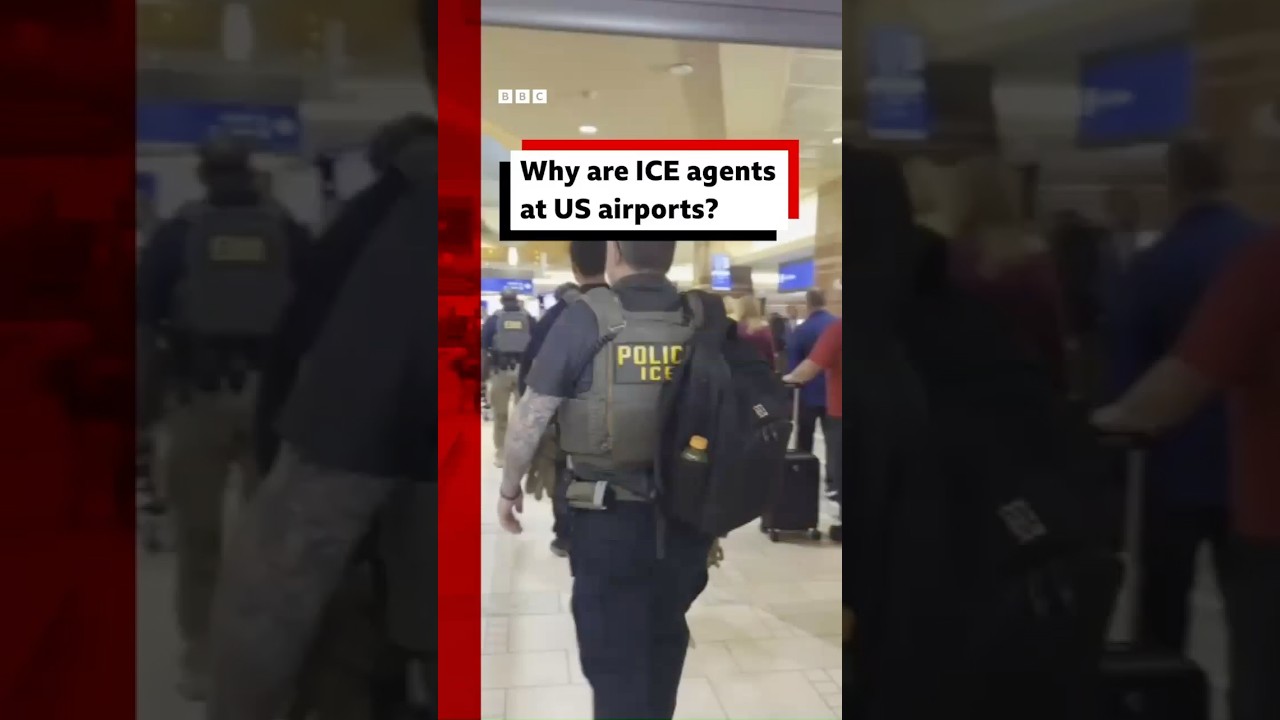
In a move that highlights the intersecting challenges of immigration enforcement, public safety, and government oversight, U.S. Immigration and Customs Enforcement (ICE) agents have begun to appear at major airports across the country. This strategic deployment is not just an immigration initiative but a government response to increasingly long lines at airport security checkpoints, exacerbated by the ongoing partial government shutdown.
The Trump administration’s decision to place ICE personnel in airports has raised eyebrows. The partial government shutdown has left security staff at certain airports working without pay. Consequently, many have opted to call in sick, leading to significant staff shortages. Reports indicate that travelers are now facing hours-long delays, with some even resorting to sleeping in terminals to ensure they catch their flights.
The Department of Homeland Security (DHS) has acknowledged this overwhelming situation. As wait times stretch to breaking points, air travel becomes fraught with anxiety. Those waiting in line are not just worried about missing their flights; they also face the inconvenience of disrupted schedules. The atmosphere in airports is increasingly tense as long lines become a new norm.
In light of these challenges, hundreds of ICE agents have been deployed to 14 key airports, including bustling hubs in New York, Atlanta, and Houston. Tom Homan, a prominent figure in the Trump administration’s immigration policy, stated that these agents are expected to assist with crowd control rather than engage in screening or enforcement actions on passengers. However, this clarification draws mixed reactions, especially considering President Trump’s comments that the agents could potentially make arrests.
The optics of this deployment have sparked a complex discussion about the role of law enforcement in public spaces. While some applaud the administration’s intent to address crowding, others express concern about the message it sends regarding the relationship between immigration and everyday life in America. Critics argue that the presence of ICE agents in airports undermines the sense of safety among travelers who may feel targeted or intimidated by enforcement personnel.
In a notable directive, President Trump has requested that ICE agents avoid wearing face coverings or masks, contradicting standard practices for uniformed personnel. His reasoning is that such attire might not present an appropriate image in the airport environment, potentially exacerbating the fear and uncertainty among travelers. Here, the administration grapples with balancing practicality against public perception.
The rationale behind deploying ICE agents can be interpreted in a broader context. On one hand, it’s a logistical response to a pressing challenge facing U.S. airports; on the other, it signifies an ongoing shift in the culture of law enforcement within non-traditional domains. By interspersing ICE agents throughout airports, the administration is attempting to address crowd control while simultaneously reinforcing its commitment to strict immigration policies, blurring the boundaries between customer service in air travel and heightened enforcement.
However, the situation remains fluid. The effectiveness of this initiative hinges not only on immediate impacts—such as reduced wait times—but also on long-term implications for public perception and community trust. How will travelers feel knowing that immigration enforcement personnel are present among them, even when the stated mission is to manage crowds?
As the shutdown continues, the deployment of ICE agents at airports serves as a fascinating case study on the complexities of governance in times of crisis. While efforts to alleviate long wait times may yield temporary relief, the broader implications for the relationship between American citizens and government authority will linger far longer. If nothing else, this episode is a reminder that the solutions to logistical problems often carry unintended consequences, particularly in a polarized political landscape.
In navigating this challenging terrain, the administration faces the dual task of managing an immediate operational crisis while trying to maintain public trust in essential government functions. The outcome remains uncertain, but the arrival of ICE agents at airports undoubtedly adds a new layer to the ongoing debate around immigration and public safety in America.