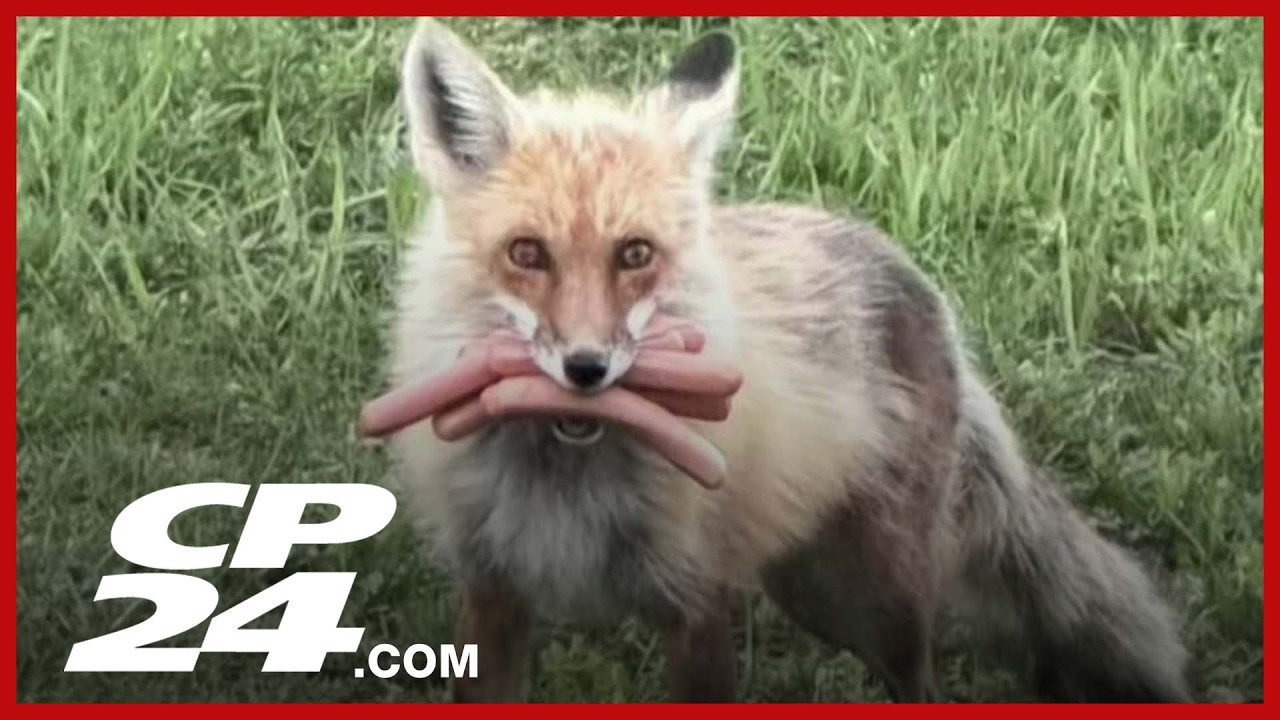
In recent news from Alberta, a mischievous fox has caught the attention of local authorities, but not for the reasons one might expect. This particular red-haired rascal found itself in a rather humorous predicament after allegedly stealing a bundle of hot dogs—a classic staple of summer barbecues. The Royal Canadian Mounted Police (RCMP) shared a picture of the furry suspect, who wore an expression that suggested it was rather proud of its thievery.
Onlookers were quick to note the amusing sight: the fox’s mouth appeared to be stuffed with the sausages, suggesting it might have been an avid fan of the summer delicacy. Perhaps it was simply enjoying an impromptu feast—an indulgence that, undeniably, offers a hint of amusement to those who stumbled upon the scene.
As the story developed, the local authorities decided against pursuing charges for the fox’s brazen behavior. After all, one might argue, it’s not every day that the police have to contend with a hungry animal caught in the act. Instead, the incident served as a light-hearted reminder of the wildlife that often crosses paths with urban living.
The thief’s narrow escape from legal ramifications has sparked a conversation about the increasing presence of wildlife in suburban areas. Many residents have reported spotting foxes roaming their neighborhoods, with one homeowner sharing, “I see them often on my way to work. They’ve certainly made themselves at home.” This observation highlights a growing trend of wildlife adapting to urban environments, where they frequently encounter food sources, be it improperly discarded trash or, as in this case, barbecued fare left unattended.
However, this adaptation comes with its share of concerns. The same observer mentioned noticing fewer rabbits in the area, a direct consequence of the increased fox population. Such shifts in local wildlife dynamics can lead to unforeseen challenges for residents who cherish a balanced ecosystem. The conversation meandered into discussions about the delicate balance between wildlife and pets, as local residents expressed vigilance about their smaller animals, especially from potential fox encounters.
Interestingly, the incident provided a catalyst for humorous speculation. Some local residents joked that the fox might have a culinary preference for uncooked hot dogs, as the stolen sausages seemed untouched by flames. “Look at that,” one observer quipped, “it’s like they prefer their meals raw.” Such light-hearted banter encapsulated the absurdity of the situation while illustrating how wildlife can intrude upon human activities in comical ways.
As digital media continues to evolve, the framing of this incident also reveals an important commentary on the nature of reporting and storytelling. The image of the fox was described as “looking almost AI-generated” by onlookers, which underscores a societal trend where skepticism towards images shared online is burgeoning. The public grapples with differentiating reality from artificially manipulated visuals, particularly in a world where misinformation can proliferate swiftly.
The dialogue shifted toward a broader discussion about content consumption in today’s age. Jokes about “hot people at sporting events” seamlessly evolved into a critique of online trends and the societal pressures in the scrolling era. Many expressed empathy for younger generations, who are often bombarded with embellished representations of reality. The innocence of childhood can be overshadowed by a digital landscape rife with distortions.
Yet amid these discussions, the story of the fox remains a heartwarming narrative of resilience, adaptation, and the unexpected intersections of nature and urban life. The incident may serve as a reminder of the simple joys and laughter that can arise from even the most peculiar situations. In the end, one can’t help but chuckle at the cheeky character who managed to create a buzz in the neighborhood, all for the love of hot dogs.