Escalation on the Horizon: U.S. Military Preparedness Against Iran
The geopolitical landscape surrounding Iran is becoming increasingly fraught as the U.S. military braces for potential strikes against Tehran as early as this weekend. This preparedness comes amidst a significant military buildup in the region, with another aircraft carrier strike group en route and heightened concerns about Iran’s nuclear infrastructure. President Trump’s equivocal stance—having privately wavered between advocating for military action and showing restraint—has yet to culminate in a definitive decision.
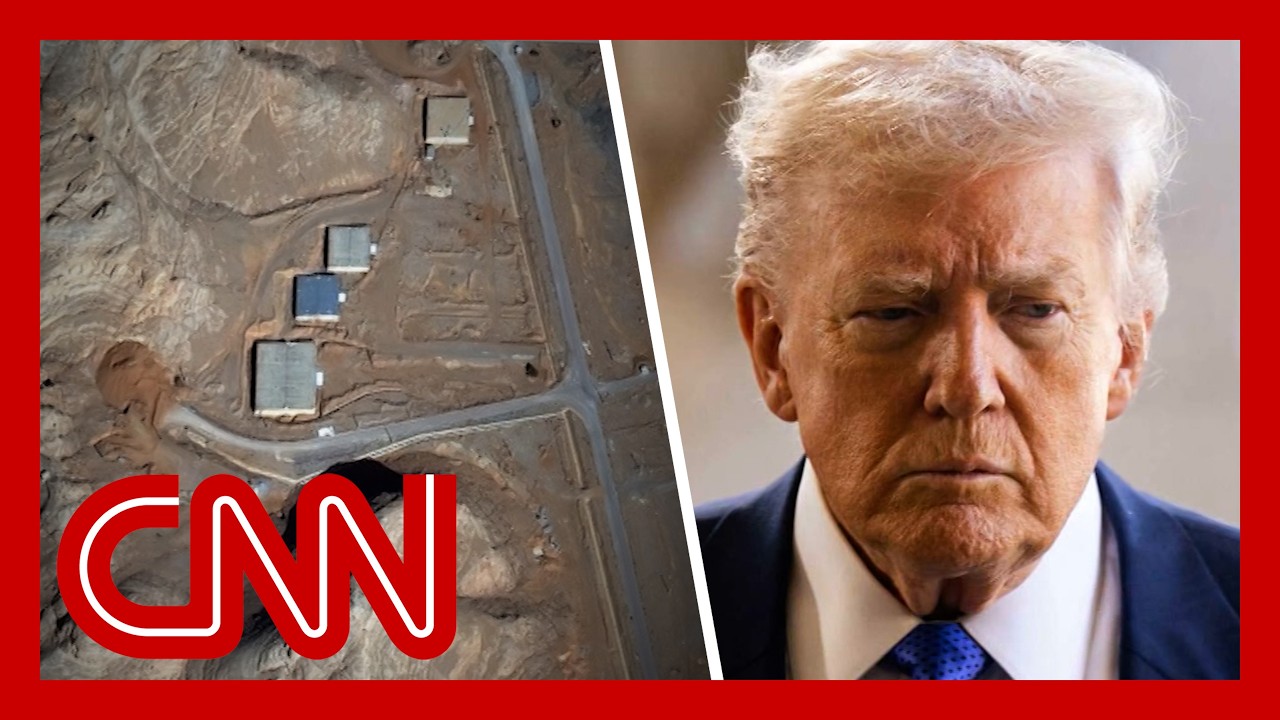
Recent satellite imagery reinforces the urgency of the situation, revealing that Iran is actively fortifying its nuclear facilities using concrete and other resources to further entrench these critical sites. The speed and scale of these preparations suggest Tehran is not merely on the defensive but is anticipating possible offensives from U.S. forces.
Former advisor to U.S. special operations forces, Seth Jones, pointed out that the presence of two carrier strike groups in the region indicates a significant U.S. military commitment. He emphasizes that without fruitful diplomatic negotiations, the risk of U.S. military action is escalating. However, Jones notes that the ultimate objectives behind these potential strikes likely remain narrow in scope. He speculated that targets may include key nuclear facilities and Iranian Revolutionary Guard Corps sites, rather than aiming for overarching, risk-laden objectives like regime change.
Discussions surrounding potential U.S. military action inevitably lead to questions of strategic intent. Would the U.S. target sites within Tehran, or focus exclusively on nuclear installations outside urban centers? Historical analogies provide essential context. Carl von Clausewitz famously characterized war as a continuation of politics by other means, underscoring the importance of aligning military objectives with political goals.
In this narrative, the U.S. administration’s intent—whether to limit action to nuclear sites or escalate further by targeting air defense installations—will dictate its military strategy. Striking merely at nuclear sites would present less risk than attacking broader military infrastructure, which carries a far higher potential for conflict escalation and unintended consequences.
The conversation about U.S. military goals brings into focus the specter of regime change. Experts suggest that while such a radical outcome is not the stated aim of the current U.S. strategy, the temptation to overreach could present significant dangers. Reactive strikes against Revolutionary Guard sites or key political figures could inadvertently push the U.S. deeper into the murky waters of Iranian domestic politics.
Iran’s reaction has further complicated the military calculus. Reportedly, Tehran is preparing for a joint naval drill with Russia, coinciding with the U.S. military’s heightened readiness. This partnership indicates Tehran’s commitment to counteract any western military actions while fortifying its defenses.
Democratic Congressman Jim Himes, who serves as the ranking member on the Intelligence Committee, voiced concerns about the ramifications of military action. Citing the risks involved, he argued that there is an inherent danger in assuming "flawless" military execution that overlooks long-term consequences. Past experiences, particularly in Iraq and Afghanistan, highlight the severe complexity of regime change that often requires far more than air strikes.
The idea that military action could achieve dramatic visual results—what Himes described as “cinematic” engagements—provides a problematic framework. The danger lies in underestimating the resilience and adaptability of the Iranian state, which has demonstrated its capacity to rebound and recover crucial military installations following previous U.S. attacks.
As the military clock ticks down, the atmosphere grows tenser. Rapid improvements to Iranian air defenses from prior engagements complicate U.S. military operations, making any potential strike increasingly perilous. Military leaders and government officials on both sides are acutely aware of these dynamics, emphasizing the need for careful strategy that balances immediate military objectives with broader political implications.
In conclusion, the potential for U.S. military action against Iran looms large but is fraught with complexity. A delicate interplay of military readiness, political goals, and the lessons of history underscores the importance of prudence in approaching this fraught relationship. As the U.S. weighs its options, the stakes are nothing short of monumental, potentially reshaping the Middle Eastern geopolitical landscape for years to come.