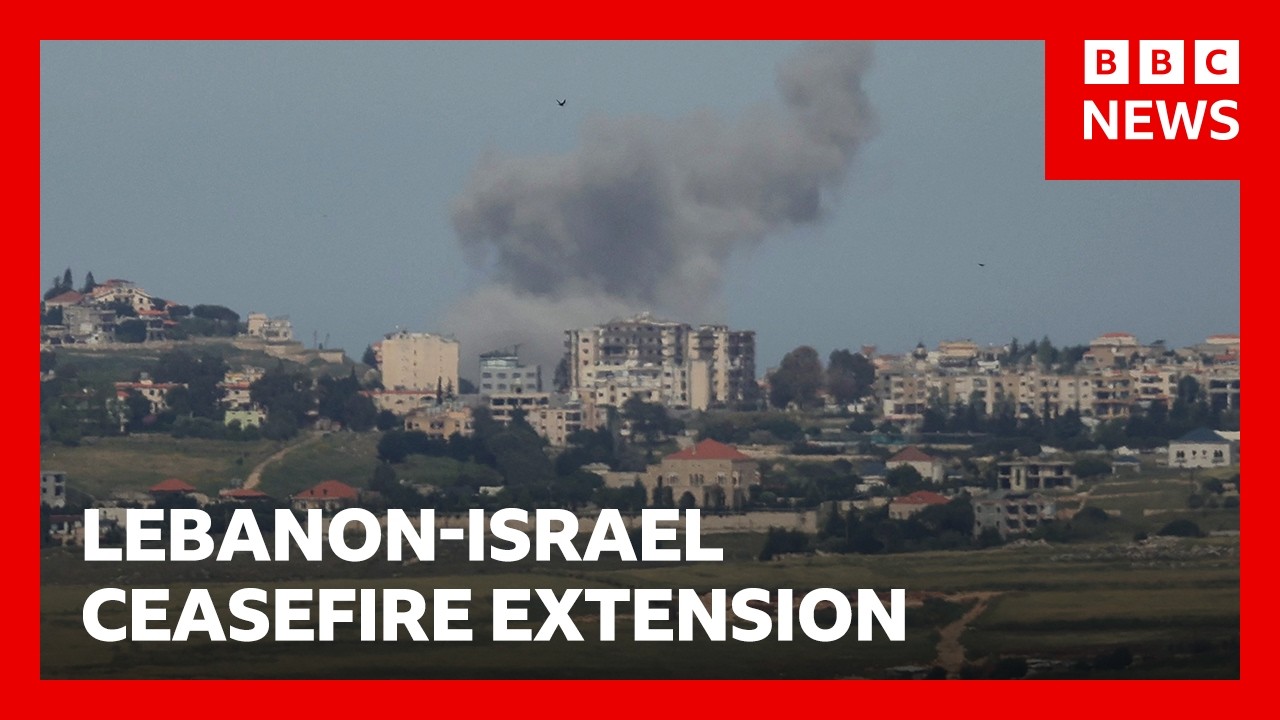
Earlier this week, a ceasefire renewal between Israel and Lebanon was announced by President Trump, igniting a spark of cautious optimism. However, the reality on the ground is far more complex than the announcement suggests.
Israel has conducted a series of targeted strikes aimed at Iranian-backed armed group Hezbollah, asserting that these actions are necessary to eliminate threats to its national security. Within a day of the ceasefire announcement, Lebanese authorities reported new Israeli strikes in southern Lebanon, resulting in the tragic deaths of six individuals, including three paramedics. Such incidents prompt the question: how credible is this ceasefire, and does it truly hold the potential to foster lasting peace?
To gain insight into these developments, we turned to Roger Shanahan, a former army officer and Middle East analyst. When asked about the implications of the ceasefire, Shanahan expressed skepticism regarding its effectiveness. He pointed out that while a 45-day extension is theoretically beneficial, the reality is that ceasefires often devolve into localized fighting rather than an outright cessation of hostilities. Both Israeli military strategies and Hezbollah’s operational response have historically been entwined in a complex web of geopolitical ambitions and regional tensions.
The road to lasting peace appears daunting, punctuated by two critical issues: the withdrawal of Israeli troops and the disarmament of Hezbollah. Shanahan noted that disarming Hezbollah poses the most significant challenge for the Lebanese government. Israeli officials have suggested that troop withdrawal is contingent upon the disarmament. However, Lebanon’s military faces significant constraints, lacking the equipment necessary to disarm such a formidable and entrenched non-state actor.
Shanahan’s observations reveal a critical reality: any efforts to disarm Hezbollah must occur within the delicate framework of Lebanese sovereignty and national unity. The Lebanese army, while a national institution, is not in a position to eliminate Hezbollah without risking a fracture in its own ranks. This makes any meaningful resolution to the disarmament issue profoundly complex, with no simple solution in sight.
The situation is further muddied by the ongoing Israeli strikes, which Israel claims are necessary to dismantle Hezbollah’s infrastructure. However, the implications of these military actions are troubling. Lebanese officials have pointed out that these strikes often target civilian infrastructure, resulting in collateral damage that includes both paramedics and bystanders. Such actions raise the specter of miscalculation and escalation, making an already volatile situation even more precarious.
Shanahan emphasizes that paramedics and first responders, although sometimes linked to Hezbollah-affiliated organizations, should not be considered combatants. The targeting of these individuals presents a moral and ethical dilemma that compounds the humanitarian crisis. Moreover, the infrastructure targeted by Israeli forces—roads, bridges, and public utilities—serves the entire population of Lebanon, not just Hezbollah. This reality complicates Israel’s narrative and sheds light on the collective suffering inflicted upon civilians.
In essence, the ongoing conflict is an intricate tapestry woven from historical grievances, national ambitions, and regional power dynamics. The interrelationship between Hezbollah and Lebanese society underscores the challenge of distinguishing combatants from non-combatants, especially in a landscape where much of the infrastructure is co-opted for various political ends.
As we look to the future, the prospect of lasting peace in Lebanon remains uncertain. The extension of the ceasefire offers a temporary reprieve, but without substantive dialogue and mutual concessions regarding disarmament and sovereignty, the cycle of violence is likely to continue. Shanahan’s analysis highlights that any resolution must consider not only military strategies but also the broader socio-political context that shapes Lebanon’s fragile peace.
In this turbulent arena, the hope for genuine stability hinges on a delicate balance: the necessity of regional security must be weighed against the imperative of safeguarding civilian lives. As events unfold, the international community watches closely, hoping for a breakthrough that could finally pave the way for enduring peace in a historically fractious region.