Has America Lost the Race for Electric Vehicles?
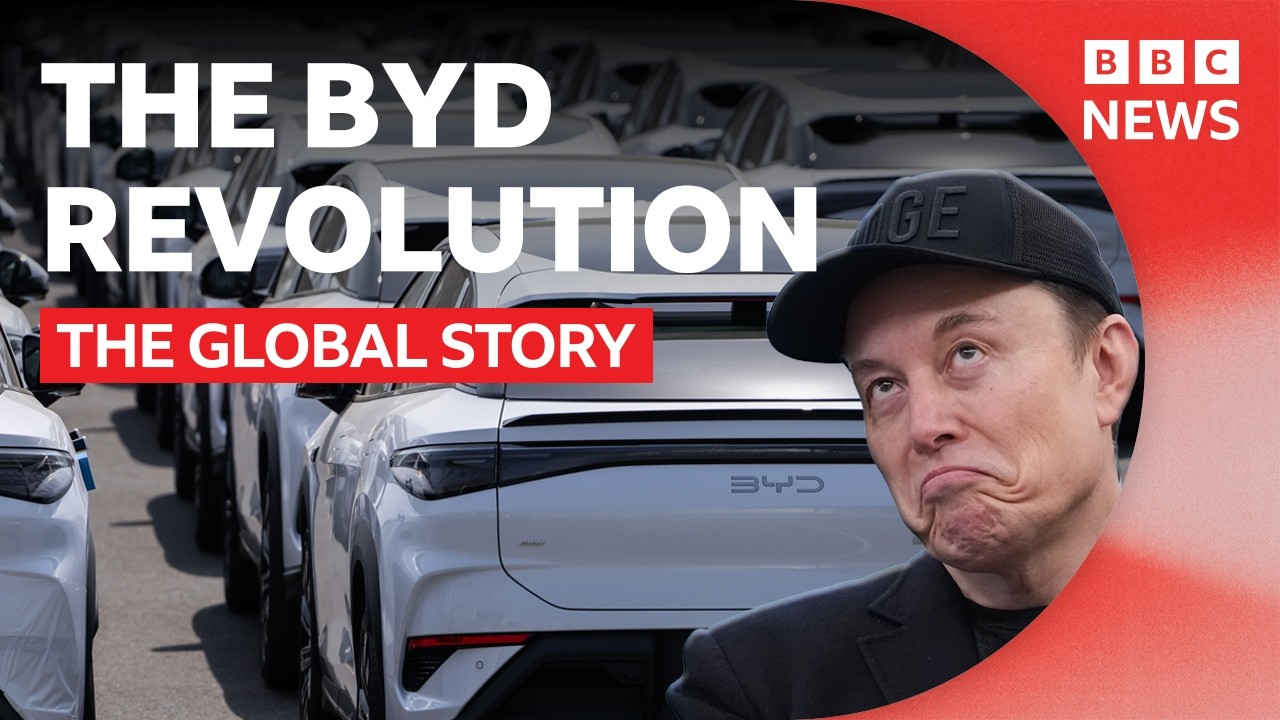
In the rapidly evolving landscape of electric vehicles (EVs), the United States faces an unsettling reality: it may be losing ground in a race it once led. The American EV giant, Tesla, has been overtaken by a competitor that few in the U.S. might recognize—BYD (Build Your Dreams), a Chinese automotive powerhouse. This article explores how China has emerged as a leader in EV production and what it means for America’s automotive industry.
For years, Tesla was synonymous with electric cars. It paved the way for mainstream acceptance, but now, it finds itself trailing behind BYD. Remarkably, while Tesla still commands respect, its market dominance is under siege, not just by BYD, but by a legion of other Chinese brands. The question inevitably arises: how did this happen?
China’s rapid ascent in the EV sector can be attributed to a multifaceted strategy, combining government support, innovation, and an aggressive market approach. The Chinese government has long recognized that the future of transportation lies in electric mobility, reinforcing this vision with substantial subsidies and incentives for manufacturers. This has allowed companies like BYD to produce high-quality vehicles at competitive prices, leaving Tesla vulnerable in the global marketplace.
Consider, for instance, the pricing of BYD vehicles. In markets like London, these cars can start around $25,000, a significantly more affordable option compared to Tesla’s offerings. Yet in the U.S., tariffs on Chinese EVs are hovering around 100%, making it economically unfeasible for most American consumers to consider BYD, or any Chinese EV, as an option. This protectionist measure ironically underscores the challenges U.S. automakers face as they attempt to compete against a backdrop of rising oil prices and shifting consumer preferences.
Beyond just pricing, the technological advancements made by Chinese companies are noteworthy. BYD and others have not only developed fully electric vehicles but have also been at the forefront of innovations like fast-charging technology. As noted at the recent Beijing Auto Show, BYD introduced a "flash charging" capability that can replenish a battery to 70% in just five minutes, presenting a significant leap in convenience for users. Such innovations create a compelling narrative for consumers, positioning Chinese EVs as the go-to choice in various global markets.
The geopolitical landscape further complicates matters. The U.S. has effectively shut Chinese manufacturers out of its market, citing national security concerns. The Biden administration’s approach involves protective tariffs while simultaneously trying to bolster domestic production through initiatives like the Inflation Reduction Act. While these efforts aim to stimulate American manufacturing, they lack the unified political support seen in China, where EV development is a national priority.
During a recent visit to a major auto show in Beijing, the contrast became stark. The enthusiasm surrounding domestic brands was palpable, underscoring a cultural shift where electric vehicles are becoming a lifestyle choice, embraced by families and consumers alike. The U.S. auto industry, in contrast, appears mired in antiquated production methods and slow adoption rates.
Meanwhile, BYD has not just adjusted its strategy to remain viable; it’s thriving in various international markets such as Europe, Latin America, and Southeast Asia. Stella Lee, BYD’s global spokesperson, expressed confidence that her company can flourish without relying on the U.S. market. It’s telling that, even in the face of protectionist measures, Chinese brands are adapting quickly, branching out into new markets with aggressive marketing strategies that leverage social media and influencer partnerships.
American manufacturers now stand at a crossroads. The traditional wisdom that U.S. automakers once relied on is faltering as they scramble to catch up with their Chinese counterparts. They not only need to innovate faster but also need to reconsider their market strategies. Although the U.S. remains a colossal consumer market, the reality is that much of the action is now happening elsewhere.
In conclusion, while the American EV industry is not yet in a state of collapse, it certainly faces significant headwinds. With China leading the charge in technology and market adaptation, U.S. automakers must accelerate their efforts if they hope to compete effectively in this new era of automotive innovation. The EV race is far from over, but the landscape has undeniably changed, making it imperative for American manufacturers to rethink their strategies and embrace a transformative approach to keep up.