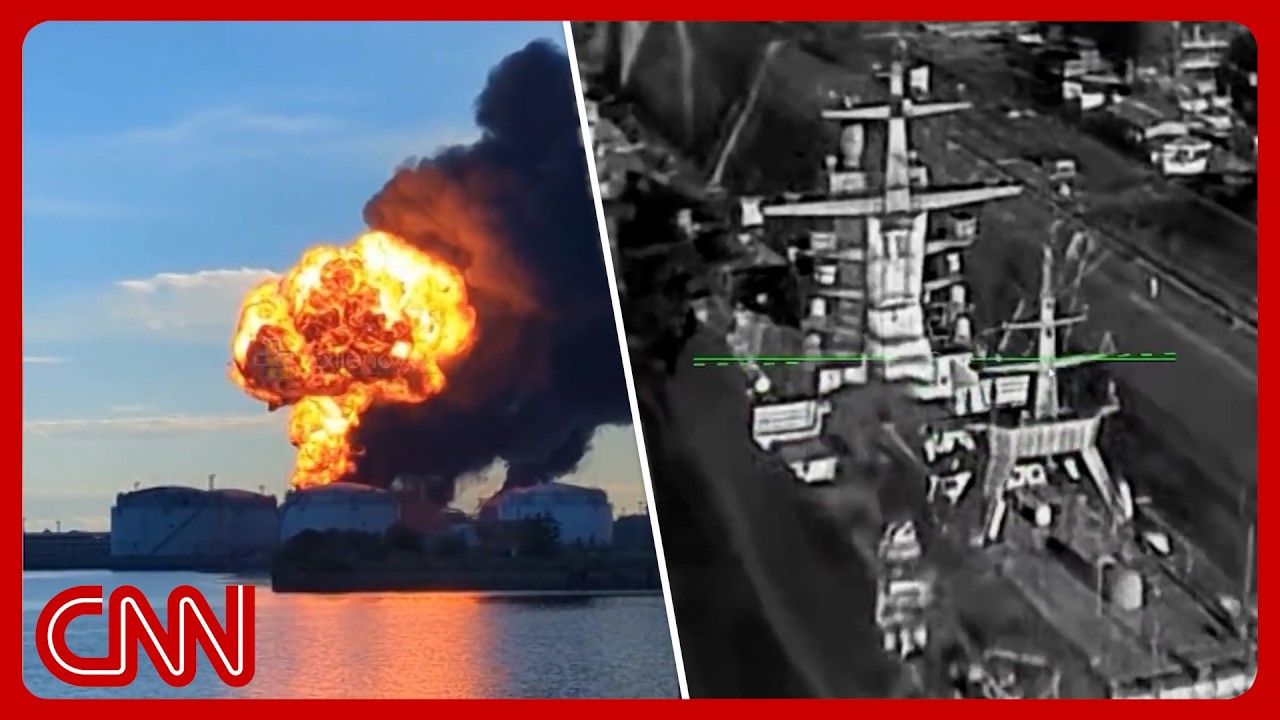
In recent developments, the conflict between Russia and Ukraine has intensified, particularly with Ukraine launching long-range drone strikes aimed at key Russian targets, including the oil terminal in Saint Petersburg. These strikes come at a significant time, coinciding with the Petersburg International Economic Forum, a prestigious event that once showcased Russia’s economic growth and at which President Vladimir Putin is scheduled to speak. The recent escalation underscores not only the grim realities of the ongoing war but also the strategic calculations both sides are making as they seek to gain leverage.
Ukrainian President Volodymyr Zelensky confirmed the effectiveness of these long-range strikes, highlighting the critical nature of the targets hit by Ukrainian forces. Saint Petersburg, historically a symbol of Russian strength and resilience, now stands as a backdrop for Ukraine’s potential to project power beyond its borders. The strike on the oil terminal—one of the largest in Russia—serves not only a military purpose but also aims to dent the Russian economy, a strategy that could yield dividends as the war wears on.
Reports indicate that the Ukrainian military has developed a sophisticated drone program, enabling it to conduct operations deep within Russian territory. The ability to diversify manufacturing sites complicates Russian efforts to target Ukrainian capabilities effectively, thereby creating a dynamic of asymmetric warfare. As one unmanned systems unit highlighted, the messaging is clear: Ukraine possesses the ability to strike back decisively even when its ground forces face a stalemate.
This recent uptick in aerial assaults from both sides is particularly notable against the backdrop of a largely static front line. The conflict has devolved into a war of attrition, with each side focusing on debilitating the other’s infrastructure and economic capacities. Russia, for its part, has conducted large-scale barrages that have resulted in civilian casualties in Ukrainian cities like Kyiv and Dnipro. Reports indicate at least 23 casualties in a recent offensive, drawing international condemnation and highlighting the human cost of the ongoing conflict.
Clare Sebastian, reporting from Poland, emphasizes the significance of this moment in the war, suggesting that these coordinated strikes serve a dual purpose. They not only aim to weaken the Russian military but also to signal to the international community that Ukraine can indeed reach deep into Russian territory. As the Kremlin faces increasing pressure from sanctions and international isolation, the ability of Ukrainian forces to strike back adds a new layer of complexity to the geopolitical landscape.
The juxtaposition of the Petersburg International Economic Forum—the so-called “Russian Davos”—against the backdrop of drone strikes reveals a striking narrative of resilience and desperation on both sides. While the Kremlin attempts to maintain an image of economic stability and national pride, the very essence of this event is undermined by the specter of drones overhead. Dmitry Peskov, a Kremlin spokesperson, highlighted the systemic nature of the responses they plan to undertake, framing them as a necessary continuation of what Moscow refers to as a “special military operation.”
Even as tensions escalate, the diplomatic landscape remains precarious. President Zelensky is reportedly pushing for renewed dialogue involving key international players, including the United States. However, optimism for a diplomatic solution has waned, particularly in light of the ongoing violence. The momentum that once briefly surfaced in early discussions has largely faded, leaving both sides entrenched in their positions.
This ongoing cycle of attack and counter-attack signals a new phase in the conflict, characterized by aerial bombardments aimed at economic and military infrastructures. Analysts suggest this method of warfare could be more sustainable for Ukraine, given the successful establishment of a domestic drone industry capable of producing weapons and mitigating supply chain vulnerabilities. On the other hand, Russia’s reliance on traditional military might may increasingly struggle to adapt to this evolving battlefield dynamic.
As we look to the future, it is crucial to understand that the stakes are high. Each strike has a purpose—to weaken the opponent and to send a message. The war remains a grim reality for both nations, yet it is also an evolving conflict that increasingly showcases the transformative power of technology in modern warfare. The world watches as the situation escalates, awaiting the next move in this unpredictable game of geopolitical chess.