Special Investigations Unit Probes Toronto Police-Cyclist Encounter Amid Growing Tensions
In recent developments, the Ontario Special Investigations Unit (SIU) has initiated an investigation into a controversial interaction between two cyclists and Toronto police officers. This announcement coincides with a protest ride organized by the cycling community to express their displeasure over the police’s actions.
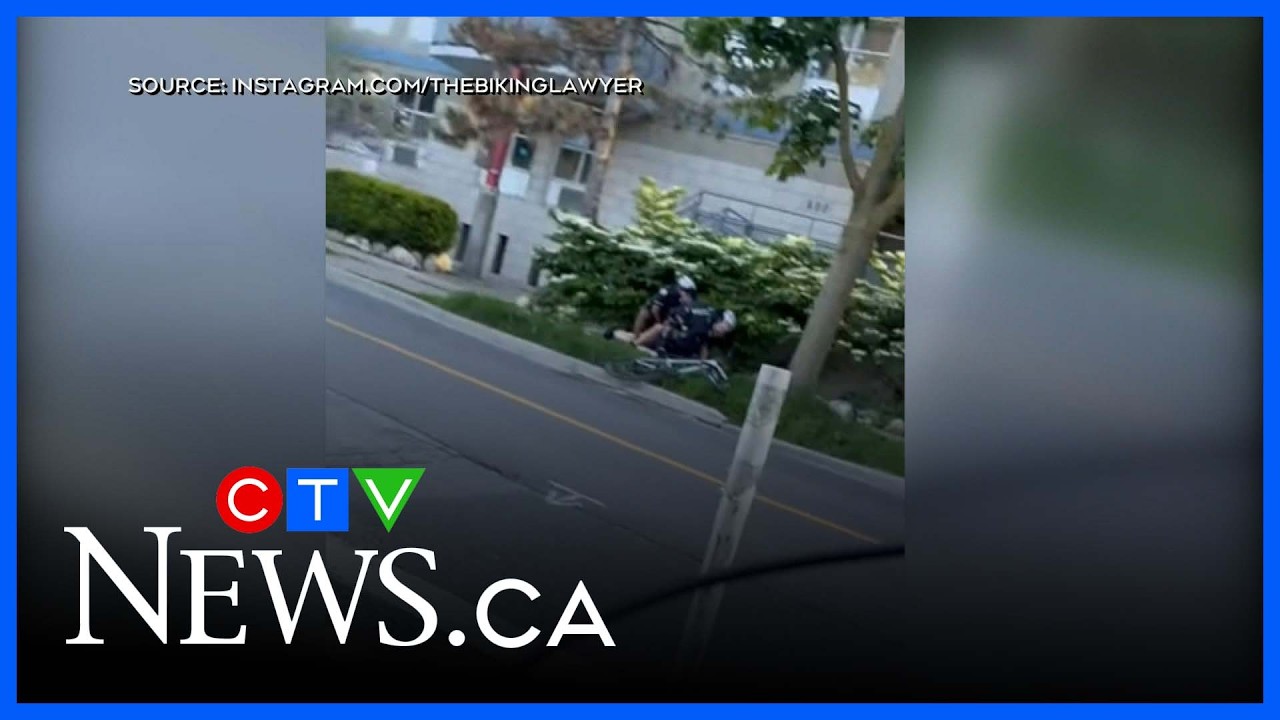
The protest, occurring on Queen’s Quay, is a direct response to an incident captured on video the previous Sunday. The footage shows a cyclist approaching the intersection of Queen’s Quay West and Little Norway Crescent. While one cyclist comes to a stop, another, apparently anxious, moves across the street. He quickly finds himself being pursued by at least one officer. Following a brief chase, multiple officers intervene, forcefully removing him from his bike and bringing him to the ground in what many observers have described as an excessive use of force.
Advocates and lawyers for cyclists are voicing serious concerns regarding the behavior of the police. David Shellnutt, an attorney representing the injured cyclist, emphasized the community’s shock and disappointment over the incident. “A person who didn’t stop at a stop sign got knocked off his bike and tackled by police, subsequently injured,” Shellnutt stated.
He went on to explain that the SIU was engaged because his client sustained a head injury during the altercation. The cyclist reportedly suffered a concussion, prompting him to seek medical assistance at an emergency room and a concussion clinic the following day. The SIU’s involvement was triggered by the seriousness of the injuries sustained—something that Shellnutt views as critical to ensuring an independent review of the circumstances surrounding the incident. "Once there’s a head injury, a serious injury like that, they invoke their mandate. We’re happy that a second set of eyes is looking at this," he remarked, responding to the initial defense stated by the Toronto police that their actions were justified.
The police defense revolves around claims that the cyclist ignored their instructions and attempted to flee, even using profanity in the process. Doubts persist among the cycling community about whether these actions warranted such a severe response. "This issue for us isn’t about whether the person should have stopped; for sure they should have stopped," Shellnutt admitted. However, he stressed that provocation should not provide grounds for excessive force—an opinion echoed by many in attendance at the protest.
In Ontario, the definition of excessive force encompasses actions that are deemed unreasonable, disproportionate, or unnecessary. Advocates argue that the situation could have been handled differently. There were no pedestrians or officers at risk, creating alternative paths for police to address the situation. Shellnutt advocates for methods more in line with community standards, saying, “They could have let the young guy go and caught up with him later or sent someone to block his path up there.” The police’s quick decision to immobilize the cyclist, he added, contradicts the expectations of proportionality in such encounters.
As attendees gather at the protest, the tensions surrounding this incident continue to rise. Questions mounted not only about the incident itself but also regarding the broader implications for community-police relations in Toronto. Local cyclists are rallying for justice, calling for accountability from the police force while underscoring the right to ride freely and safely in the city. The responses and community fallout from this encounter will likely resonate well beyond this immediate incident, influencing public discourse on police conduct and community safety.
The protest ride serves as a compelling reminder of the need for dialogue between law enforcement and the communities they serve. It shines a light on the complexities involved in traffic stops, public safety, and the responsibilities of both parties in such encounters. The coming days will be crucial, as the SIU continues its investigation while the cycling community presses for necessary reforms.