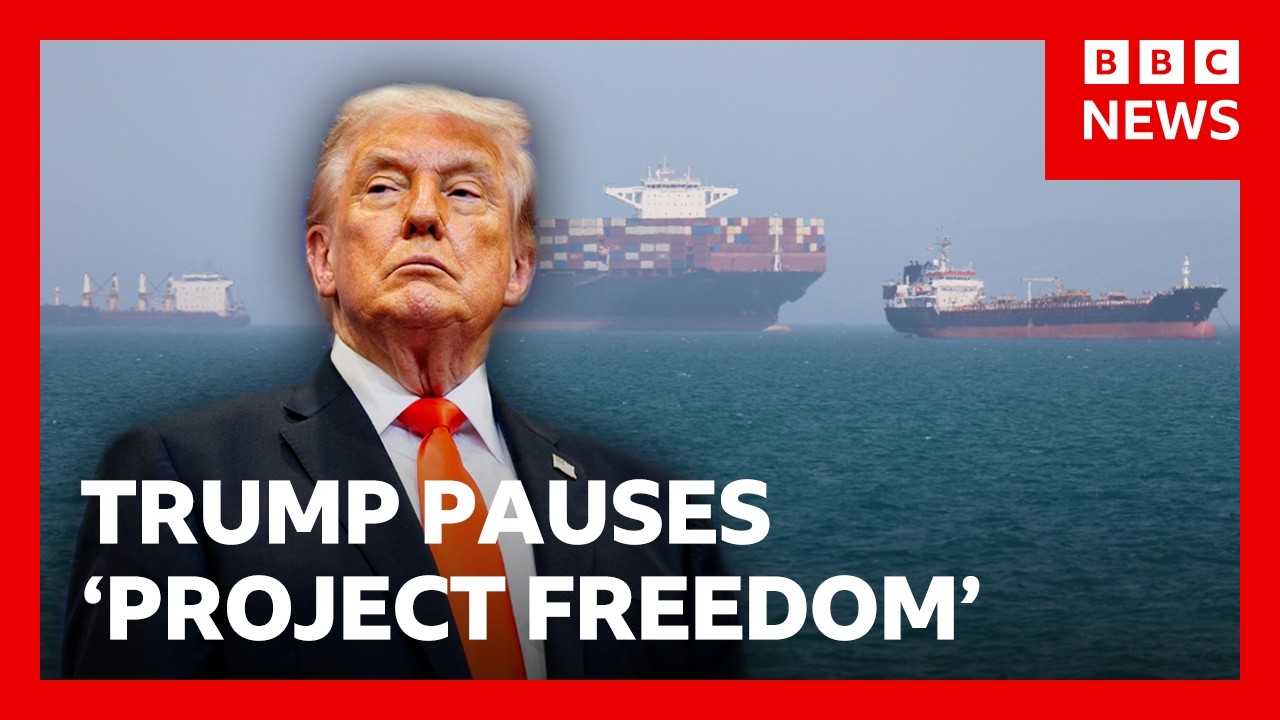
In a surprising turn of events, President Donald Trump recently announced the suspension of “Project Freedom,” a military operation aimed at facilitating commercial shipping through the strategically vital Strait of Hormuz. This decision comes less than 48 hours after the initiative was launched, following Trump’s assertion that negotiations with Iran are progressing. On social media, he stated, “We have mutually agreed that while the blockade will remain in full force, Project Freedom will be paused for a short period to evaluate whether an agreement can be finalized and signed.”
The announcement arrives amidst a backdrop of military operations, previously dubbed “Operation Epic Fury,” that involved a collaborative offensive by the United States and Israel against Iran, reportedly achieving its initial objectives. Secretary of State Marco Rubio has underscored a shift in focus from military aggression to navigational security, emphasizing that the U.S.-Israeli military efforts have concluded. However, despite these developments, Iran has continued to assert its control over navigation in the Strait of Hormuz, raising concerns about the stability of maritime routes in the area.
The intricacies of this geopolitical situation were further vocalized during Rubio’s lengthy press briefing, wherein he asserted that a defensive posture was crucial for safeguarding oil tankers traversing the Strait. It’s worth noting that nearly 1,600 vessels remain stranded in these waters, some having faced harsh conditions for upwards of two months. This raises pressing humanitarian and logistical questions about the fate of those aboard these ships.
Following the secretary’s remarks, speculation heightened concerning the potential for a diplomatic resolution with Iran. Trump’s social media update suggests he perceives the negotiation landscape as more favorable, but the true nature of these talks remains unclear. Observers are left to wonder: Does a meaningful agreement lie on the horizon?
The fluctuations in oil prices reflect the market’s reaction to these developments. There seems to be a cautious optimism regarding the resumption of talks between Iran and the West, with indications that major players, including China, may exert influence on Tehran to facilitate reopening the Strait. China’s strategic interests in the region cannot be overlooked, particularly as it has significant economic ties that hinge on the Strait’s accessibility.
Additionally, Iran’s foreign minister is currently in Beijing, engaging with Chinese officials. This visit is noteworthy given the unique position China holds as both a friend to Iran and a country whose economic interests depend heavily on Iranian oil and the stability of Gulf shipping routes. Secretary Rubio expressed hope that China would urge Iran to recognize their diminishing global standing and the detrimental impacts of its current policies. Yet, the Chinese government adopts a more ambivalent stance, arguing that all parties involved must adopt a collaborative approach.
China’s nuanced position reflects its desire to maintain economic relations with Iran while also safeguarding its interests in the Gulf, particularly with the United Arab Emirates, a nation that has been repeatedly targeted by Iranian actions. These dynamics present a complex backdrop against which diplomatic engagements are unfolding.
Experts suggest that both the U.S. and Iran may indeed be inching toward a pragmatic agreement, with each side likely willing to make concessions that allow for a semblance of victory. This might not only help alleviate tensions in the Strait but also mitigate potential humanitarian crises exacerbated by prolonged military engagements.
As the situation develops, the coming days will likely be pivotal in determining whether negotiations can materialize into tangible agreements. With various stakeholders, including China, actively seeking resolution, the international community will be watching closely, hoping for a pathway that not only opens the Strait of Hormuz but also heralds a period of renewed diplomatic engagement in the region.