Unpacking the UFO Phenomenon: Insights from Neil deGrasse Tyson
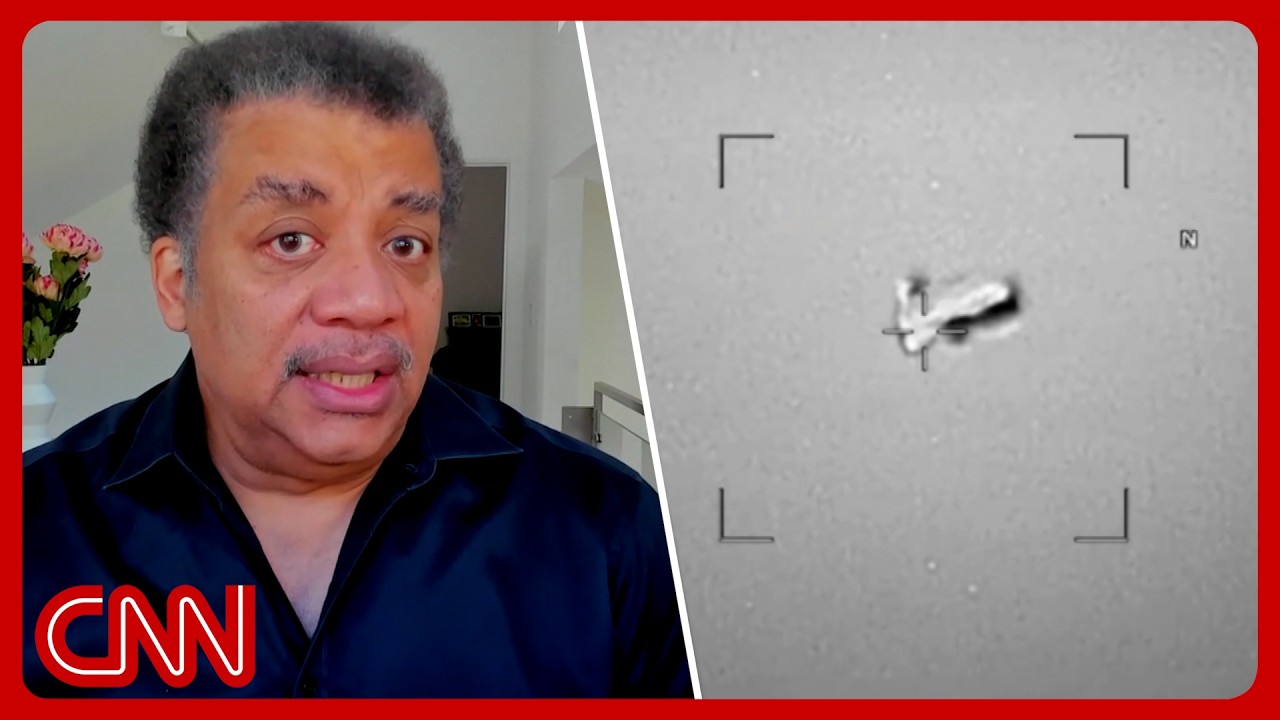
Last week marked a significant moment in the discourse surrounding unidentified flying objects (UFOs), as the Pentagon released a trove of government files shedding light on the longstanding mystery. The implications of these documents have widened the lens through which we view the potential existence of extraterrestrial life—further fueled by concerns raised by past administrations about humanity’s readiness for such a revelation. This topic recently gained traction in public discussions, particularly following the insights shared by astrophysicist Neil deGrasse Tyson in his new book, Take Me to Your Leader.
Tyson, known for his ability to communicate complex scientific ideas with clarity, emphasizes the importance of preparedness in the face of potential extraterrestrial encounter. “The real question is not whether we are alone in the universe, but whether we are ready for what we might find,” he states. Many may share the whimsical desire for an alien encounter, but Tyson anchors this yearning in a scientific context, advocating for an evidence-based approach to the issue.
Drawing from national conversations around UFOs, particularly the testimony of military officials and intelligence officers before Congress, Tyson highlights the credibility of these sources. He notes that the accounts are no longer limited to anecdotal evidence from rural observers or intoxicated bar patrons. Instead, they come from individuals with vested authority and experience, raising the stakes of this ongoing investigation. “If alien technology exists, where’s the evidence? If you have an alien in the shed, just bring it out,” Tyson quips. This statement underscores his insistence on empirical proof rather than speculation, challenging the public to transition from belief to acceptance based on tangible evidence.
In a segment of our conversation focusing on the recent revelations, Tyson conveys a mix of skepticism and wonder. He articulates his disappointment with the artistic renderings of UFOs popular in popular culture, pointing out that the physics involved in these depictions—particularly “smooth, rotating flying saucers”—are implausible. The laws of physics, he insists, are universal, meaning they hold true whether on Earth or beyond. It is this deep-rooted adherence to scientific principles that shapes Tyson’s musings on extraterrestrial life.
He introduces a fascinating thought experiment: given that humans share more than 98% of our DNA with chimpanzees, what if extraterrestrial beings possess a similar degree of advancement over us? Tyson’s perspective urges us to examine our own intelligence and the potential hubris in declaring ourselves the pinnacle of cognitive evolution. The possibility that an alien species might possess enhanced intelligence challenges the very basis of our self-identity.
Additionally, Tyson delves into the inherent biases we project onto the idea of aliens, often casting them as malevolent beings. “Perhaps we ascribe our own darker traits onto them,” he reflects. His thoughts amplify the notion that whether we encounter extraterrestrial beings or not, the quest for meaning and understanding lies within our capacity to create a narrative that aligns with our higher aspirations—lessening suffering and fostering knowledge.
The urgency of this narrative is intensified when considering the staggering public interest regarding UFOs. Recent data indicated that over 500 million individuals visited government websites to scrutinize the released UFO files. This overwhelming curiosity signals not only an appetite for the truth but also a collective yearning for transparency.
As new information surfaces, the question remains: what will the government reveal next? Tyson expresses hope for increased disclosure, noting the slow yet steady accumulation of evidence suggesting the existence of unidentified aerial phenomena. He emphasizes the responsibility of journalists and the public to demand transparency from those in power, establishing a “court of public opinion” as a vehicle for accountability.
Ultimately, the conversation around extraterrestrial life, as illuminated by Tyson’s insights, merges scientific inquiry with philosophical pondering. The implications of these discussions—whether regarding intellectual boundaries, ethical encounters, or the essence of human existence—richly color our understanding of not only potential extraterrestrial life but our own place in the cosmos. In a world where the line between fact and fiction often blurs, Tyson’s guidance encourages us to embrace curiosity, not just about the universe that exists beyond us, but about the depths of our own humanity.