A Commemorative $250 Bill: The Controversy Behind Trump’s Face
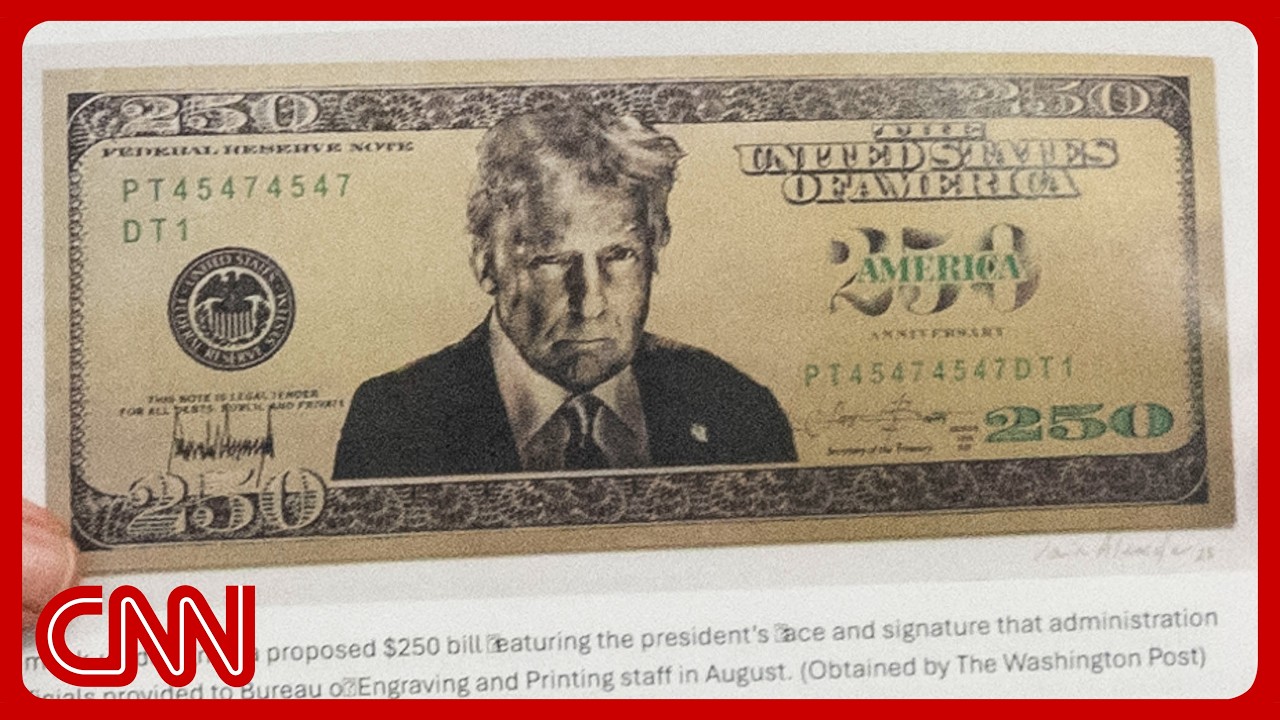
The Trump administration is reportedly preparing to introduce a commemorative $250 bill featuring the visage of former President Donald Trump, marking the nation’s 250th anniversary. This initiative, although still in the discussion phase, has already ignited debate among political circles and the public. According to recent reports, two political appointees within the Trump Treasury Department are pushing for prototypes, despite the existence of an 1866 law that prohibits living persons from appearing on U.S. currency.
The Washington Post highlighted this proposal, bringing it into the spotlight. Critics have raised eyebrows at the timing of such a potential release. With many Americans grappling with rising gas prices and increasing grocery bills, the discussion of a commemorative bill featuring Trump seems misaligned with pressing economic issues. In an interview, Treasury Secretary Scott Bessen downplayed the article’s significance, stating that the Treasury operates within the law and is simply preparing for any congressional changes that might allow this bill’s production.
Secretary Bessen’s assertion raises several questions: Is it politically prudent to pursue this bill? Are Americans ready to celebrate a milestone associated with a figure who has become highly polarizing?
To date, reactions from political analysts have varied widely. Some, like former DOJ Director of Public Affairs Soji Henosa, point out the potential implications of commemorating Trump, especially when many citizens are struggling financially. Henosa articulated a concern that a $250 bill featuring Trump could serve as a daily reminder of economic strain under his administration. Additionally, Democratic voices have joined the chorus of criticism. House Democratic leader Hakeem Jeffries dismissed the proposal as “monopoly money” and a distraction from more critical issues, further emphasizing the ill-timed nature of the initiative.
However, not all responses have been negative. Politically conservative commentators, like Scott Jennings, acknowledged the potential for a commemorative item to mark America’s 250th anniversary. He argued that having a face on a bill would not fundamentally alter the economic landscape. For Jennings, the proposal is less a question of legality and more a matter of priorities. He pointed out that Congress has the power to change the relevant laws and could easily sanction such a bill if desired.
Despite the potential for dissent, the decision to commemorate the anniversary may stem from a wider governmental initiative to celebrate national achievements. The government has already minted special coins in anticipation of the 250th anniversary. The very notion of commemorative items is deeply embedded in American culture and provides a platform for collective reflection. However, when viewed through the lens of today’s economic challenges, it generates heated discussions about priorities.
Democrats have articulated that focusing on a $250 bill represents misplaced values among Republicans, particularly when a significant majority of Americans feel discontent regarding economic conditions. Polls indicate that a considerable segment of the population believes that the current administration’s policies have failed to mitigate their financial struggles. This sentiment suggests that a commemorative bill may be perceived as a further detachment from the realities many are facing.
As political commentators exchange views on the potential bill, it is evident that the proposal raises more questions than it answers. As discussions unfold, they reveal a growing divide in perceptions of leadership, celebration, and policy priorities. The debate has unveiled the challenge of communicating national unity while acknowledging stark economic realities.
In the end, while the creation of a commemorative $250 bill featuring Donald Trump seeks to mark a significant moment in American history, the larger political and economic context cannot be ignored. Whether this initiative proceeds or remains a thought experiment, it serves to remind us of the inherent tensions that exist between celebration and the day-to-day struggles of the American citizenry. Ultimately, as the nation inches toward its 250th anniversary, one must consider how best to honor the past without overshadowing the present.