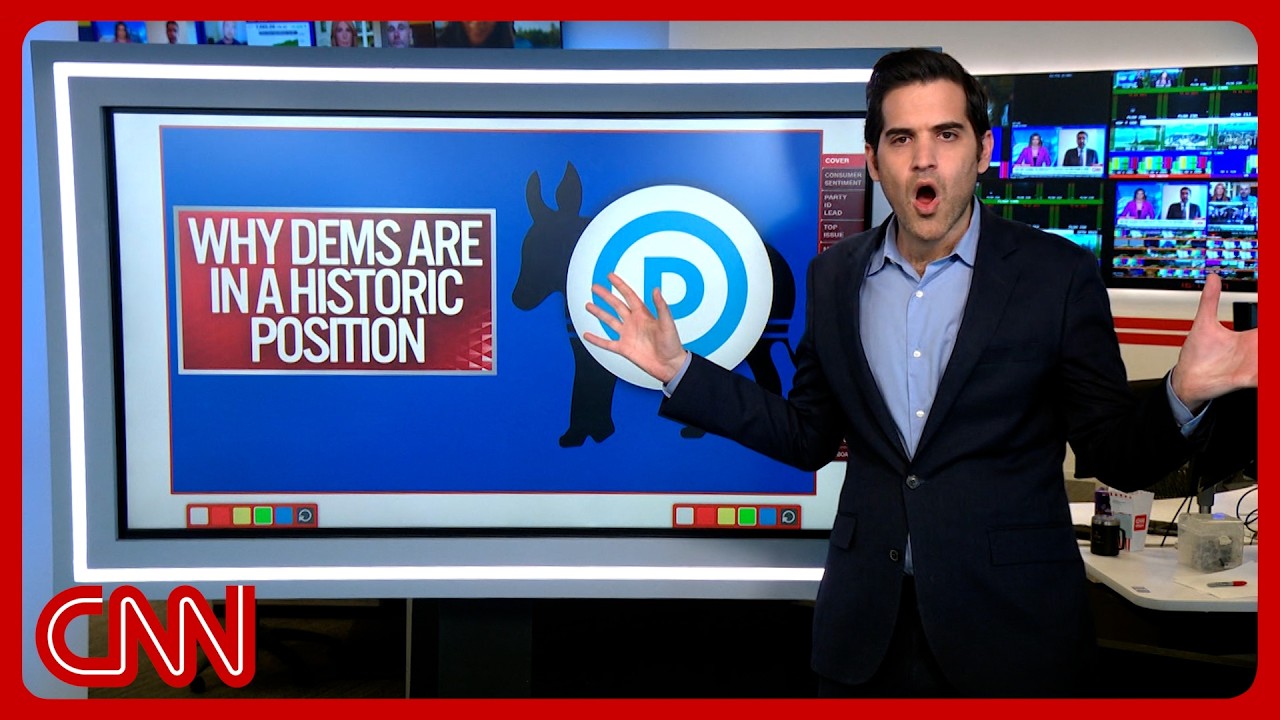
Democrats in a Historic Position Heading into the Midterms
As we approach the midterm elections, the Democratic Party finds itself in a uniquely strong position—one that many analysts believe is unprecedented in recent decades. While debates surrounding the economy, voter turnout, and party identification are central to understanding this landscape, it’s important to consider the broader implications of these trends as they shape the upcoming elections.
One of the primary drivers behind the Democrats’ favorable position is public sentiment regarding the economy. Historical polling data shows an alarming decline in consumer confidence, as revealed by a startling 38% drop since the beginning of Donald Trump’s presidency. This sentiment impacts how individuals identify politically—Democrats currently enjoy a 13-point lead over Republicans in party identification. This is noteworthy, as it marks one of the largest advantages for Democrats in the last 20 years, even exceeding the lead they had in 2006 when they successfully regained control of both the House of Representatives and the Senate.
Additionally, when voters are asked about the most pressing issues facing the nation, Democrats are increasingly viewed as more capable of addressing those concerns. The same 13-point advantage reflects this trend, turning on its head the narrative established in the 2022 elections, where Republicans were trusted by an 11-point margin. The current political climate echoes the Democrats’ 2006 performance, suggesting that they have a golden opportunity to advance their policy agenda heading into November.
Even with the Republican Party’s strategic redistricting efforts—particularly in Southern states—the Democrats have managed to maintain a formidable advantage. They lead by seven points in the generic congressional ballot, a significant margin that must be contextualized against the backdrop of redistricting dynamics. A mere three-point lead is typically necessary for Democrats to take back the House, thus their current positioning indicates a promising harvest of seats.
However, a lead on paper means little without voter turnout. Currently, a significant 75% of Democrats express certainty about their intention to vote, compared to only 67% of Republicans. This eight-point margin in committed voters is not only encouraging but may be indicative of a larger trend: Democrats are mobilizing a coalition that is more likely to show up at the polls. This phenomenon—college-educated voters leaning Democratic—suggests a shift in the electorate that could prove pivotal in the upcoming midterms.
Yet, it would be incomplete to discuss the Democratic advantage without addressing the specter of Donald Trump. Trump’s historically low approval ratings, consistently hovering under 40%, have profound implications for the Republican Party. Comparisons to past presidents with similarly low ratings, like Richard Nixon during Watergate and George W. Bush during the Iraq War, serve as a cautionary tale for current GOP candidates. In both instances, the resulting political backlash contributed to significant Democratic gains in Congress.
The historical parallels are unmistakable. With Trump embattled and facing challenges within his own party, the potential exists for Democrats to capitalize on a climate of discontent. As we move closer to the elections, these dynamics create a canvas upon which Democratic strategies may successfully unfold.
In sum, the upcoming midterm elections represent not merely an opportunity for the Democratic Party but a crucial test of its evolving identity in a rapidly changing political landscape. As voters grapple with economic anxiety and political dissatisfaction, the stage is set for a dramatic showdown at the ballot box.
While uncertainties loom, one thing is clear: the Democrats are in a historic position heading into the midterms. As the realities of voter sentiment, turnout, and party dynamics unfold, both parties will need to adapt and strategize accordingly. The next few months will be critical, and the choices made now will shape the trajectory of American politics for years to come.