A Call for Accountability in the Midst of Tension: Marjorie Taylor Greene on Presidential Rhetoric and U.S.-Iran Relations
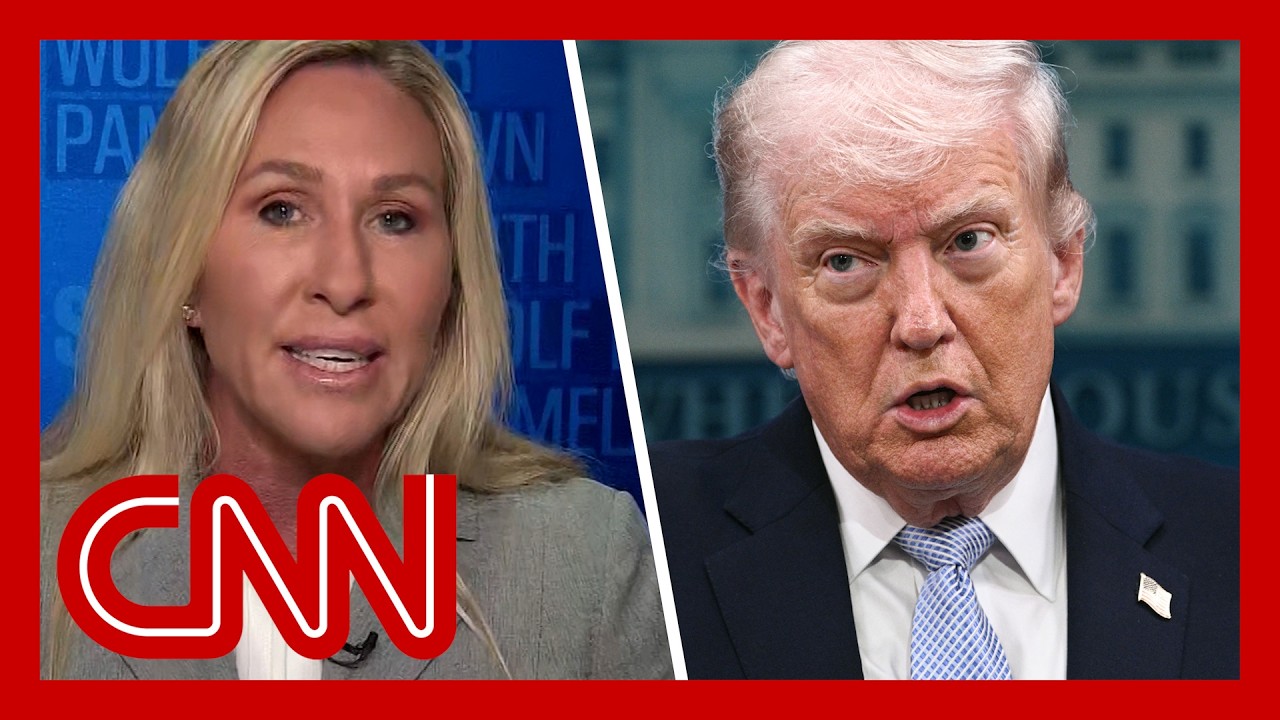
The fragile state of peace in the Middle East has become a focal point of concern, particularly following President Trump’s controversial rhetoric regarding Iran. With tensions remaining high even amid a tenuous truce, former Republican Congresswoman Marjorie Taylor Greene of Georgia recently voiced her opposition to the President’s inflammatory statements, calling for his removal from office under the 25th Amendment. This provocative call to action has ignited a conversation about the responsibilities of leadership and the implications of reckless language on the geopolitical stage.
Greene’s condemnation centers around Trump’s alarming threat to annihilate an entire civilization. “How can any person that is mentally stable call for an entire civilization of people to be wiped out?” she asked. Her dismay is rooted not only in the moral implications of such rhetoric but also in its potential to destabilize U.S. foreign policy and endanger American lives. By taking to social media to relay such extreme language, Greene argues, the President has crossed an unacceptable line. The reality of war, she contends, is complex and rife with consequences, and calling for mass destruction is not a viable path to peace or stability.
In response to questions regarding the administration’s claims that Trump’s tough stance compelled Iran to agree to a ceasefire, Greene firmly disagreed. She characterized the President’s words as “insanity,” insisting that proper diplomatic negotiations should be prioritized over threats of violence. Her perspective is significant, especially as America grapples with the implications of military interventions abroad. “Negotiations should be happening,” Greene stated, underscoring the importance of dialogue in mitigating conflict.
Moreover, Greene’s critique raises important questions about the role of the U.S. military. She expressed confidence in the integrity and professionalism of American service members, asserting that they would not support a mission to wipe out civilian populations. Highlighting the struggles of veterans dealing with the psychological aftermath of warfare, Greene emphasized the necessity of responsible leadership that prioritizes their welfare and the ethical implications of military action.
Greene’s shift from support to criticism of Trump has prompted discussions about the evolving dynamics within the Republican Party. While many MAGA supporters express unwavering backing for the President, Greene delineates a demographic divide in this support. She argues that older generations, particularly baby boomers, dominate the pro-war sentiment, while younger Americans increasingly advocate for peace and caution in international relations. The economic ramifications of war are also a concern for her, as she warns that prolonged conflict could exacerbate inflation and disrupt the everyday lives of Americans.
The hesitance of Republican leadership to respond to Trump’s incendiary remarks has not gone unnoticed. Greene expressed frustration with her party’s reluctance to hold the President accountable, attributing the silence to fear of political reprisals. She has positioned herself as an “honest Republican,” suggesting that her candid approach is rare among her peers, many of whom she accuses of cowardice for failing to confront uncomfortable truths.
Greene’s recent remarks provoke deeper reflections on the intersection of morality, leadership, and the responsibilities of international communication. In her view, Christian values should guide the actions and words of leaders. “As a Christian, do you really support the President calling for the annihilation…of an entire civilization?” she questioned, suggesting that such rhetoric fundamentally contradicts the principles of compassion and humanity espoused by Christianity.
As the U.S. continues to navigate its complex relationship with Iran, Greene’s perspective serves as a reminder of the power that words hold in the realm of politics and diplomacy. The stakes are high, not only for those directly involved in conflict but for ordinary Americans whose futures hinge on the decisions made by their leaders. In times of turmoil, the call for accountability and responsible rhetoric remains ever urgent, or we risk losing sight of our shared humanity in the face of geopolitical challenges.