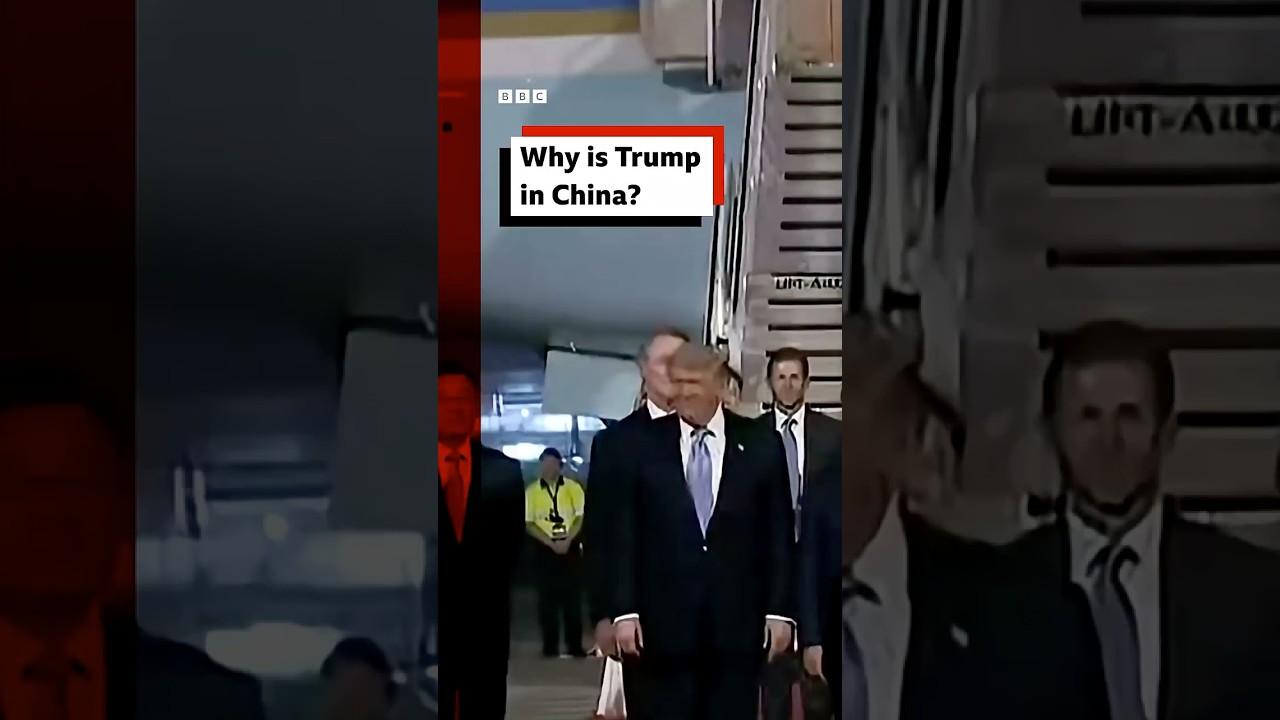
President Donald Trump’s visit to China to meet with President Xi Jinping is a pivotal moment, one steeped in complex dynamics regarding global politics, economics, and security. The significance of this meeting cannot be overstated as it addresses what can be summarized as the four T’s: Tan, trade, technology, and Taiwan—issues that have dominated U.S.-China relations in recent years.
Originally scheduled for late March, this meeting was postponed largely due to the conflict in Iran. Now, President Trump has an opportunity to exert pressure on China to leverage its influence over Iran. The U.S. hopes to bring the Iranian government back to the negotiating table, thus paving the way to de-escalating tensions in the Middle East. This move could help stabilize not only the region but also global markets, which are often affected by fluctuations in Middle Eastern oil production.
On the trade front, the ongoing tension between the United States and China has reached fever pitch. Washington’s desire for China to import more American products is a clear agenda item during the discussions. Reports suggest that President Xi would be amenable to increasing purchases of commodities such as soybeans and American beef. This would provide some relief to U.S. farmers, who have been adversely affected by tariffs and trade barriers. However, the conversation will not simply be one-sided. China will likely demand greater access to advanced technology, particularly high-end computer chips. Currently, the U.S. has placed restrictions on this access as part of a broader national security strategy aimed at curbing China’s technological advancements.
The issue of technology encapsulates not just trade but also a sense of national sovereignty and competition. The U.S. government sees China’s rapidly growing tech sector as a potential threat to its own security and economic interests. Advanced technologies are integral not only for economic dominance but also for military superiority. Thus, these discussions surrounding technology will be laced with tension as both leaders navigate the complexities of national interests.
The Taiwan question looms large in the backdrop of this diplomatic encounter. China regards Taiwan as a breakaway province and has consistently pushed for its reunification with the mainland. The U.S., on the other hand, maintains a policy of strategic ambiguity while providing arms to Taiwan to bolster its defense capabilities. This aspect of bilateral relations has been a point of contention, and it is unlikely that it will reach a resolution in just a couple of days. Nevertheless, any indication that Trump may soften arms sales to Taiwan could be viewed as a significant concession, potentially altering the balance of power in the region. Conversely, a firm stance from Trump on arms sales could further strain relations and elevate tensions.
While these issues are multifaceted and may not see immediate breakthroughs, the mere act of dialogue is essential. Even a brief encounter between the two leaders can set a precedent for future interactions and lay the groundwork for long-term cooperation. Each meeting serves as a stage on which both countries can express their respective agendas while also attempting to understand each other’s perspectives.
In conclusion, Trump’s visit to China signifies a challenging yet crucial engagement between two of the world’s leading powers. The four T’s—Tan, trade, technology, and Taiwan—illustrate the intricate web of interests that define U.S.-China relations. A successful negotiation may not emerge from this encounter, but the very act of discussing contentious issues could help ease tensions and foster a more stable relationship in the future. The world will be watching closely as these discussions unfold, acknowledging that the repercussions of this meeting will echo well beyond the borders of both nations.