President Trump’s Historic Supreme Court Visit: The Stakes of Birthright Citizenship
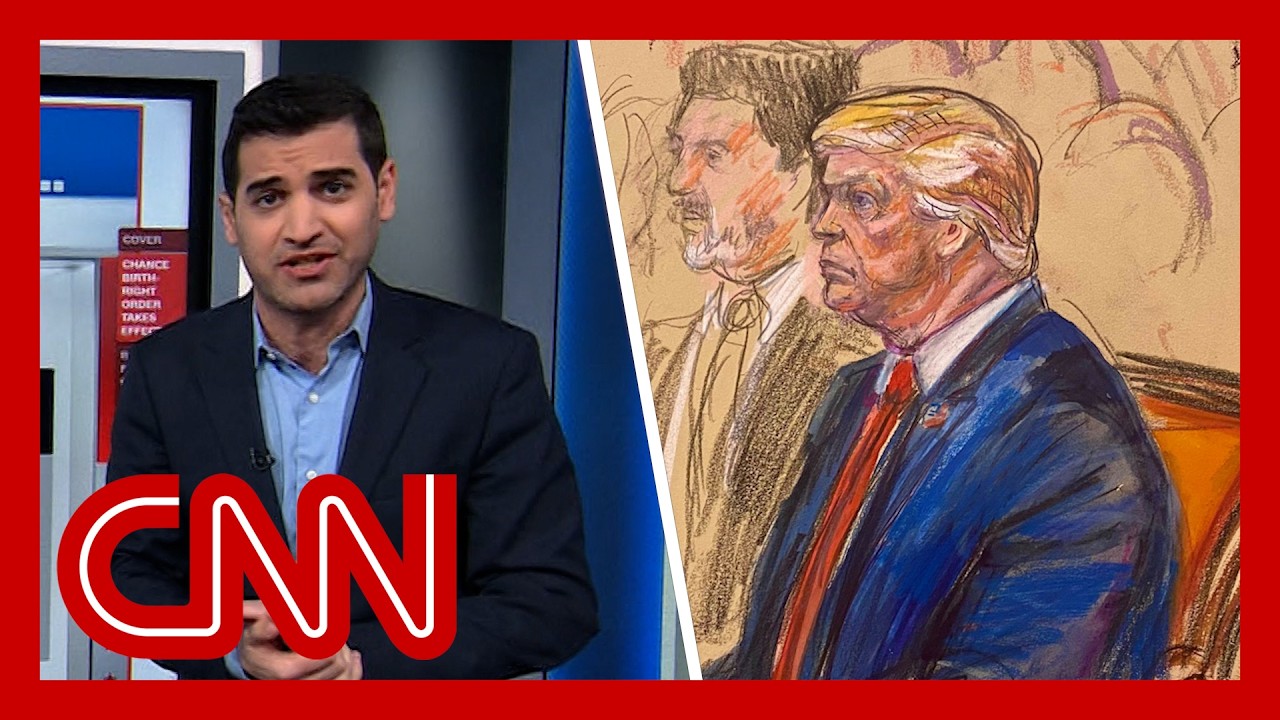
On a momentous occasion, President Trump made history by becoming the first sitting president to attend oral arguments before the Supreme Court. His presence was not merely ceremonial; he was there to advocate for his executive order aimed at limiting birthright citizenship—a contentious issue that has significant implications for immigration policy in the United States.
A Historic First with Limited Impact
President Trump’s visit served a dual purpose: to underscore the administration’s commitment to its immigration policies and potentially sway the justices in favor of his executive directives. However, analysts suggest that the day did not unfold as he had hoped. Following the arguments presented in court, prediction markets reflected a steep decline in the likelihood that Trump’s birthright citizenship order would take effect before August, plummeting from a 20% chance to just 7%. This dramatic shift indicates a growing skepticism about the president’s legal position and the viability of his executive orders.
Changing Public Opinion
Americans’ attitudes towards birthright citizenship have shifted significantly over the past decade. According to recent polling data, 69% of Americans now favor birthright citizenship, a considerable increase from earlier data, which recorded only 47% in support back in 2010. This growing consensus reflects a broader acceptance of immigrants and their contributions to society. Interestingly, the perspective on immigration has also evolved; a record 79% of Americans now believe that immigration is beneficial for the country, marking a stark contrast to previous years when such sentiments were far less favorable.
Republicans, a group that has traditionally held a more restrictive view of immigration, have experienced a remarkable transformation in their opinions. The proportion of Republicans who believe immigration is good for America surged from 39% to 64% within a year. This dramatic shift underscores the changing dynamics of public sentiment around immigration as a whole.
The Supreme Court’s Skeptical Stance
As the oral arguments unfolded, the Supreme Court justices exhibited skepticism regarding the Trump administration’s interpretation of the 14th Amendment. Traditionally viewed as guaranteeing citizenship to anyone born on U.S. soil, the administration’s stance suggested a more restrictive interpretation—arguing that individuals born to parents who are in the country illegally should not automatically attain citizenship. The justices, including those appointed by Trump himself, raised challenging questions that hinted at their reluctance to endorse such a reinterpretation.
Legal experts observed that the questions posed by the justices were less about making a ruling and more about shaping their forthcoming opinion. This signals a potentially unfavorable outcome for the Trump administration, as they may face a significant legal setback on their ambitious attempts to redefine birthright citizenship.
The Implications of Presidential Presence
Despite the historical nature of his visit, President Trump’s attendance did not appear to influence the justices positively. His presence may have backfired, as it goes against the long-standing tradition of maintaining a perceived separation between the executive branch and the judiciary. By sitting in on the proceedings, Trump risked what could be interpreted as an attempt to intimidate the justices, a strategy that ultimately did not resonate. Chief Justice John Roberts’ remarks—"It may be a new world, but it’s the same Constitution"—underscored the enduring relevance of established legal principles over the president’s political motivations.
Conclusion
As the Supreme Court prepares to issue its ruling in June, the implications of the arguments presented extend far beyond the courtroom. President Trump’s ambitious push to limit birthright citizenship faces substantial opposition—not only from the justices but also from a public increasingly supportive of diverse immigration policies. The evolution of public sentiment and the skepticism expressed by the Supreme Court serve as a sobering reminder of the complex interplay between executive authority, constitutional law, and the enduring values held by the American people. Whether Trump’s executive order will withstand judicial scrutiny remains to be seen, but what is clear is that the landscape of immigration policy in the United States is undergoing a significant transformation, one that could redefine long-standing legal frameworks.