Devastation Strikes Venezuela: A Nation in Crisis After Twin Earthquakes
A state of emergency has been declared in Venezuela following a series of powerful earthquakes that struck near the capital, Caracas, on a national holiday. Interim President Delcy Rodriguez has reported at least 32 fatalities and around 700 injuries, but the full scale of the disaster remains uncertain. With estimates suggesting that the casualty numbers could reach into the thousands, rescue operations are underway amidst widespread destruction.
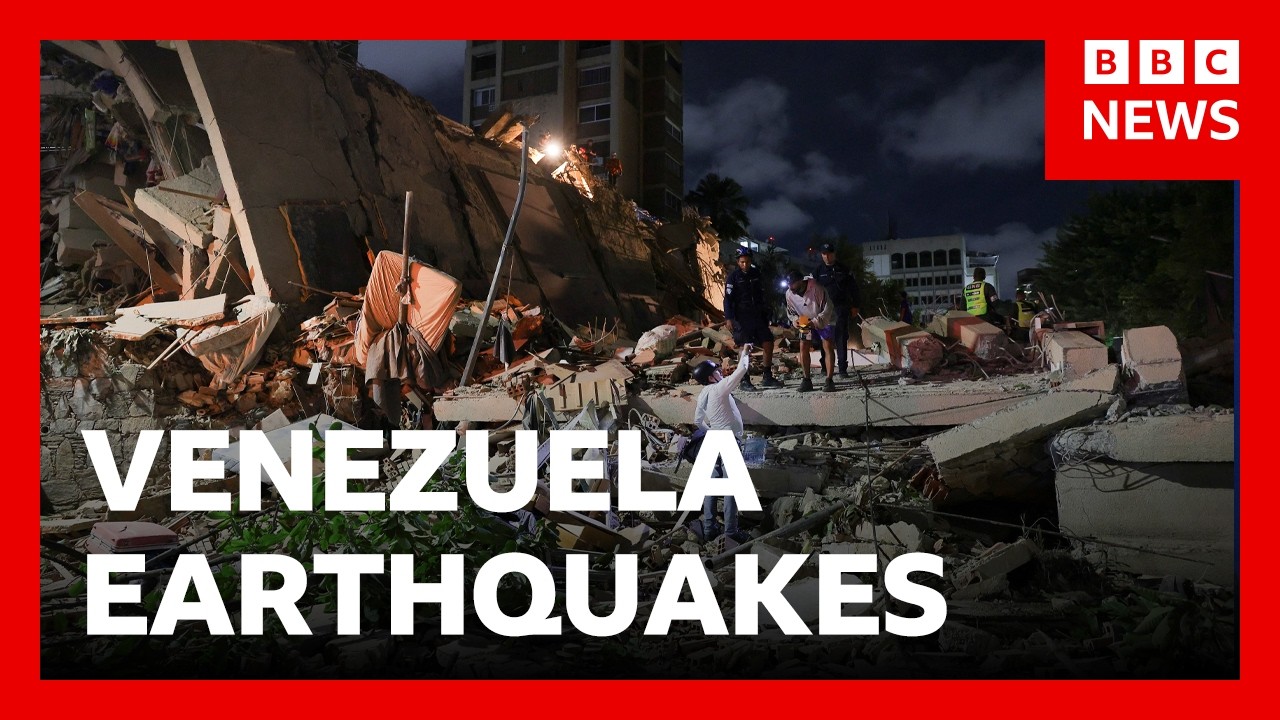
Images emerging from the affected areas depict a grim reality, with several buildings in Caracas reduced to rubble. The main international airport has sustained significant damage and is currently closed, complicating relief efforts. Emergency services, alongside volunteers, are desperately attempting to reach individuals trapped under the debris while residents frantically search for missing loved ones. As night falls, the urgency of these operations increases, with reports indicating that many structures may still be precarious, raising concerns about potential aftershocks.
According to the US Geological Survey, the earthquakes measured 7.2 and 7.5 in magnitude and occurred less than a minute apart. This unusual seismic activity was felt as far away as Bogotá, Colombia, highlighting the vast reach of the tremors. The first quake struck at around 6:00 p.m. local time, when workers were just beginning to return home, making the event even more tragic as families gathered for the holiday.
Eyewitness accounts reveal the sheer panic experienced during the tremors. One resident, caught in an elevator, described the harrowing experience of being jolted violently in a building that shook as if it were about to collapse. The fear was palpable, as crowds quickly gathered in outdoor spaces, seeking refuge from potential further damage indoors.
The devastation is reminiscent of the 1967 earthquakes that have left an indelible mark on the city’s memory. The aftermath of such powerful earthquakes raises questions about building safety standards in a country that has faced relentless crises over the years. While structures in Caracas were designed to withstand seismic activity, the existing socio-economic collapse has significantly weakened the nation’s emergency response capabilities.
Many hospitals, already strained by insufficient resources, now find themselves overwhelmed with incoming patients requiring urgent medical care. The country’s humanitarian infrastructure has been stretched thin, as evidenced by local government requests for basic supplies to aid recovery efforts. Social media platforms are flooded with appeals for assistance from residents fearing for their family members and friends, further emphasizing the desperate situation on the ground.
In a timely response, US President Donald Trump announced that federal agencies would be prepared to provide assistance to Venezuela. This development signals a potentially transformative change in international relations, marking a shift toward arriving aid where it is urgently needed. The successful mobilization of resources from abroad could prove crucial, especially in areas beyond the capital that may face even worse damage and resource shortages.
Regional areas such as La Guaira and Yaracuy are emerging as some of the hardest-hit locales, with damaged infrastructure and electrical outages reported. As the situation unfolds, concerns linger over the well-being of those in more remote areas, where the challenges of providing adequate disaster relief are compounded by logistical hurdles.
The anticipated need for international aid raises hope amidst despair, as many Venezuelans face not only immediate loss but also the long-term implications of the disaster. The population, already grappling with severe socio-economic difficulties, will require comprehensive support to rebuild from both the physical destruction and emotional scars this disaster will etch into the fabric of Venezuelan society.
As the rescue operations continue into the night, the Venezuelan government, supported by local and international organizations, must work tirelessly to address the overwhelming needs of its population. In a country already scarred by crises, the resilience of the Venezuelan people will be tested once again, as they navigate the path forward from this natural disaster.