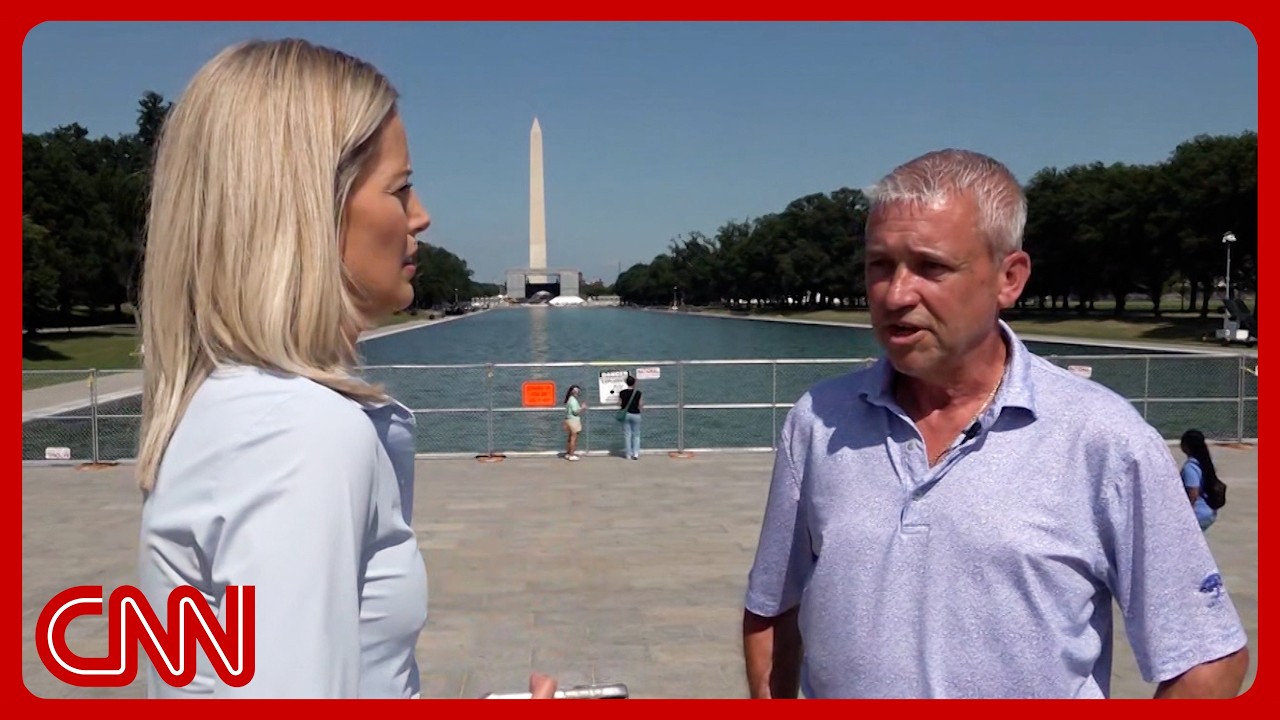
The Reflecting Pool Controversy: A Lesson in Vanity, Politics, and Environmental Science
Recent statements from President Trump have ignited considerable debate over the restoration of the National Mall’s iconic reflecting pool. In a bold declaration, Trump warned that anyone who damages the nearly 70 renovated structures in Washington, D.C., including the pool, could face up to ten years in prison. This stark warning raises an essential question: at what point does the preservation of a monument devolve into a spectacle of political grandstanding?
Amidst the backdrop of Trump’s rhetoric, the reflecting pool has become a focal point for a complex interplay of environmental management, political loyalty, and public perception. Enter Sunland Servati, a small Ohio-based company, which has stepped up to tackle the algae infestation plaguing the pool. Their role in this high-stakes project has thrust them into the national spotlight, revealing both the challenges of maintaining historical sites and the intricacies of governmental contracts.
At the helm of this initiative is Chaz Anton, CEO of Greenwater Services, who touts a patented ozone nanobubbler technology designed to obliterate algae with unprecedented efficiency. “Ozone is 3,000 times faster and 50 times more powerful than chlorine,” Anton explained, emphasizing the system’s capability to treat specific toxins effectively. While these claims sound promising, the project has been marred by various complications, earning criticism from both political and environmental corners.
Additionally, the restoration project has not been without its controversy. Critics point to the rush to complete revitalization before the upcoming Fourth of July celebrations as a pivotal factor behind the bubbling tensions. Reports surfaced indicating that a more qualified company, Sika, had been approached to handle the renovations but declined due to the impractical timeline and specific aesthetic demands—namely, a blue bottom for the pool. It begs the question: does prioritizing a political agenda overshadow professional competence when it comes to public contracts?
The narrative around the reflecting pool has turned increasingly sinister. Allegations of sabotage in the form of "criminal algae" and fertilizer interference have fueled speculation that external forces may be complicating the situation. Trump himself hinted at "left-wing vandals" undermining the project, a claim unsupported by evidence. Such rhetoric transforms a mundane public works issue into a charged political battle, demonstrating how deeply intertwined environmental stewardship and political narratives have become.
Furthermore, questions surrounding the legitimacy of the no-bid contract awarded to Sunland Servati under the Trump administration have been raised. The company’s co-owner, JJ Cafaro—a long-time Trump supporter—has a controversial history, having previously pleaded guilty to conspiracy and campaign finance violations. The White House has denied involvement in the contract selection process, a claim met with skepticism by some.
The repercussions extend beyond the pool itself. Protests surrounding the reflecting pool have drawn attention to broader grievances against the Trump administration, creating a visual tableau that contrasts political loyalty against civic engagement. Many tourists now visit the site out of curiosity, capturing the evolving narrative that has escalated from a simple renovation to a larger metaphor for current political divides.
Despite the prevailing controversies, an unsettling reality remains: the preservation of iconic American landmarks has become entangled with the spectacle of political power. This situation evokes greater concerns about who manages and preserves public spaces, not merely for their historical significance but also for their role as platforms for contemporary political discourse.
The fate of the reflecting pool serves as a reminder that, while monuments stand to commemorate the past, they are not immune to the currents of present-day politics. As the July 4 celebrations approach, Americans will look to this site, which has transformed from a symbol of reflection to one of contention. In a country rich in history and collective memory, the intersection of politics and environmental stewardship is not merely an academic concern—it’s a reflection of national identity. The true challenge lies in balancing preservation with accountability, avoiding the pitfall of turning historic sites into pawns on a political chessboard.