Nixon’s Legacy: A Modern Perspective on a Complex Historical Figure
Richard Nixon often evokes polarized reactions, ranging from disdain due to his role in Watergate to admiration for his foreign policy achievements. In recent years, however, his legacy appears to be undergoing a renaissance, prompting historians and political analysts alike to reevaluate the complexity of his presidency. The fascination surrounding Nixon’s character stems not only from his remarkable accomplishments but also from the drama surrounding his administration’s demise, revealing deeper themes still relevant today.
One commentator recently remarked, "If Watergate happened tomorrow, it would be like a 12-hour news story." This statement encapsulates the current media landscape’s rapid pace, contrasting sharply with the intense scrutiny Nixon faced in the 1970s. The idea that a political scandal of such magnitude could be swiftly marginalized draws intriguing parallels with contemporary politics. Notably, some observers have suggested a conceptual thread binding Nixon’s downfall to the challenges faced by the Trump administration. Both scenarios involved fierce media scrutiny and a perceived "deep state" seeking to undermine the presidency.
Indeed, Nixon’s time in office was not devoid of significant achievements. From opening diplomatic relations with China to instituting critical environmental protections, he navigated many of the pivotal issues of his era. Critics, however, argue that these accomplishments cannot overshadow the ethical breaches that ultimately led to his resignation. Watergate was not merely a scandal; it symbolized an erosion of trust in governance, a dilemma that remains pressing in today’s political climate.
As commentators dissected Nixon’s legacy, many recognized the courage it took for members of Nixon’s own party to demand his resignation. These Republicans upheld their oath to the Constitution, emphasizing accountability—a cornerstone of democracy that seems to falter in the current political era. Many advocates voiced frustration over the absence of similar accountability among today’s Republican leaders, drawing attention to a lack of moral courage in navigating ethical dilemmas.
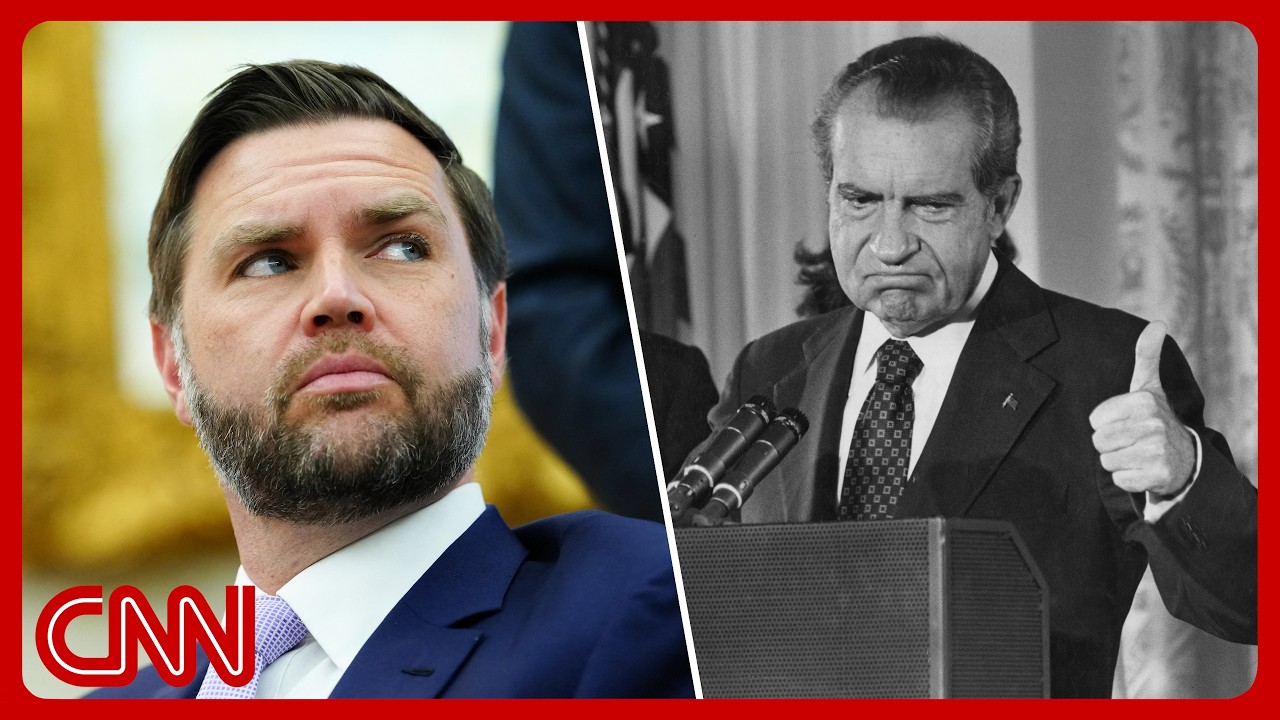
JD Vance’s recent comments at the Nixon Library, suggesting a similarity between his own political trajectory and Nixon’s, further ignited the debate. While some interpreted this as a mere rhetorical flourish aimed at appealing to Nixon’s admirers, experts have argued that such comparisons risk trivializing the gravity of Nixon’s transgressions. Vance’s implications about Watergate, framed as a conspiratorial assault by the “deep state,” seemed to downplay the systemic issues of corruption that plagued Nixon’s presidency.
The contentious responses to Vance’s remarks underscore a fundamental question: what does it mean to embrace a controversial historical figure as a political totem? Beyond nostalgia, invoking Nixon reflects deeper anxieties about governance, trust, and ethical leadership. Vance’s candidacy and subsequent remarks invite scrutiny about the lessons modern politicians might draw from the Nixon era, particularly regarding integrity.
While the media today operates at lightning speed, determined narratives often eclipse nuanced discussions about historical significance. Today’s political landscape, rife with chaos and controversy, raises critical questions about accountability. Would a contemporary Watergate warrant the same political consequences as it did in Nixon’s day? The cautious consensus seems to lean towards a belief that historical precedents might no longer apply as they once did.
In examining Nixon’s presidency, it is vital to acknowledge both his achievements and failures. His role in advancing civil rights legislation, environmental protections, and foreign relations cannot be overlooked. At the same time, his presidency serves as a cautionary tale about the corrosive effects of unchecked power and the moral compromises that can ensue.
As history continues to unfold, Richard Nixon’s complex legacy serves as a mirror reflecting not only the challenges of his time but also those of our own. The conversations surrounding his presidency remain vital, inviting reflection on accountability, governance, and the enduring struggle to align political actions with ethical standards. Ultimately, as modern politicians navigate the legacies of their predecessors, they must grapple with the question: What kind of leaders do we aspire to be?