Barack Obama: The Rock Star Among Living Presidents
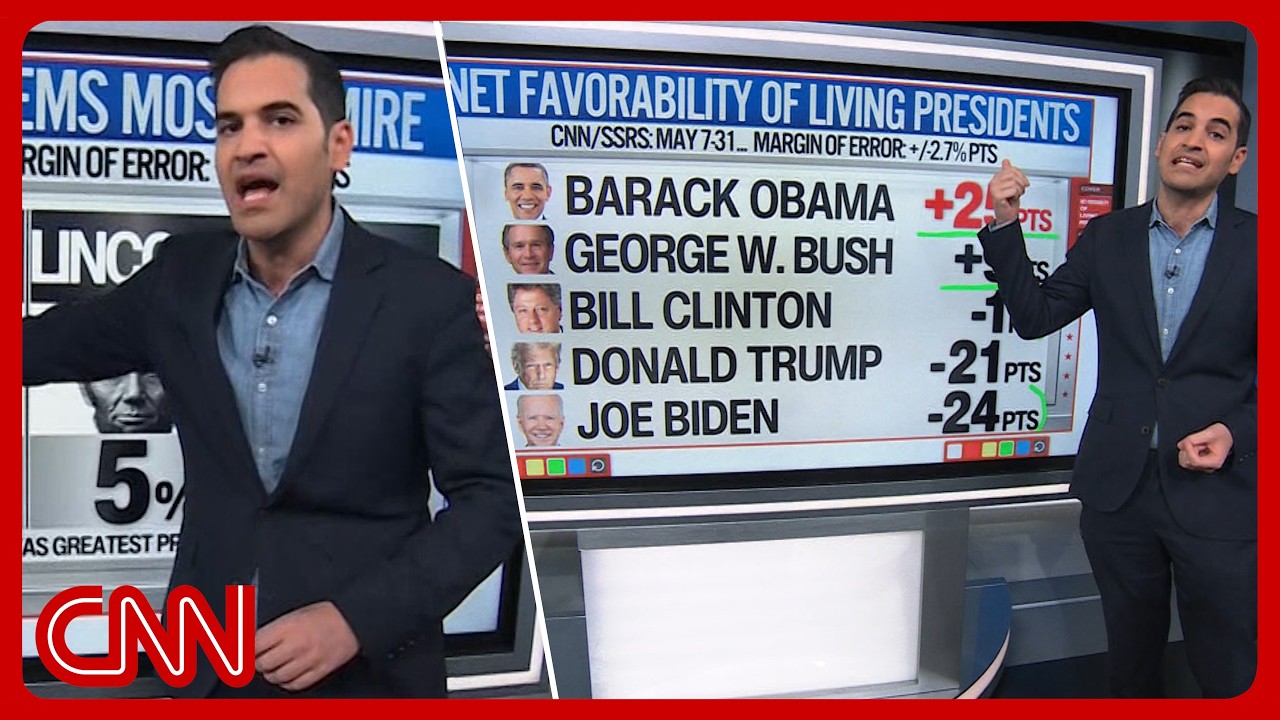
In the realm of contemporary politics, few figures embody the term "rock star" quite like Barack Obama. Nearly a decade after leaving the White House, Obama’s popularity continues to outshine that of every other living president. According to recent favorability ratings, Obama boasts a net favorability of plus 25 points—a significant lead over his nearest competitor, George W. Bush, who sits at plus nine points. In stark contrast, most other former presidents, including Bill Clinton, Donald Trump, and Joe Biden, struggle to maintain positive ratings, with Biden sinking to a staggering minus 24 points.
This remarkable disparity indicates that Obama occupies a unique space in the political landscape, especially among Democrats, who consider him a contemporary emblem of leadership. Polls reveal that 64% of Democrats regard him as the president they admire most, a statistic that invites comparisons to Abraham Lincoln. In fact, when Democrats were asked to name the greatest president in history, Obama emerged as the clear favorite, far exceeding ratings for any other historical figure within the party.
Obama’s popularity isn’t simply a matter of charisma; it is also tied to his legislative legacy. The Affordable Care Act, often referred to as "Obamacare," initially faced harsh criticism that cost him congressional seats and popularity. However, the passage of time has altered public perception. Today, the ACA enjoys a net favorability rating of plus 23 points, aligning closely with Obama’s own approval ratings. This trend illustrates a broader acceptance of healthcare reform, emphasizing how policy measures can become more palatable as they become entrenched in society.
Interestingly, this attitudinal shift towards the Affordable Care Act parallels challenges faced by other contemporary presidents. For instance, Donald Trump’s presidency is mired in controversy, primarily around issues of inflation and economic downturn. Recent polling indicates that Trump’s approval ratings are significantly underwater—witnessing highs of minus 22 points in May and staying consistently low since. His net approval rating stands at an alarming 51 points underwater on inflation alone, a stark contrast to the favorable view of healthcare reforms rooted in Obama’s legacy.
While Obama appears to bask in the glow of popularity, the political environment for Democrats is experiencing seismic shifts. Among Democratic voters, there is noticeable momentum building for Democratic Socialists, whose favorable ratings surpass traditional congressional Democrats. With a net favorability of plus 17 points among Democrats, Democratic Socialists are gaining traction, which speaks to a growing leftward shift within the party. This trend resonates in the ongoing primaries, particularly in New York City, where an increasing number of self-proclaimed democratic socialists are successfully contending against established incumbents.
Moreover, public sentiment around core American values is shifting as well. A recent analysis regarding the meaning of July 4th reveals stark ideological divides. For Republicans, it remains a celebration of national pride, while a plurality of Democrats view it primarily as an occasion for time with friends and family. This divergence in national identity signals a broader trend of polarization that is affecting perspectives on issues such as American pride and even the act of displaying the flag on significant holidays.
This polarization extends to even touching upon issues concerning flag burning, where the Supreme Court has historically reinforced the constitutional protection of such actions. Interestingly, current prediction markets indicate there is a very low chance that this issue will be revisited by the court soon, reflecting a broader indifference toward flag symbolism among younger generations.
In conclusion, Barack Obama’s continuing popularity stands as a testament not merely to his leadership qualities but also to the adaptability of his legislative achievements within the evolving political landscape. As both Republicans and Democrats grapple with issues of identity, policy, and national pride, the former president’s legacy remains a beacon of Democratic aspirations. Whether Obama will continue to serve as a harbinger of future political trends, or whether changing dynamics will shift the party’s focus remains to be seen. However, the implications of these shifts are undeniable, painting a complex picture of America’s political future.