Extreme Weather Patterns Unfold Across the United States and Beyond
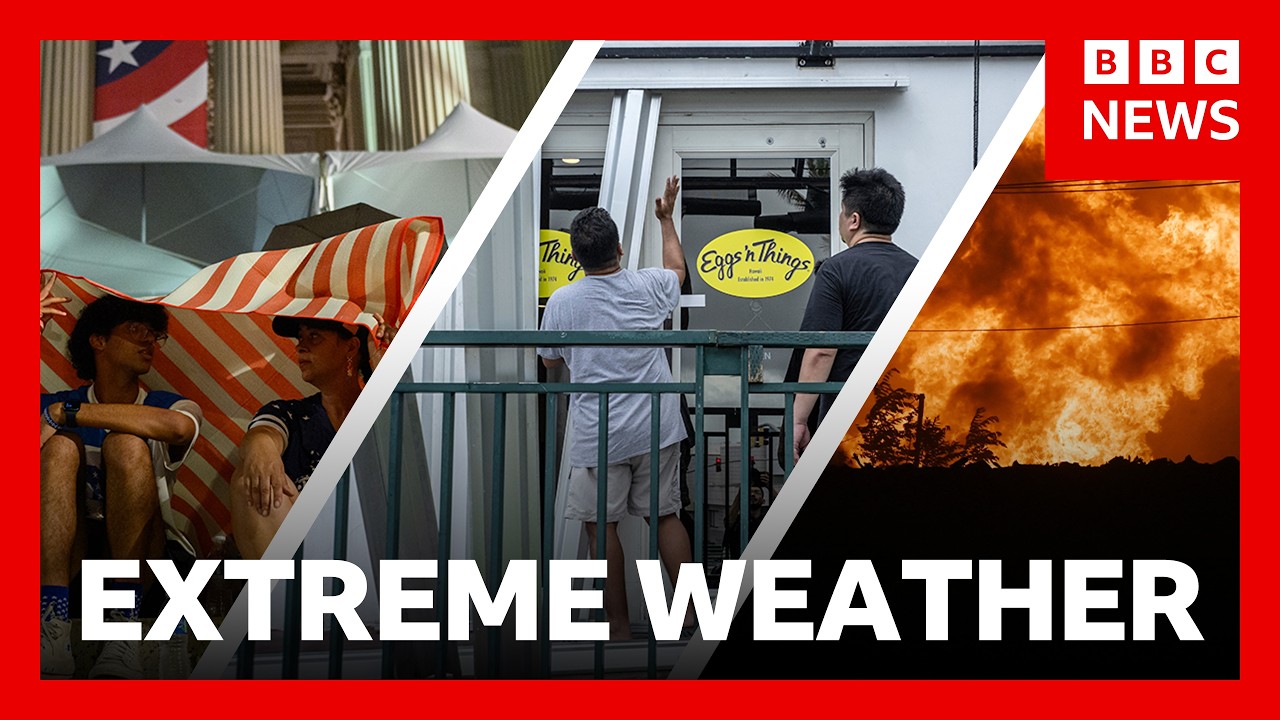
The summer season has ushered in a wave of extreme weather conditions across the United States, particularly focusing on the East Coast. Authorities have recently issued evacuation orders for the National Mall in Washington, D.C., as thunderstorms encroach on the area, threatening holiday festivities. This tumultuous weather follows a dangerous heatwave that gripped not only Washington D.C. but also extended across much of the Eastern Seaboard.
On Saturday, the nation’s capital was reported as one of the hottest spots in the world, with temperatures soaring into the high 30s Celsius. When humidity factors were considered, conditions felt as oppressive as 46° Celsius. Such extreme heat presents significant risks, prompting officials to act swiftly.
The Science Behind the Storms
Weather presenter Simon King explains that a significant heat dome has formed over the eastern United States, creating a perfect storm of adverse conditions. High humidity further exacerbated the soaring temperatures, generating vast amounts of energy in the atmosphere. A cold front moving southeast played a dual role—it disrupted the stifling heat while also serving as a catalyst for severe thunderstorms.
This combination of extreme temperatures and sudden cold fronts is common in the U.S. Such weather patterns often lead to explosive conditions. Lightning and thunderstorms became a reality across the eastern states, particularly impacting festivities. While the celebratory fireworks were planned for Independence Day, nature had its own agenda, reminding everyone of its power.
As the week progresses, the eastern states will experience a shift. Temperatures in metropolitan areas like New York City and Washington D.C. are expected to cool, providing some relief to residents. However, the heat wave appears to have migrated southward, focusing its intensity on Virginia and the Carolinas, where temperatures are predicted to reach into the mid to high 30s Celsius.
A Global Perspective on Heatwaves
The intense heat isn’t restricted to the United States. Europe is also grappling with high temperatures and emerging crises. In Greece, wildfires have ravaged populated areas, exacerbated by prolonged dry conditions. As climate changes continue, the summer in Greece lingers, creating a prime environment for wildfires. Concerns are mounting that as the summer progresses, similar occurrences could resurface.
Looking ahead, the European continent is bracing for its third heatwave of the year. Forecasts predict a gradual temperature rise, particularly across France and the United Kingdom, where the potential for consecutive days of soaring temperatures looms large. While this heatwave may not reach the extreme heights of June, it could last significantly longer, creating daunting implications for public health and safety.
Pacific Territories on High Alert
Farther afield, the Pacific territories of Guam and the Northern Marianas are preparing for an entirely different kind of catastrophic weather event. Emergency evacuations are underway ahead of a super typhoon expected to make landfall on Monday. Characterized by its ferocity, the storm is forecasted to bring winds exceeding 260 km/h, in addition to heavy rainfall and hazardous waves. The National Weather Service has labeled this event as extremely dangerous, placing residents on high alert as they brace for its impact.
Concluding Thoughts
The continuous barrage of extreme weather across the globe serves as a stark reminder of the changing climate. From heatwaves to thunderstorms, and impending super typhoons, these events unveil the complex interplay of natural forces exacerbated by human-induced change. As communities in the United States and beyond respond to these challenges, the imperative for resilience and adaptation has never been clearer. Now, more than ever, it is crucial for governments, organizations, and individuals to engage in proactive measures to prepare for an increasingly unpredictable climate.