The Human Toll of Escalation: Russia’s Attack on Kyiv
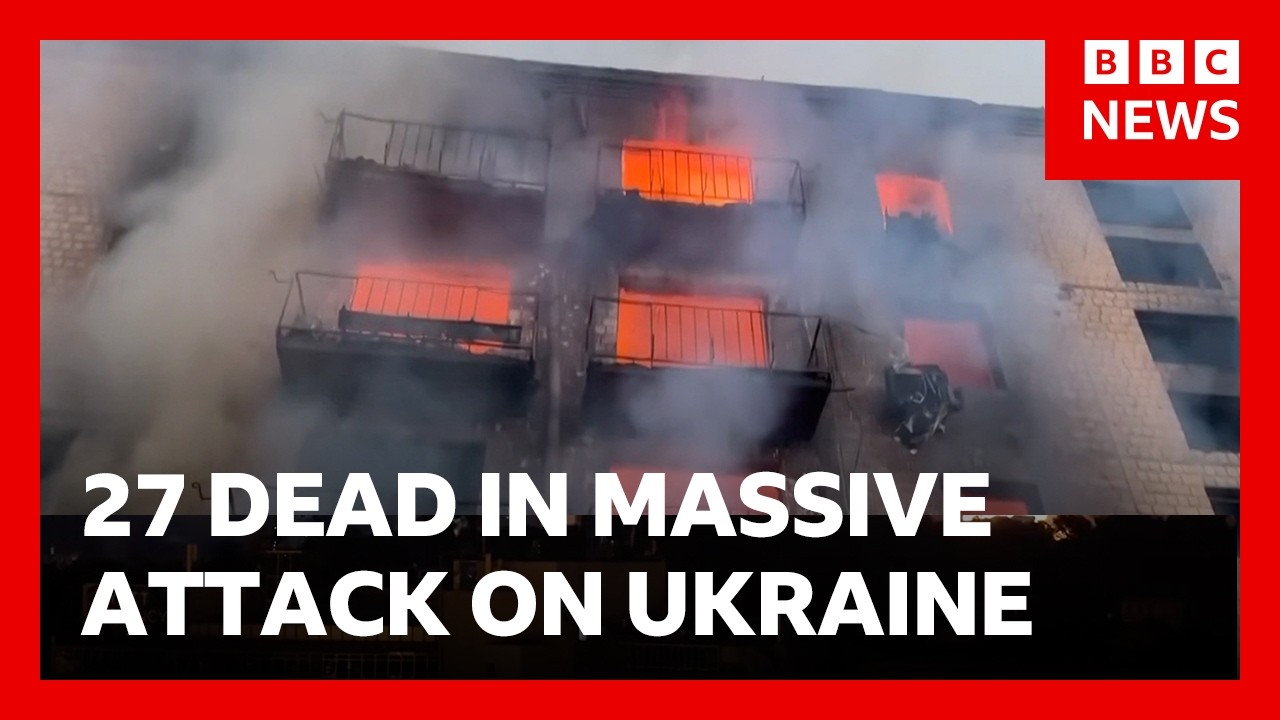
In a dramatic escalation of conflict, Russia has unleashed a large-scale assault on Ukraine’s capital, Kyiv, resulting in at least 25 fatalities and numerous injuries. The onslaught saw Moscow launch more than 70 missiles and nearly 500 drones in an eight-hour barrage that specifically targeted residential neighborhoods, sparking chaos and destruction.
Sarah Rainsford, reporting from the devastated heart of Kyiv, captures the aftermath of this relentless attack. The night sky was illuminated by ominous explosions as Russian forces aimed at the city, with residents caught in the crossfire. Even as dawn broke, firefighters struggled to extinguish blazes that engulfed houses, hotels, and entire blocks of flats. In the wake of this violence, humanitarian efforts are underway, but the devastation is palpable.
In one particularly harrowing scene, rescuers worked tirelessly to salvage lives amid the rubble of a residential building. A missile had struck directly, turning homes into graveyards while families were still asleep. Survivors, like Svetlana, share their heart-wrenching stories of loss. With her windows shattered and her world upended, Svetlana faces the devastating reality of having lost both her mother and son in different acts of violence over the past two years. She embodies the resilient spirit of the Ukrainian people, declaring, “We have to go on living. And we will, because if we live, so will Ukraine.”
Despite the horrifying toll on human life, the potential for further casualties looms. Many individuals remain unaccounted for, suggesting that they could be trapped under the debris. The site of attack not only includes apartment buildings but is also located near a kindergarten, sharply illustrating the indiscriminate nature of the violence.
Russian officials have framed the attack as retaliation, citing Ukrainian drones that have reached deep into Russian territory, inflicting damage on critical infrastructure such as oil refineries. However, this narrative is met with skepticism in Ukraine. President Volodymyr Zelenskyy, upon visiting the bomb sites, vehemently accused Vladimir Putin of intentionally targeting civilians. “It’s an act of desperation,” he insists, highlighting the Kremlin’s choice of escalation rather than seeking peace.
As the war grinds on, both sides seem entrenched in their positions. Ukraine remains steadfast in its resolve to defend its territory, while Russia appears increasingly willing to up the ante. The situation raises pressing questions. What will it take to compel both parties to the negotiating table? Will civilian lives continue to be expendable in this deadly game of one-upmanship?
The ongoing conflict has not only wrought destruction on physical structures but has also torn apart the social fabric of communities. The scars of war run deep, affecting individuals in ways that statistics cannot capture. Each lost life is a world shattered, with families left grappling with grief and uncertainty. The agony of those like Svetlana reflects a broader narrative of survival and the human cost of warfare.
In the coming days, as the world watches, the need for diplomatic engagement grows more urgent. For Ukraine, peace isn’t merely a goal; it is a necessity for healing and rebuilding. The shadow of violence looms large, and every missile launched further entrenches a cycle of fear and retaliation. Civilians pay the price for choices made far removed from their daily lives. As bodies are pulled from the rubble, it becomes clear that, in this battle of ideologies and territorial claims, the human toll remains indisputable.
In times of such intense conflict, it is crucial to remember the faces behind the headlines. Every story, like that of Svetlana, serves as a poignant reminder of what is at stake. As Ukraine continues to navigate this harrowing chapter, the world must take heed. It is not merely a struggle for land, but for humanity—and the hope for a peaceful future hangs precariously in the balance.